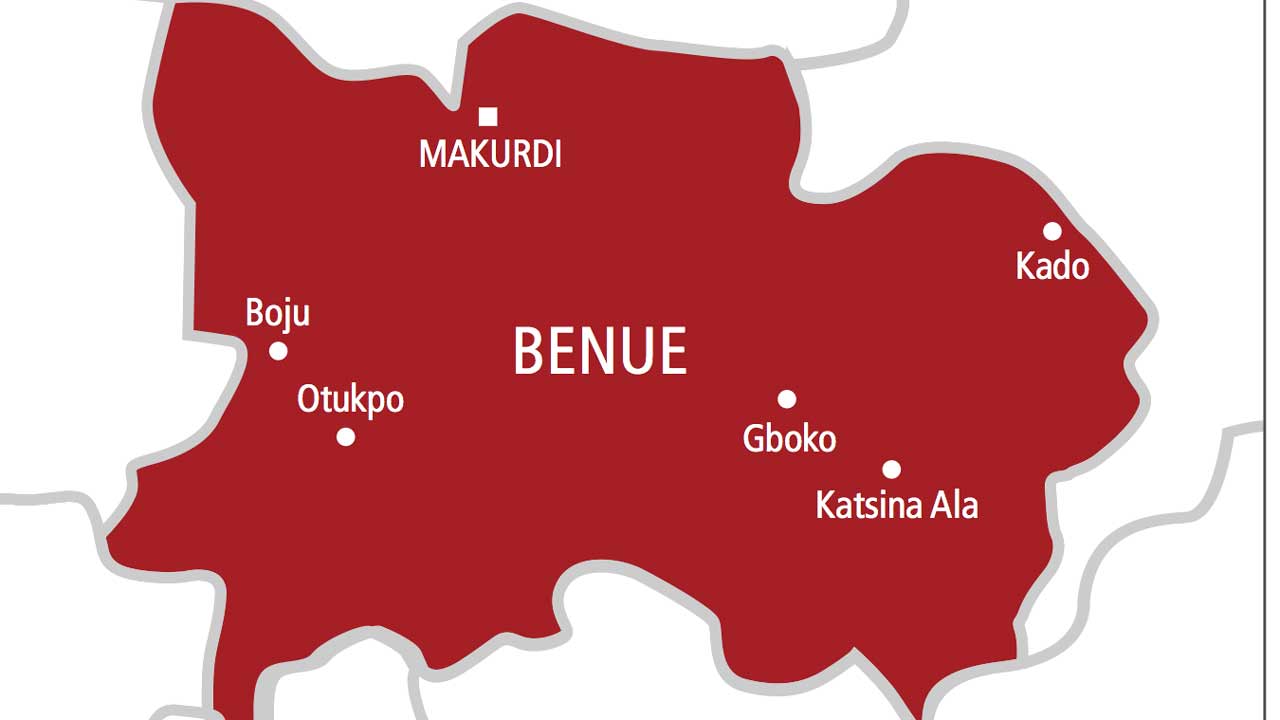
A pall of grief has settled over Benue State’s political and academic community following the death of David Salifu, a former secretary to the state government (SSG), who was shot by suspected bandits along the volatile Wukari-Makurdi road.
Salifu, who held the influential SSG position during the tenure of former Governor Gabriel Suswam, had in recent years transitioned into academia, lecturing at the Federal University, Wukari, in neighboring Taraba State.
Colleagues described him as a respected figure who bridged the worlds of public administration and higher education, a background that made his violent death all the more shocking to those who knew him.
According to accounts relayed to reporters, the tragedy unfolded on Thursday as the former SSG set out from Wukari toward Makurdi, a journey along a corridor that has increasingly become a flashpoint for armed criminal activity in the region.
Sources said armed men waylaid his vehicle somewhere along the route, forcing it to a stop. The assailants reportedly ordered Salifu out of the car and instructed him to mount a waiting motorcycle, a common tactic among kidnap gangs who prefer to spirit victims away on two wheels rather than risk being tracked in a car.
Salifu, however, is said to have resisted or challenged his abductors, a decision that appears to have cost him his life, as the gunmen opened fire on him in response.
The gravity of his injuries required an urgent medical response. He was first taken to a hospital in Wukari, but the severity of his wounds necessitated more advanced care.
David Olofu, a close associate of Salifu’s and the African Democratic Congress’ senatorial candidate for Benue South, said that efforts were made to airlift or transport the victim to Abuja for specialist treatment, with the vice chancellor of the Federal University, Wukari, personally facilitating the release of an ambulance and a medical team for the journey.
In a turn that remains only partly explained, Salifu did not reach Abuja. He was instead conveyed to the Benue State University Teaching Hospital in Makurdi, where he succumbed to his injuries in the early hours of Friday.
Olofu recounted the sequence of events and confirmed that Salifu had been a valued member of his campaign council and a personal confidant.
“He was a member of my campaign council and a confidant,” Olofu said, recalling how he learned that Salifu had run into “hoodlums” at the outskirts of Wukari. “They stopped his car and asked him to come down, but the bandits thereafter shot him.”
As of press time, the exact reasons behind the last-minute change of destination from Abuja to Makurdi remained unclear, adding a layer of uncertainty to an already tragic sequence of events.
Security operatives have not issued an official statement on the killing, and the identities of the attackers remain unknown, consistent with a broader pattern of unresolved banditry-related violence along Nigeria’s North-Central corridors.
Salifu’s death is likely to reignite concerns over the security situation on the Wukari-Makurdi road, a route frequently used by travelers, traders, and academic staff shuttling between Taraba and Benue states, and one that has featured repeatedly in reports of armed attacks, kidnappings, and highway robberies in recent years.
WHAT YOU SHOULD KNOW
The death of David Salifu is a stark reminder that insecurity on Nigeria’s rural highways spares no one, even those with prominent political and academic credentials.
A former SSG and university lecturer, travelling a route many use daily, was stopped, ordered off his vehicle, and killed for resisting his attackers. Despite frantic efforts to save him, including an attempted transfer to Abuja, he died before reaching adequate care.
The Wukari-Makurdi road remains dangerously exposed to banditry, and until security along it improves, anyone who travels it, regardless of status, remains at risk.