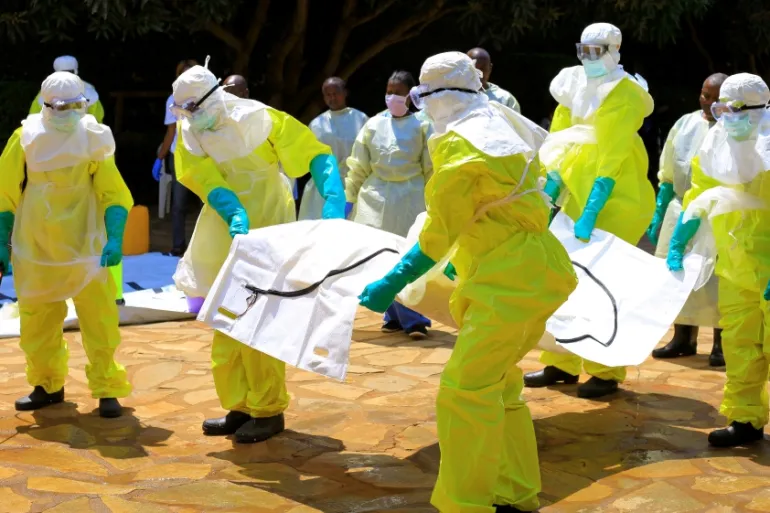
The Ebola outbreak ravaging the Democratic Republic of Congo has officially become the deadliest in the country’s recorded history, after government data released on Sunday confirmed 2,325 deaths, surpassing the 2,299 fatalities recorded during the 2018-2020 outbreak in eastern DRC.
According to the country’s public health institute, confirmed cases have climbed to 4,945, including 101 new infections detected in just the previous 24 hours. That case count had already made this the largest outbreak by infection numbers in DRC history; a grim milestone was reached in late July, and now it has claimed the record for deaths as well.
What makes this outbreak especially alarming to health officials is its speed. The West African epidemic of 2014-2016 took nearly five months to reach 1,000 deaths; this DRC outbreak hit 2,000 deaths in under three months.
The case fatality rate now stands at roughly 47%, an extraordinarily high figure even by Ebola’s brutal standards.
Tom Fletcher, the United Nations’ top humanitarian official, did not mince words. “Ebola is winning in the Democratic Republic of the Congo,” he said in a statement Friday, warning that the outbreak is the fastest-growing on record and pleading for “speed, scale, and solidarity before this virus gets even further ahead of us.”
Fletcher outlined the response gap in stark operational terms, calling for burial teams to double, treatment capacity to triple, and improvements to contact tracing, alongside urgent investment in water, hygiene, and basic health services in the affected region.
Complicating the response is the pathogen itself. The outbreak is caused by the Bundibugyo species of Ebola virus, for which no vaccines or treatments have been approved, unlike the Zaire strain that fueled the 2018-2020 outbreak, for which an effective vaccine exists.
That gap has left responders largely reliant on supportive care, isolation, contact tracing, and safe burial practices to slow transmission.
This is the DRC’s 17th Ebola outbreak since the disease was first discovered in 1976. It was declared on May 15, when authorities had recorded 246 suspected cases, eight lab-confirmed cases, and 80 deaths tracing back to a healthcare worker who first developed symptoms on April 24 and later died.
Three months on, it remains second only to the catastrophic West African epidemic of 2014-2016, in which 28,616 cases and 11,310 deaths were recorded across Guinea, Liberia, and Sierra Leone. WHO Director-General Tedros Adhanom Ghebreyesus warned that at its current pace, the outbreak is “on track to eclipse the West African Ebola outbreak of 2014 to 2016.”
There is a sliver of regional good news: Uganda, which had reported cases after infected individuals crossed the border from DRC, declared itself Ebola-free late last month. But inside DRC, continuing insecurity, population displacement, and cross-border movement are compounding the humanitarian crisis and raising the risk of further geographic spread.
With treatment centers overwhelmed and burial teams struggling to keep pace, health officials say the coming weeks, not the death toll already recorded, will determine whether this becomes DRC’s worst public health catastrophe in decades or whether the intervention Fletcher is calling for arrives in time.
WHAT YOU SHOULD KNOW
The DRC’s Ebola outbreak has become the deadliest in the nation’s history, with 2,325 deaths and nearly 5,000 confirmed cases, but the real danger isn’t just the toll; it’s the speed.
This outbreak is spreading and killing faster than any before it, hitting milestones in weeks that past epidemics took months to reach, driven by a strain with no approved vaccine or treatment.
Without an urgent scale-up in treatment capacity, burial teams, and contact tracing, officials warn it could soon eclipse even the catastrophic 2014-2016 West African epidemic.