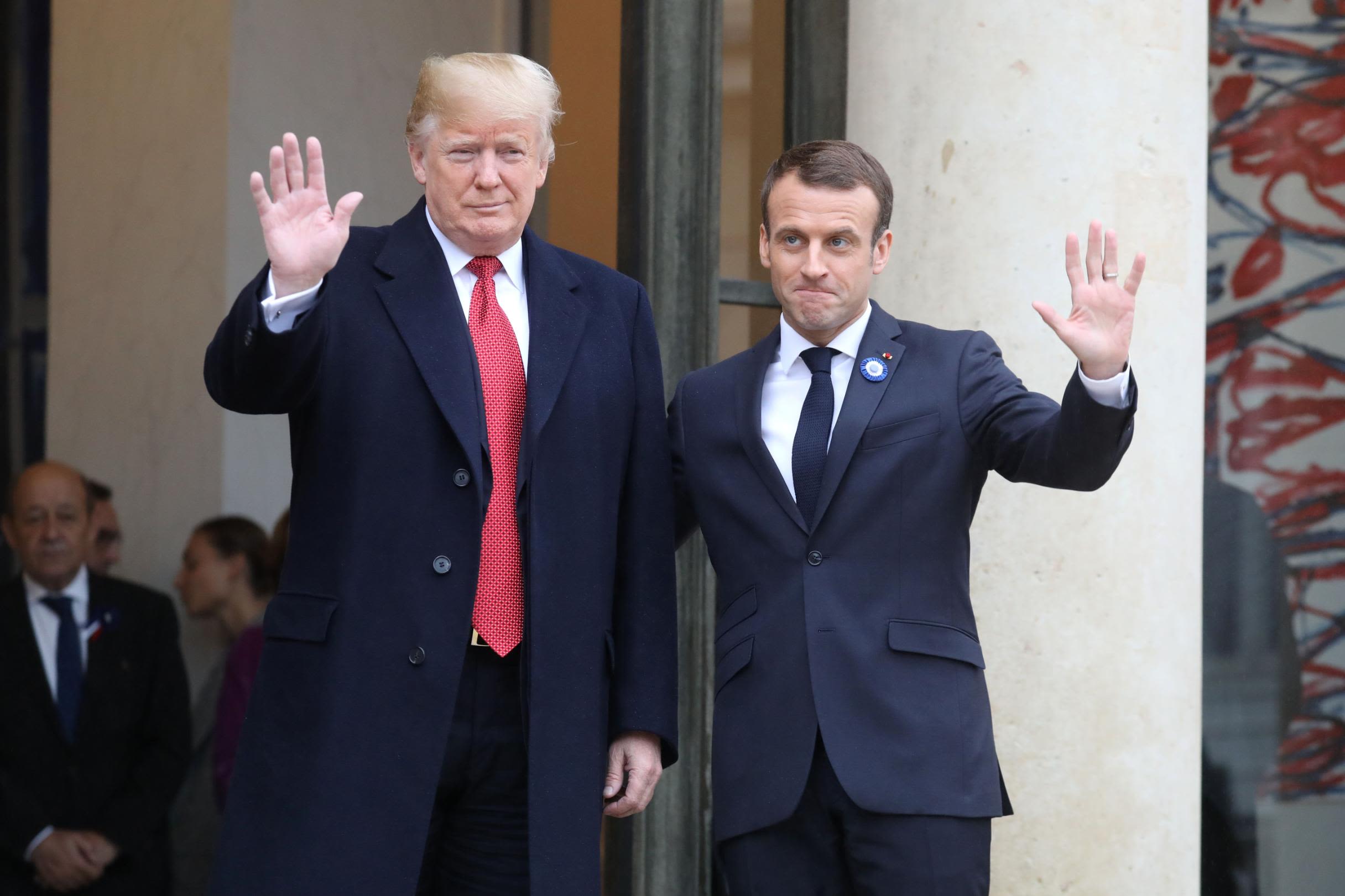
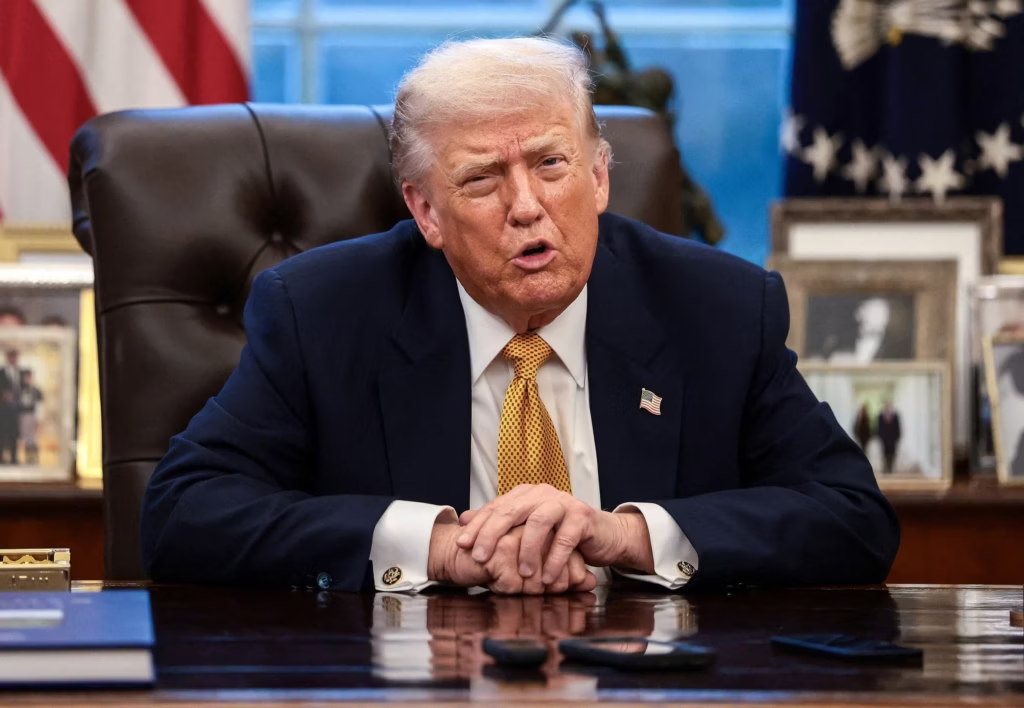
U.S. President Donald Trump has drawn sharp criticism in France after mocking French President Emmanuel Macron and making remarks about his wife, Brigitte Macron.
The controversy erupted after Trump, during a private lunch on Wednesday, ridiculed Macron while criticizing NATO allies for not participating in the war against Iran. Trump reportedly imitated a French accent and claimed that Macron’s wife “treats him extremely badly.”
The remarks quickly triggered backlash across the French political spectrum. Yael Braun-Pivet, president of France’s lower house of parliament, condemned the comments, describing them as inappropriate given the gravity of global events.
“Honestly, it’s not up to par,” she said, stressing that discussions about international conflicts should not be overshadowed by mockery.
Even political opponents of Macron came to his defence. Manuel Bompard, a leading figure in the France Unbowed party, said that while he often disagrees with Macron, Trump’s remarks crossed a line.
“You are aware of the extent of my disagreements with the president, but for Donald Trump to speak to him like that and to speak of his wife in such a manner—I find that absolutely unacceptable,” Bompard stated.
French newspaper Le Figaro described the episode as “another controversial outburst” from Trump.
The remarks were captured in a video briefly posted on the White House YouTube channel before access was restricted. In the video, Trump referenced a May 2025 incident involving Brigitte Macron during a trip to Vietnam, which had previously been dismissed by Macron as misinformation.
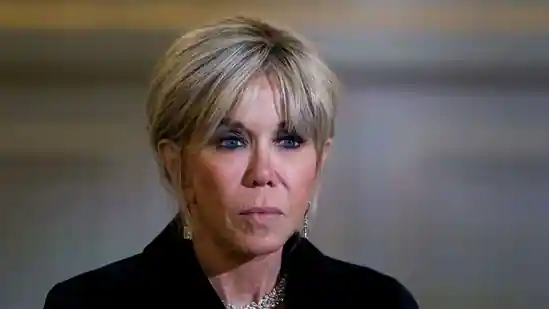
At the time, Macron rejected claims of any domestic dispute, stating that the moment was taken out of context and that the couple were “joking as we often do.”
Trump also claimed he had asked France for military assistance in the Gulf, quoting Macron as declining involvement until after the conflict. He then used the exchange to criticize NATO, calling the alliance a “paper tiger” and questioning its reliability in major conflicts.
The comments add to growing tensions between the United States and its traditional allies, especially as debates continue over NATO’s role and commitments in ongoing global conflicts.
What you should know
Donald Trump’s remarks have intensified diplomatic tensions between the U.S. and France, highlighting ongoing disagreements over NATO’s role and international military cooperation.
His criticism reflects a broader skepticism within parts of the U.S. leadership about alliance commitments, especially during conflicts involving Iran. The backlash from French leaders, including Macron’s critics, shows rare political unity in defending national dignity.
Such incidents can strain diplomatic relations and complicate cooperation between Western allies at a time when global security challenges require coordinated responses.