The African Democratic Congress (ADC) has raised concerns over what it described as a calculated attempt to impose a one-party state ahead of the 2027 general elections, accusing the ruling All Progressives Congress (APC) of using the Independent National Electoral Commission (INEC) to weaken opposition parties.
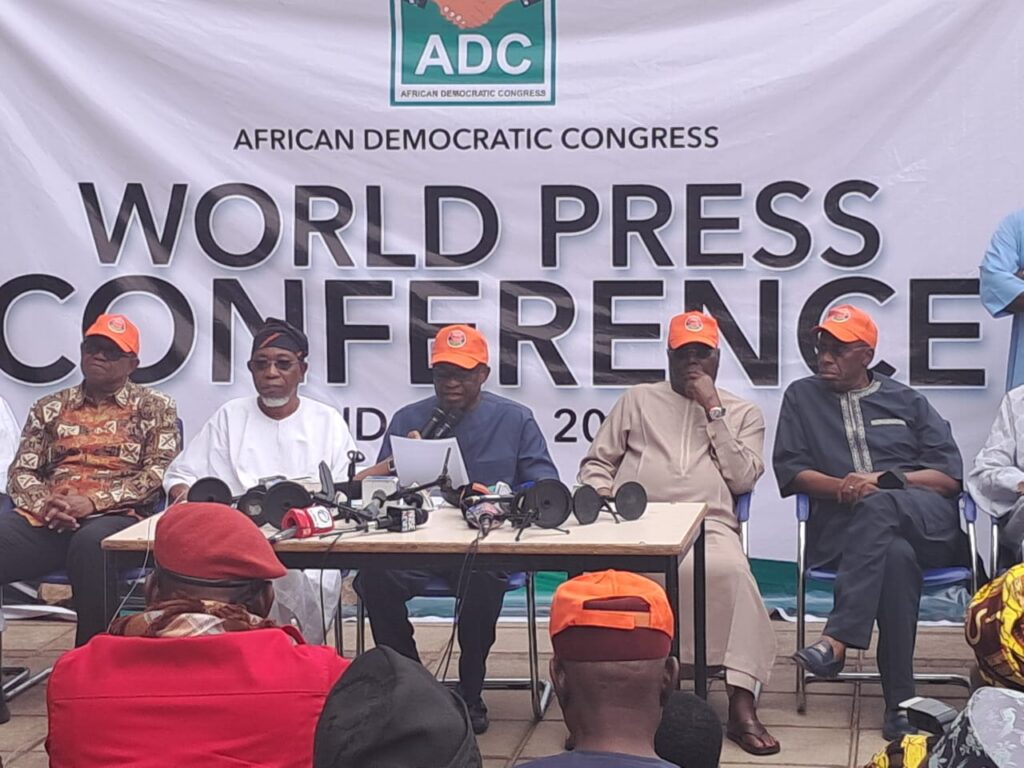
Speaking at the Yar’Adua Centre in Abuja, the ADC National Chairman, David Mark, called for the immediate removal of INEC Chairman, Amupitan Joash, over alleged bias and unlawful conduct.
The development follows INEC’s decision to delist key ADC officials, including Mark and National Secretary Rauf Aregbesola, citing compliance with a court order. The commission, through its National Commissioner, Mohammed Haruna, explained that the move was intended to maintain the status quo pending the determination of an ongoing case.
The ADC has been grappling with an internal leadership crisis since 2025, after a new National Working Committee led by Mark emerged. The dispute stems from disagreements over the tenure of former National Chairman Ralph Nwosu, whose term officially ended in August 2022 but whose involvement in the leadership transition triggered divisions within the party.
Addressing journalists, Mark alleged that recent developments form part of a broader effort to undermine democratic freedoms and restrict political competition ahead of the next general elections.
“The agenda is very clear: to create a situation where, in 2027, President Bola Ahmed Tinubu emerges as the only option left for the people, despite the widespread suffering and wanton killings going on across the country. The twin challenge of deepening poverty and a worsening security situation in the country did not just happen. They are direct consequences of the failure of this government. They know that Nigerians will not want this to continue. They know Nigerians will vote them out. This is why they would do anything to hang on to power by hook or crook,” he said.
Mark maintained that the leadership change within the ADC followed due process, including a National Executive Committee meeting held on July 29, 2025, which was monitored by INEC officials. He added that the resolutions from that meeting, including the appointment of a caretaker committee, were formally communicated to the electoral body.
He also referenced the case involving Nafiu Bala, who, despite resigning earlier, later approached the court seeking recognition as the party’s chairman. According to Mark, INEC was already aware of the leadership changes before the legal action was initiated.
The ADC chairman further criticised INEC’s interpretation of the “status quo ante bellum” directive issued by the Court of Appeal, arguing that the commission had misapplied the concept and created confusion within the party’s leadership structure.
“With its action, INEC has left no one in doubt that it has chosen the path of dishonour and has become complicit in undermining Nigeria’s democracy. It can therefore no longer be trusted,” Mark said.
He accused the commission of acting in contempt of court and described its actions as a direct threat to democratic participation and citizens’ rights.
Mark also questioned the ruling party’s confidence, addressing Bola Tinubu directly, and asking why the government would allegedly seek to weaken opposition parties despite controlling a majority of political structures across the country.
He warned that INEC’s actions could affect the ADC’s participation in upcoming elections in Osun and Ekiti states, as well as disrupt its scheduled congresses and national convention in April 2026.
Despite the challenges, Mark insisted that the ADC would proceed with its planned activities, maintaining that there is no legal requirement for INEC’s presence at internal party processes.
What you should know
The ADC-INEC dispute highlights growing political tension ahead of Nigeria’s 2027 elections.
At the heart of the crisis is a leadership battle within the ADC, now complicated by legal interpretations and INEC’s administrative actions. Allegations of bias against the electoral body raise concerns about public trust in the electoral process.
The outcome of this conflict could influence opposition strength, election credibility, and the overall democratic landscape in Nigeria as parties begin early positioning for 2027.