Nigeria’s Marine and Blue Economy sector has recorded a dramatic turnaround, with agencies under the ministry generating ₦1.83 trillion in revenue in 2025 — a staggering 160% surge from the ₦700.79 billion posted in 2023.
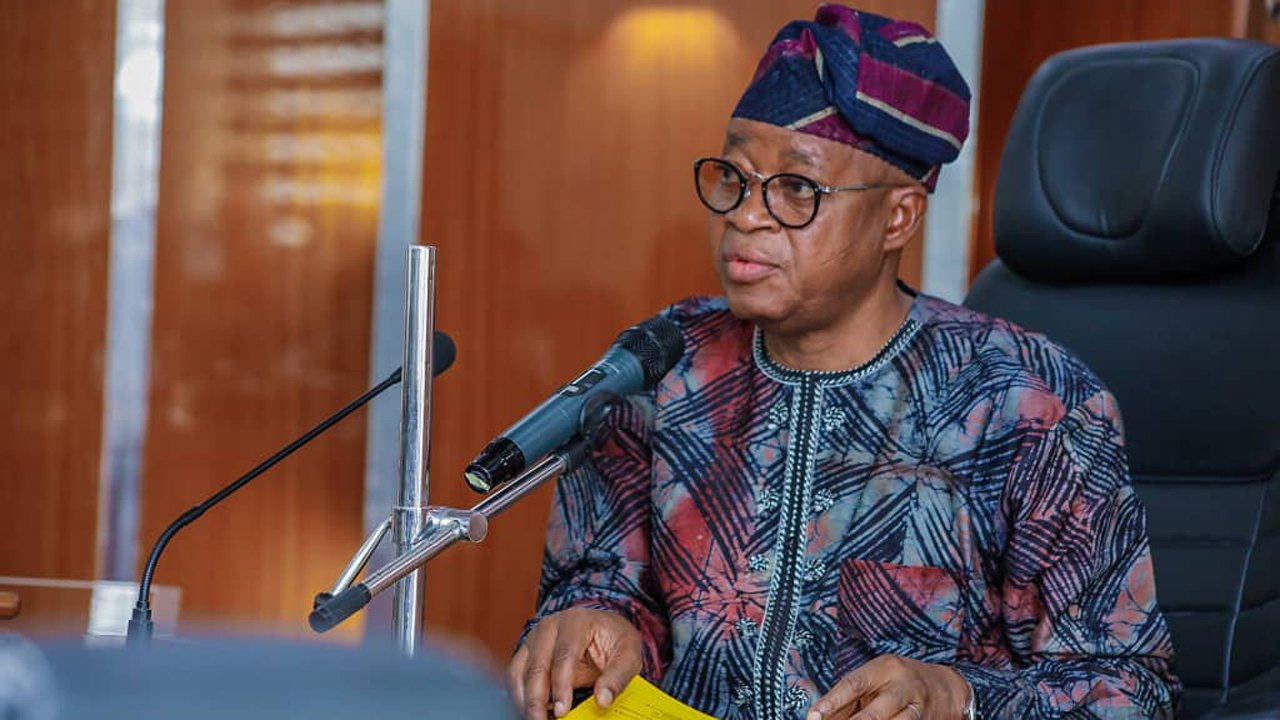
Minister Adegboyega Oyetola disclosed the figures on Thursday during the 2026 First Quarter Citizens and Stakeholders’ Engagement, Sectoral Performance Review, and Ministerial Management Retreat in Lagos, framing the jump as concrete proof that sustained reforms are finally delivering results in one of the country’s most strategic but historically underperforming sectors.
“In 2023, our agencies generated ₦700.79 billion. By the end of 2025, this figure had risen to approximately ₦1.83 trillion. This remarkable achievement is the result of deliberate and sustained reforms,” Oyetola told stakeholders and agency heads gathered for the high-level review.
The minister attributed the sharp growth to a combination of strengthened regulatory oversight, improved revenue assurance mechanisms, digitalisation of key processes, and a determined crackdown on revenue leakages that had long drained the sector. He emphasised that the gains reflect a broader shift toward greater institutional discipline, transparency, and efficiency.
The performance boost comes as the Federal Government ramps up efforts to fully harness Nigeria’s vast blue economy potential — encompassing shipping, ports, fisheries, coastal tourism, offshore resources, and related maritime activities.
In 2024, the ministry rolled out a three-pronged strategy aimed at hitting an ambitious target of ₦2 trillion in annual revenue by 2027.
The pillars include:
– Blocking revenue leakages through automation and technology
– Enhancing yields from existing sources
– Developing new income streams across the blue economy value chain
Key measures deployed so far involve automating revenue collection systems, rolling out revenue assurance technologies, and forging public-private partnerships to expand capacity and attract fresh investment.
Oyetola described the stakeholder engagement as a deliberate platform to align policy, implementation, and public expectations, while also using the occasion to sign performance bonds with heads of maritime agencies — a clear signal that accountability will remain central to sustaining the momentum.
The revenue story is part of a larger reform package. The minister highlighted ongoing port modernisation efforts, which are expected to improve efficiency, reduce bottlenecks, and boost throughput at Nigeria’s key gateways.
He also pointed to the recent activation of the long-dormant Cabotage Vessel Financing Fund (CVFF) — a scheme established over two decades ago but only now moving toward actual disbursement to indigenous shipowners.
The fund is designed to help local operators acquire modern vessels, thereby increasing Nigerian participation in coastal and inland waterway transportation and reducing reliance on foreign-flagged ships.
“These reforms are boosting investor confidence in the marine and blue economy sector,” Oyetola said, adding that the progress demonstrates improved governance and a more structured approach to sector development.
The marine and blue economy has traditionally been viewed as a sleeping giant — rich in potential but hampered by leakages, weak enforcement, outdated infrastructure, and limited local capacity.
The 160% revenue growth over two years suggests that policy interventions introduced since Oyetola assumed office in 2023 are beginning to bite, even as the ministry itself has complained about modest capital budget releases in previous years.
Analysts will be watching closely to see whether the trajectory can be maintained amid global shipping volatility, domestic economic pressures, and the need for massive infrastructure upgrades.
Reaching the ₦2 trillion mark by 2027 will require not only sustaining current reforms but also scaling up private investment and completing critical projects such as deeper port dredging, digital port community systems, and expanded fisheries infrastructure.
For now, Thursday’s disclosure in Lagos offers a rare positive headline from Nigeria’s maritime space: measurable progress driven by transparency, technology, and tighter oversight.
Whether this marks the beginning of a sustained blue economy boom will depend on continued execution and the ability to translate revenue gains into broader economic multipliers — jobs, local shipbuilding, enhanced trade facilitation, and food security from marine resources.
As Oyetola put it, the gathering itself reflected “a governance approach that is inclusive, transparent, and results-driven.” The numbers, at least for 2025, appear to back that claim.
WHAT YOU SHOULD KNOW
Nigeria’s Marine and Blue Economy sector has achieved a remarkable turnaround, generating ₦1.83 trillion in 2025 — a 160% increase from ₦700.79 billion in 2023.
The key factor driving this success is the deliberate policy reforms focused on transparency, strengthened regulatory oversight, digitalisation, blocking revenue leakages, and improved operational efficiency.
With a clear three-pronged strategy in place, the ministry is on track to hit its ₦2 trillion annual revenue target by 2027, signalling stronger governance and growing investor confidence in the sector.