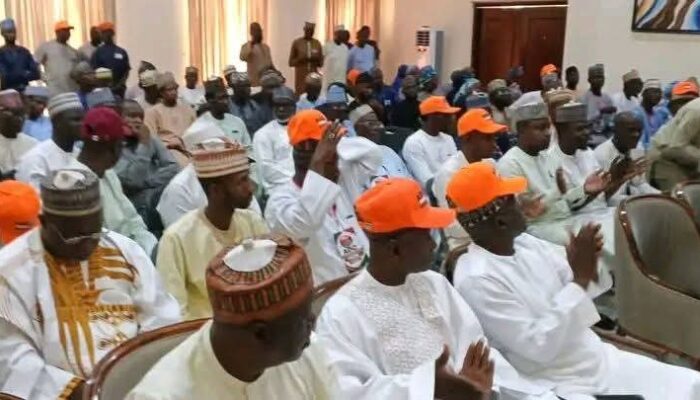
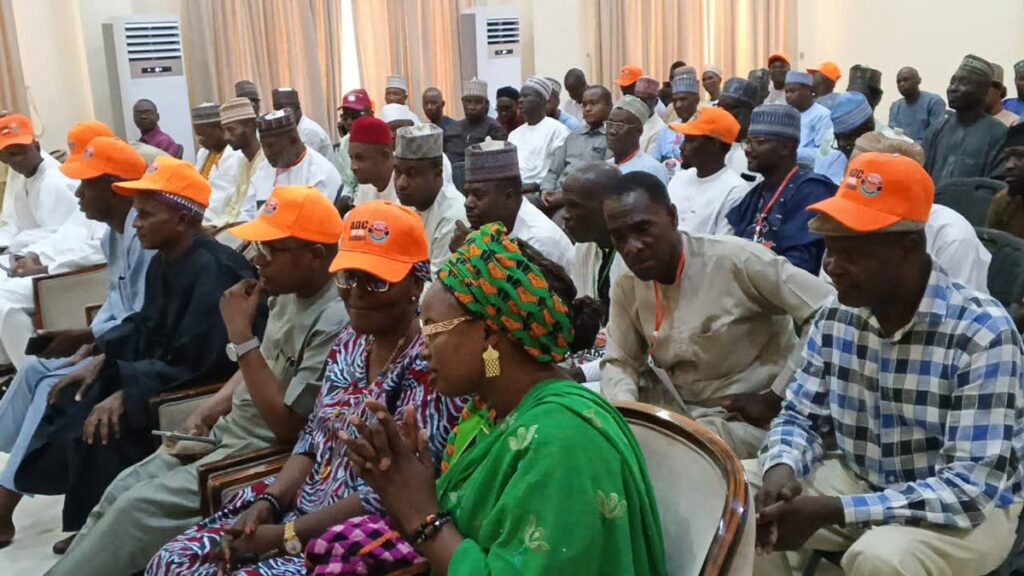
The African Democratic Congress has screened more than 70 governorship aspirants ahead of its 2027 primary elections, with party members commending the exercise as transparent, professional and consistent with democratic principles.
The screening exercise, held in Abuja on Monday, drew aspirants from several states including Adamawa, Delta, Benue, Zamfara, Plateau, Bauchi, Jigawa, Lagos, Nasarawa and Rivers.
Speaking after appearing before the screening panel, Mohamed Onawo described the process as detailed and fair.
Onawo, who also chairs the Senate Committee on Arts, Culture and Creative Economy, said the committee members demonstrated professionalism in reviewing aspirants’ credentials and raising critical governance-related questions.
“The committee members were professional, thorough and fair in assessing documents and asking relevant questions,” he said.
The senator expressed optimism about the ADC’s chances in the 2027 governorship elections, particularly in Nasarawa State, citing his political experience and growing public support for the party.
He also argued that internal crises affecting some major political parties had created opportunities for the ADC to strengthen its national electoral presence.
Onawo further backed consensus arrangements in party primaries, noting that such a strategy could promote unity and reduce post-primary disputes.
“I have total confidence in the leadership of the party, and I believe the ADC will emerge stronger ahead of the 2027 elections,” he added.
Former Adamawa State Governor, Mohammed Jibrilla, popularly known as Bindow, also praised the exercise.
He described the screening as transparent, intellectually engaging and professionally handled.
According to him, the panel ensured all aspirants were subjected to equal scrutiny.
In Delta State, governorship aspirant Great Ogboru used the opportunity to unveil part of his development blueprint.
Ogboru promised what he described as an equal opportunity development initiative designed to guarantee dedicated monthly funding for grassroots projects across all local government areas.
He said the policy would ensure balanced development and prevent marginalisation in project execution.
Former Lagos governorship candidate Gbadebo Rhodes-Vivour described the screening as a critical institutional safeguard.
According to him, such processes help political parties avoid future legal disputes over candidate eligibility.
“Having participated in similar exercises previously, I am pleased with the professionalism and thoroughness of the committee,” he said.
Rhodes-Vivour urged Nigerians to support leaders focused on public service rather than personal enrichment.
He also expressed confidence in his political prospects for 2027, citing sustained grassroots mobilisation, coalition-building efforts and strategic political engagement.
The ADC’s Deputy National Publicity Secretary, Queen Okiyi, confirmed that more than 70 governorship aspirants had already been screened.
She disclosed that the exercise would continue on Tuesday for the remaining contestants.
“The screening has come to an end today. The first panel screened about 34 governorship aspirants. In the second hall, we had over 35. In total, we have over 70 governorship aspirants screened, and the exercise continues tomorrow,” she said.
Among those screened were former Attorney-General of the Federation, Abubakar Malami; Senator Mohammed Jibrilla; Great Ogboru; Senator Mohamed Onawo; Gbadebo Rhodes-Vivour; Shehu Ahmad Issa; and retired General John Surai.
Others included Adeboyega Adegoke, Haliru Jika, Kashim Geidam, Musa Ahmed and Peter Adejo.
The ADC has recently intensified efforts to position itself as a credible alternative political platform ahead of the 2027 general elections amid growing dissatisfaction within some of Nigeria’s dominant political parties.
What You Should Know
The screening of over 70 governorship aspirants reflects the ADC’s growing political relevance as it seeks to challenge established parties ahead of the 2027 elections.
The participation of prominent political figures such as Abubakar Malami, Mohammed Jibrilla and Gbadebo Rhodes-Vivour signals increasing interest in the party as an alternative platform.
Transparent screening processes are crucial for strengthening internal democracy and reducing disputes that often follow party primaries in Nigeria.
If sustained, the ADC’s institutional reforms and broadening support base could significantly reshape political alignments in several states before the next general elections.