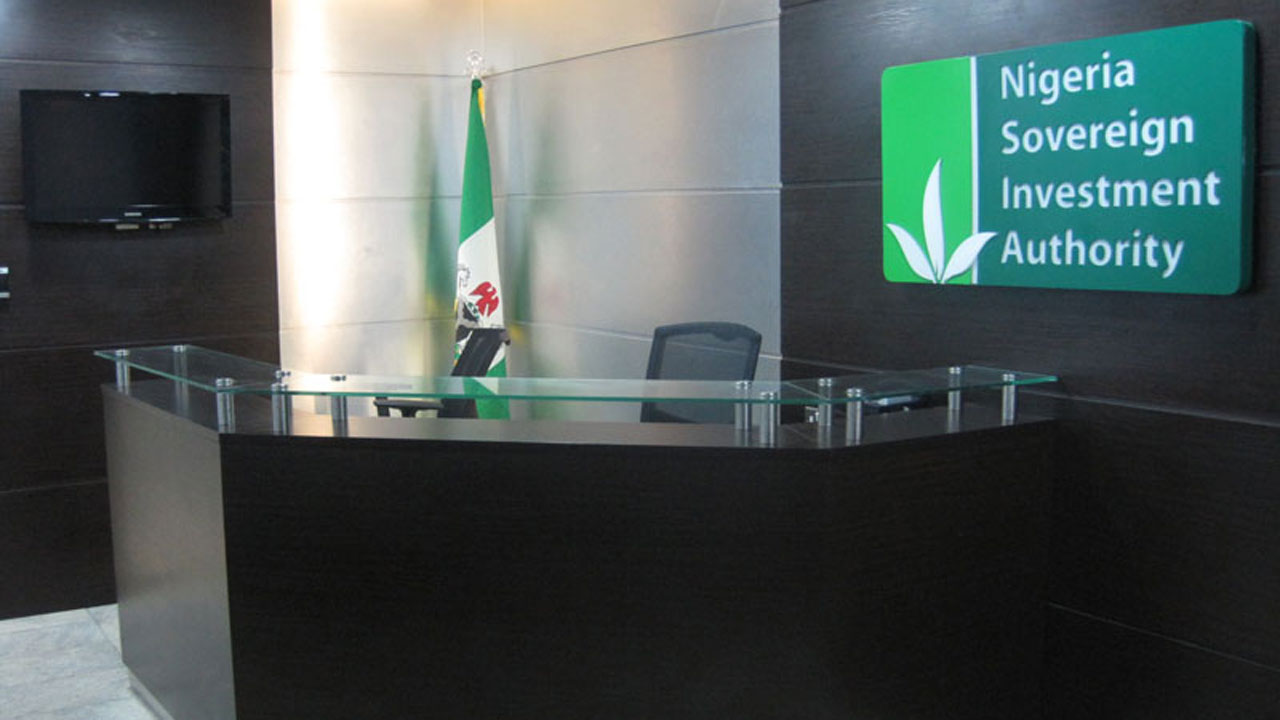
The Nigeria Sovereign Investment Authority (NSIA), delivered robust growth in 2025, with total assets rising to ₦4.91 trillion and core comprehensive income hitting a record ₦478.8 billion, despite a sharp unrealised foreign exchange loss from the naira’s appreciation.
Managing Director and CEO Aminu Umar-Sadiq unveiled the audited 2025 results on Thursday in Abuja, describing the performance as evidence of a resilient, diversified investment strategy that continued to deliver despite global volatility and domestic economic pressures.
Total assets rose 10.9 percent from ₦4.42 trillion in 2024 to ₦4.91 trillion, while net asset value climbed to ₦4.88 trillion. In dollar terms, net assets reached $3.4 billion, reflecting a stronger 19.8 percent increase, helped by the naira’s appreciation.
Core operating income grew 5.5 percent to ₦525.3 billion from ₦498 billion the previous year. The jump was propelled by a dramatic 138 percent surge in returns from externally managed investment portfolios and a 10 percent rise in interest income.
Overall, core total comprehensive income increased 17.4 percent to ₦478.8 billion — the highest since the Authority’s inception — while return on equity improved markedly to 10.5 percent from 7.2 percent, and return on assets stood at 9.9 percent.
Umar-Sadiq highlighted the Authority’s tight cost discipline, maintaining a low cost-to-income ratio of just 4.2 percent despite persistent inflationary pressures. “This performance reflects deliberate efforts to actively deploy capital across a diversified set of investments, supported by strong risk management and a focus on long-term value creation,” he said.
Yet the results were not without headwinds. The NSIA recorded a net unrealised foreign exchange loss of ₦322.4 billion after the naira appreciated by 6.5 percent against the US dollar in 2025 — a sharp reversal from the large gains posted in 2024 when the currency depreciated dramatically.
The loss, purely an accounting translation effect given the naira’s role as the statutory reporting currency, trimmed the headline bottom line but did not undermine the underlying operational strength.
Beyond the balance sheet, Umar-Sadiq pointed to tangible progress in sectors critical to Nigeria’s development. Through its MedServe platform, the NSIA is expanding cancer care and advanced diagnostic centres nationwide, with ongoing support from partners including the International Finance Corporation (IFC) to scale oncology and diagnostic services in underserved communities.
In renewable energy, the RIPLE platform (Renewables Investment Platform for Limitless Energy) continues to grow, powering initiatives such as clean energy solutions for healthcare facilities and advancing solar manufacturing capacity.
The Authority is also deepening its infrastructure push. Umar-Sadiq disclosed active collaboration with the World Bank on the planned **Nigeria Infrastructure Finance and Guarantee Facility**, an integrated platform designed to unlock large-scale projects in power, airports, seaports, and transmission infrastructure.
The facility will bundle project preparation, viability gap funding, direct financing, and guarantee mechanisms to de-risk investments and attract both domestic and international capital. “What we are trying to establish is a platform that can make these projects bankable and executable at scale,” Umar-Sadiq explained.
He linked the initiative to Nigeria’s improved global standing following its removal from the FATF grey list in October 2025. The delisting, after successful completion of an action plan on anti-money laundering and counter-terrorism financing reforms, has opened doors to a broader pool of global investors and reduced perceived risks for partners.
“With Nigeria’s removal from the grey list, we are now able to engage a broader pool of global investors. This significantly enhances our ability to attract strategic partners to co-develop and co-finance critical projects in the country,” he added.
The 2025 results come against a backdrop of mixed macroeconomic signals. While the naira posted its first annual appreciation in over a decade — closing the year stronger after years of depreciation — inflation remained elevated, and global markets continued to grapple with uncertainty.
Umar-Sadiq credited the Authority’s three-pillar structure — the Stabilisation Fund, Future Generations Fund, and Nigeria Infrastructure Fund — along with disciplined asset allocation and active management for the strong showing.
“Our 2025 results demonstrate the resilience of our investment strategy and our ability to deliver consistent returns despite a volatile global environment. We have continued to grow our asset base, strengthen our balance sheet, and generate stable earnings across our diversified portfolio,” he stated.
Looking ahead, the NSIA intends to sustain momentum through further diversification, efficient capital deployment, and deepened strategic partnerships, all aimed at driving long-term economic development and delivering measurable national impact.
For a sovereign wealth vehicle established to safeguard excess hydrocarbon revenues, build savings for future generations, and catalyse infrastructure, the 2025 numbers underscore a maturing institution increasingly focused not just on preserving wealth but on deploying it to address Nigeria’s most pressing developmental gaps — from healthcare access and clean energy to bankable mega-projects.
As Umar-Sadiq put it, the focus remains on “sustaining growth through diversified investments, efficient capital deployment and strategic partnerships aimed at driving long-term economic development and national impact.”
WHAT YOU SHOULD KNOW
Nigeria’s Sovereign Investment Authority (NSIA) delivered a strong 2025 performance, growing total assets to ₦4.91 trillion and achieving a record core comprehensive income of ₦478.8 billion, with returns on equity and assets improving to 10.5% and 9.9% respectively.
The standout message is resilience amid volatility: despite a ₦322.4 billion unrealised forex loss caused by the naira’s 6.5% appreciation, the Authority maintained tight cost discipline (4.2% cost-to-income ratio) and posted solid operational growth driven by diversified investments and strong returns from external portfolios.
Looking ahead, NSIA is positioning itself to play a bigger role in national development through expanded healthcare and renewable energy platforms, and by launching the Nigeria Infrastructure Finance and Guarantee Facility in partnership with the World Bank — a move boosted by Nigeria’s removal from the FATF grey list.