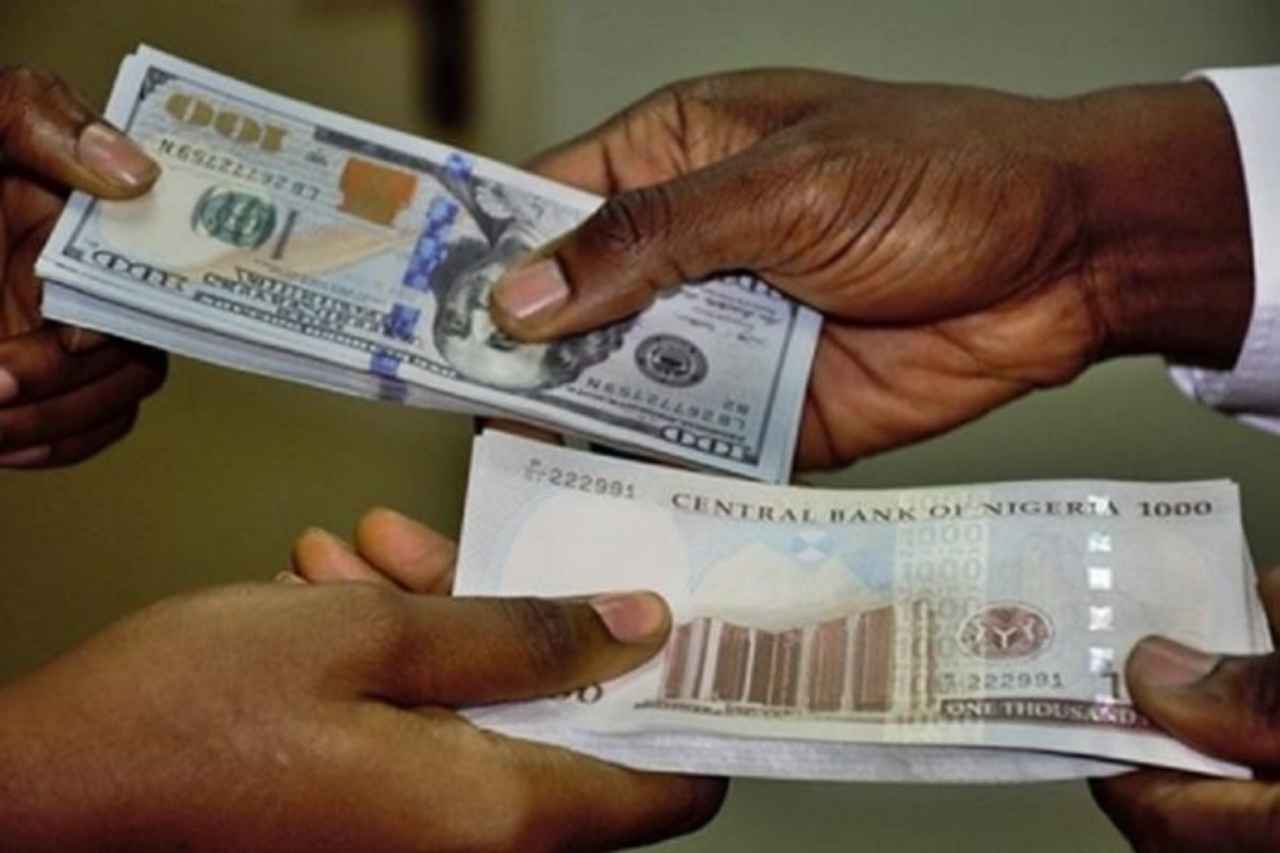
The Nigerian naira traded at ₦1,346.90 to the US dollar in the official market on Tuesday, extending a stretch of relative calm that has now defined trading for much of the past week, even as the parallel market continued to command a premium of roughly ₦53 over the official rate.
Figures from the Nigerian Foreign Exchange Market (NFEM), the CBN-supervised window where authorized dealers transact, put the official rate at ₦1,346.49 per dollar, a level essentially unchanged from where the naira closed on Friday.
A separate live benchmark tracking real-time USD/NGN activity showed the pair near ₦1,347.26 on Tuesday morning, reinforcing the sense that the currency has settled into a tight band rather than drifting in either direction.
The NFEM rate, according to the Central Bank of Nigeria, is derived from the volume-weighted average of all transactions executed in the official window on a given day, a methodology introduced to give the published rate a firmer grounding in actual trading activity rather than indicative quotes.
That methodology has, in recent sessions, told a story of stability. On August 21, the NFEM rate stood at ₦1,346.49 per dollar, with the market’s official closing rate coming in at ₦1,346.90.
Within that session, the naira traded in a range of ₦1,342 to ₦1,348, a spread of just six naira, modest by the standards of a market that, as recently as earlier this year, saw much sharper intraday swings.
Traders and analysts have pointed to two factors behind the currency’s steadier footing: improved foreign exchange liquidity in the official market and a stronger reserve buffer at the central bank.
CBN data cited in recent market reports placed Nigeria’s external reserves at approximately $52.66 billion as of August 19, giving the apex bank more room to defend the naira and meet demand without the kind of scarcity that has historically pushed buyers toward the street market.
Away from the official window, the picture remains less generous for dollar buyers. The parallel or “black” market quoted the dollar at approximately ₦1,400 on Tuesday, according to the latest Aboki Forex data, putting the premium over the official closing rate at about ₦53.10.
At that rate, the arithmetic is straightforward for Nigerians converting cash informally: $100 fetches roughly ₦140,000, while $1,000 comes to about ₦1.4 million figures that underline just how sensitive everyday transactions, from school fees abroad to online subscriptions, remain to which market a buyer can access.
Even so, market watchers note that a roughly ₦53 gap is narrow by recent historical standards. In periods of acute naira pressure, the spread between official and parallel rates has at times stretched far wider, reflecting scarcity, speculative demand, and a loss of confidence in the official window’s ability to meet real demand.
The current gap, by contrast, suggests the two markets are converging rather than pulling apart a dynamic analysts generally read as a sign of improving, if incomplete, market confidence.
The CBN does not officially recognize the parallel market, directing individuals and businesses seeking foreign exchange to transact through licensed banks. But in practice, the rate any individual Nigerian actually receives can differ meaningfully from the headline NFEM figure, whether they go through a bank, a Bureau de Change, or a street operator.
Several variables come into play: the size of the transaction, the buyer’s location, how much dollar liquidity a particular outlet has on hand at that moment, and broader market conditions on the day.
Parallel-market rates in particular are not fixed; they can move several times within a single day as demand and supply shift, meaning a quote obtained in the morning may not hold by the afternoon.
Tuesday’s figures extend a pattern that has held for roughly a week: a naira that has stopped losing ground and, by some measures, posted modest gains, alongside a parallel market that continues to price in a persistent if not widening risk premium.
For now, the combination of firmer reserves and steadier official-market liquidity appears to be doing what months of policy adjustments have aimed for: keeping Nigeria’s currency market boring, in the best possible sense of the word.
Whether that holds will depend, as it always does in Lagos’s parallel-market alleys and Abuja’s policy corridors alike, on how long the dollar supply keeps up with demand.
WHAT YOU SHOULD KNOW
The naira closed at ₦1,346.90/$ officially and ₦1,400/$ on the street on August 25, 2026, a gap of about ₦53, one of the narrower spreads seen in months.
Improved dollar liquidity and stronger external reserves (~$52.66bn) are keeping the currency stable rather than sliding, signaling growing, though still incomplete, convergence between Nigeria’s official and parallel FX markets.
Anyone converting cash should still expect the actual rate to vary by bank, BDC, or location and to shift during the day.