The Trump administration has escalated its economic war against Iran, unveiling a sweeping new sanctions campaign as the six-month-old military conflict between the U.S., Israel, and Iran has settled into a stalemate.
Treasury Secretary Scott Bessent laid out the initiative branded “Operation Economic Outcast” at a press conference Monday, framing it as a financial counterpart to the D-Day invasion.
Bessent warned countries to sever financial ties with Iran or risk losing access to the U.S. dollar system. He told reporters Iran now faces a stark binary: total isolation and a subsistence economy, or a route back into the global economic fold.
Treasury also broadened its legal authority to sanction any person, anywhere, operating in specific sectors of Iran’s economy digital assets, technology, gold, aviation, and shipping.
Alongside that expanded authority, the department named roughly 60 entities, individuals, and vessels tied to Iran’s nuclear and missile programs, its cyber operations, and its oil revenue generation.
Treasury said the targets include a web of brokers, firms and so-called shadow-fleet vessels operating out of the UAE, Hong Kong, China, Singapore, Switzerland and elsewhere, all allegedly funneling Iranian oil money to the IRGC-Qods Force and other regime elements.
Rather than announcing immediate, sweeping penalties on Iran’s largest trading partners, Bessent’s remarks functioned more as an ultimatum. He said President Trump is personally phoning world leaders to demand they cut ties with Tehran, though he declined to name which countries or set a deadline.
The Washington Post characterized the rollout as sweeping in rhetoric but one that delayed the campaign’s toughest measures.
China, historically the largest buyer of Iranian crude even under existing sanctions, is widely seen as the eventual target of any secondary sanctions.
Asked whether Washington was pulling punches on Beijing, Bessent insisted no nation is beyond the reach of U.S. sanctions while stressing the administration prefers quiet diplomacy to set expectations with each country individually. Notably, Treasury has already sanctioned Chinese entities accused of processing Iranian oil.
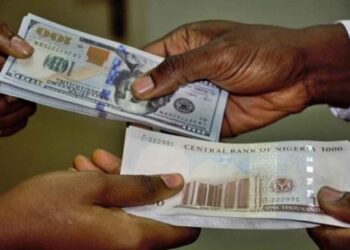
The economic squeeze is already visible inside Iran. The country’s rial has plunged past 2 million to the dollar amid anticipation of the new measures, and Iran’s Statistical Center now puts inflation at nearly 90%. One Iranian woman told NPR that many ordinary citizens have resorted to buying groceries on credit.
Tehran, for its part, has vowed to respond to the sanctions push “in a seismic manner,” according to reporting cited by NPR, a signal that the standoff is far from over.
Bessent’s messaging leaned heavily on martial metaphor: “economic D-Day,” “economic asphyxiation,” and an “economic onslaught” meant to sever every pipeline keeping Iran connected to global finance until, in his words, Tehran stands alone.
Whether that rhetoric translates into the kind of coordinated multilateral squeeze that forced Iran to the table during past sanctions eras or instead becomes another chapter in a decades-long, largely unresolved economic standoff will likely hinge on how Beijing, and other major buyers of Iranian oil, respond to Washington’s private overtures in the weeks ahead.
WHAT YOU SHOULD KNOW
Washington has launched its most aggressive economic pressure campaign against Iran yet, “Operation Economic Outcast,” sanctioning nearly 60 entities and vessels while expanding its authority to target anyone, anywhere, dealing in Iranian oil, gold, tech, or shipping. But the operation’s real weight hasn’t landed yet.
Bessent gave countries, especially major buyers like China, a window to cut ties before facing secondary sanctions, without naming names or setting a deadline.
This is a warning shot dressed as a knockout blow; the harshest measures are still in reserve, even as ordinary Iranians already feel the squeeze through a collapsing rial and near-90% inflation.