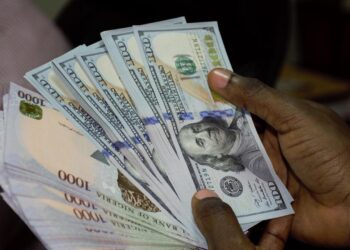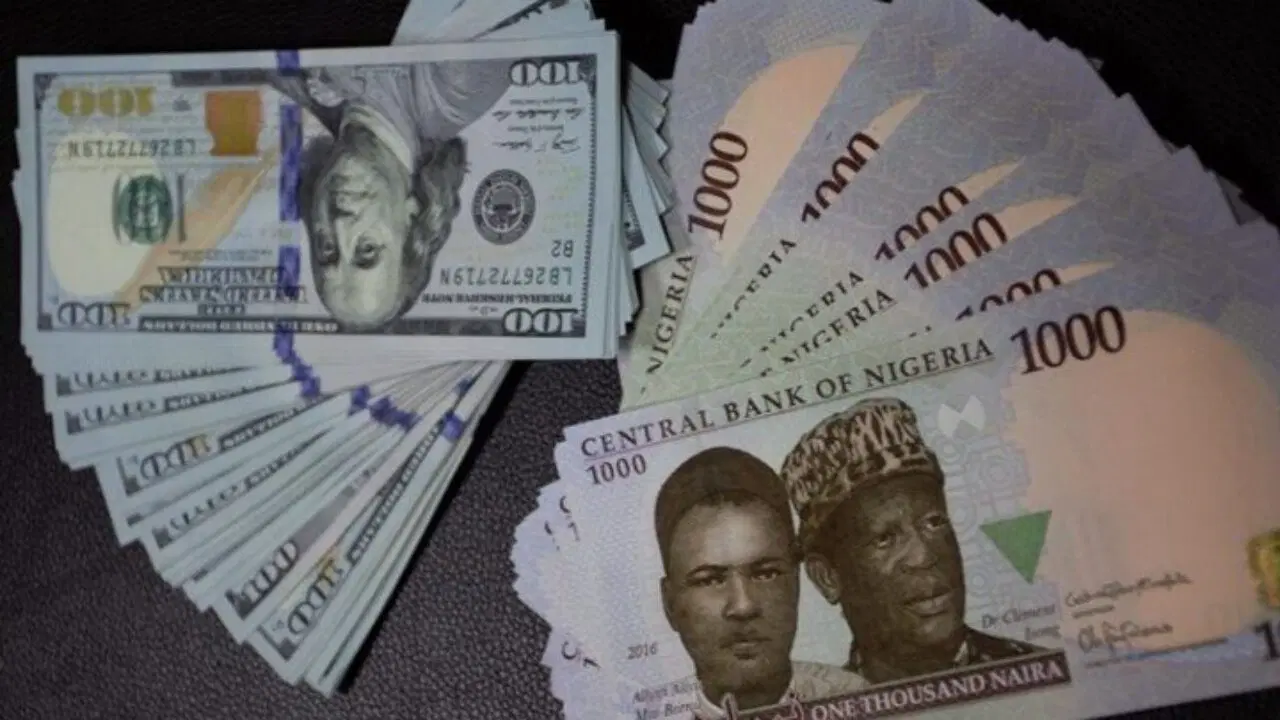
The Nigerian naira traded steadily on Thursday, holding firm against the US dollar in both the official and parallel markets, as dealers and investors closely monitored liquidity and foreign exchange demand.
Data from the Central Bank of Nigeria’s (CBN) exchange rate portal placed the official Nigerian Foreign Exchange Market (NFEM) rate at approximately ₦1,360 to ₦1,366 per dollar during the day’s trading sessions, a range that analysts described as broadly stable and consistent with the currency’s recent trajectory.
The NFEM, which serves as Nigeria’s official benchmark for foreign exchange transactions, derives its rates from volume-weighted dealings in the interbank market, giving it a credibility that has grown significantly since the CBN’s reform-driven push toward greater market transparency in recent years.
The naira’s performance over the past several sessions has been largely confined to the ₦1,350–₦1,370 corridor in the official window, a relatively modest range that signals a degree of market discipline not always associated with Africa’s largest economy.
For a currency that endured dramatic depreciations and chronic volatility in earlier years, Thursday’s measured trading represented something of a quiet milestone.
“What we are seeing reflects improved confidence in the official market mechanism,” one Lagos-based currency analyst told this reporter. “When liquidity is adequate, and the CBN is consistent in its messaging, participants don’t need to panic-buy or hold dollars unnecessarily.”
Monetary authorities have in recent months intensified efforts to sustain stability in the foreign exchange sector, channelling improved dollar liquidity into the official window and working to ensure that authorized dealers have consistent access to foreign currency. Those efforts appear, at least for now, to be bearing fruit.
On the streets of Lagos, in the informal bureau de change stalls of Wuse Market in Abuja, and in commercial districts from Port Harcourt to Kano, dollar sellers quoted rates of between ₦1,395 and ₦1,405 per dollar on Thursday, with buying rates hovering around ₦1,385 per dollar, depending on location, transaction volume, and the mood of individual traders.
The spread between the official rate and the parallel market rate, at roughly ₦35 to ₦45 per dollar, is, by historical standards, strikingly narrow. Not long ago, that premium stretched into the hundreds of naira, a chasm that bred round-tripping, arbitrage abuses, and widespread distrust of the official rate.
The compression of that gap is widely regarded by economists as one of the more tangible signs of progress in Nigeria’s ongoing foreign exchange reform agenda.
“The convergence story is real,” said a senior economist at a Pan-African investment firm who declined to be named. “It doesn’t mean all problems are solved, but the structural incentive to bypass the official market has weakened considerably.”
Beneath the relative calm, however, demand pressures continue to simmer. Currency dealers on Thursday reported sustained appetite for dollars from importers seeking to settle trade invoices, businesses making offshore payments for services and licenses, and travelers preparing for international trips ahead of the mid-year holiday season.
That persistent demand, dealers say, is precisely what keeps the parallel market alive even as access to foreign exchange through official banking channels improves. For many small businesses and individuals, bureaucratic hurdles, documentation requirements, and processing delays at commercial banks still make the informal market the path of least resistance.
“The banks are better than before, yes,” one bureau de change operator in Lagos Island said. “But for someone who needs $500 today for a flight tomorrow, they are still coming to us.”
Nigeria’s foreign exchange market has undergone substantial transformation since the CBN moved decisively in 2023 to collapse multiple exchange rate windows into a unified, market-reflective rate.
That pivot, painful in its initial phase as the naira lost significant ground almost overnight, was designed to eliminate distortions, attract foreign investment, and restore confidence among portfolio investors who had long steered clear of naira-denominated assets.
Thursday’s subdued trading suggests those structural repairs are gradually taking hold, even if the job is far from complete. The economy still contends with import dependency, oil revenue volatility, and a current account susceptible to external shocks, all factors that will continue to test the naira’s resilience in the months ahead.
For now, however, the market is watching and, for the moment, holding.
WHAT YOU SHOULD KNOW
The Nigerian naira is holding steady, and that matters. On June 11, 2026, the currency traded at roughly ₦1,360–₦1,366 per dollar in the official market and ₦1,395–₦1,405 in the parallel market.
The headline story, however, is not the numbers themselves but what they represent: the gap between the official and black market rates has narrowed dramatically, a concrete sign that Nigeria’s foreign exchange reforms are working.