The House of Representatives has passed a bill seeking the establishment of state police forces across the country, advancing one of the most consequential constitutional reforms in recent memory.
The bill, identified as HB 617, sailed through the lower chamber via a manual voice vote, with an overwhelming 289 lawmakers voting in favor and only four opposing it, a margin that underscores the growing legislative consensus around the urgency of decentralizing policing in a country battered by worsening insecurity.
The push for state police does not exist in a vacuum. Nigeria has, in recent years, been gripped by a deepening security crisis that has stretched the federal police and military to their limits.
From the blood-soaked forests of the Northwest, where bandits and kidnappers operate with near impunity, to the insurgent-ravaged Northeast still scarred by decades of Boko Haram terrorism, and the Southeast, where separatist agitation has fueled sporadic violence, the nation’s centralized security architecture has faced mounting criticism for being too slow, too distant, and too detached from local realities.
It is against this grim backdrop that Thursday’s vote carries its full weight.
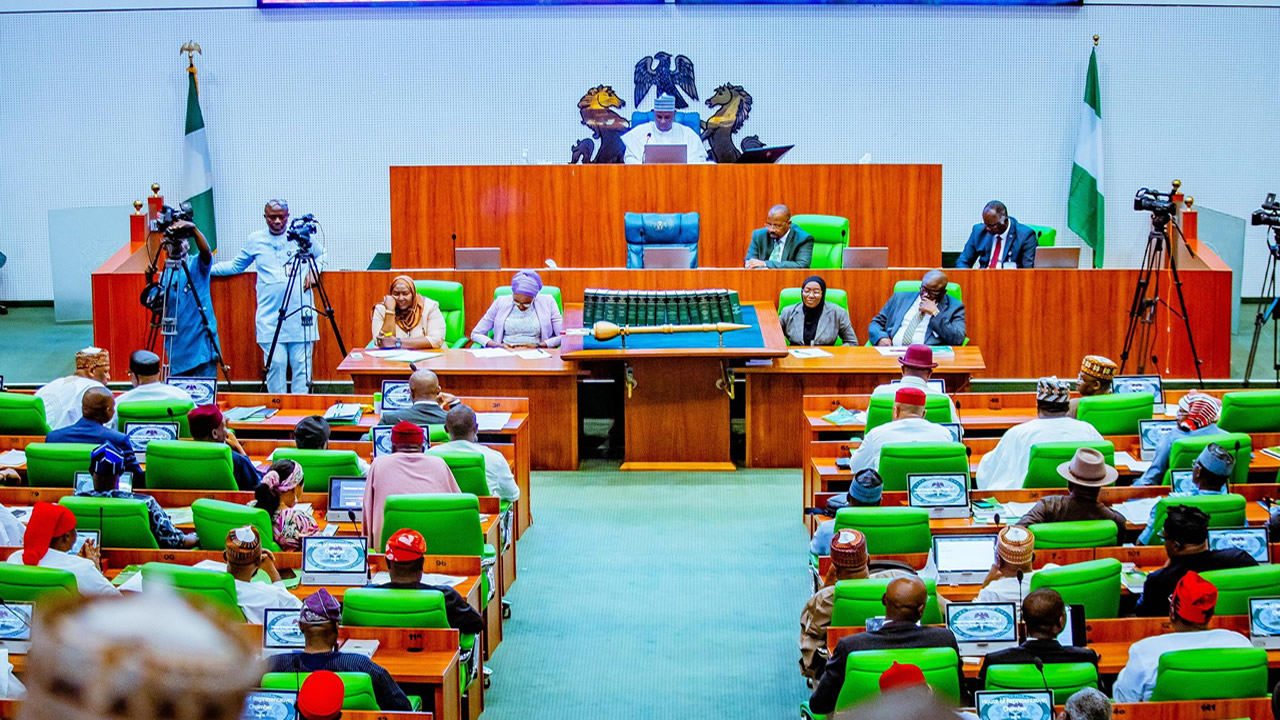
The session, presided over by Speaker Abbas Tajudeen, opened with remarkable attendance, over 290 lawmakers present, signaling the gravity with which the House regarded the day’s business.
Before proceeding to the substantive bill, the House Leader, Julius Ihonvbere (APC, Edo), moved a procedural motion to suspend the chamber’s rules, clearing the path for the House to rescind an earlier decision concerning the presentation of reports by the Committee on Constitution Review.
The motion, seconded by Minority Leader Fred Agbedi (PDP, Bayelsa), was adopted without contest, a rare show of bipartisan alignment that set the tone for the rest of the session.
Speaker Tajudeen was unambiguous about the House’s priorities. He told lawmakers that only the security-related amendment would be considered at this stage, describing it as both urgent and necessary.
He added that the decision to act swiftly was also driven by the need to avoid further legislative delay, noting that members would proceed on a two-week end-of-year recess following the session time, which he said would be used for proper review of remaining bills upon resumption.
A minor procedural hiccup emerged midway through proceedings when the House’s electronic voting system failed, compelling lawmakers to fall back on a manual voice vote. Despite the disruption, the mood in the chamber remained resolute.
The bill’s most forceful advocate on the floor was Deputy Speaker Benjamin Kalu, who also chairs the House Committee on Constitution Review. In a presentation that blended data, principle, and pragmatism, Kalu argued that Nigeria’s current centralized policing model with command authority heavily concentrated in Abuja had become a structural liability in the fight against crime and insecurity.
“A centralized policing system has slowed response times to emergencies,” he noted, making the case that state police would fundamentally change the equation. Officers recruited from and deployed within their home states, he argued, would bring an intimate knowledge of local languages, terrain, customs, and community dynamics that federal officers posted from distant states simply cannot replicate.
Kalu described the bill as more than a legislative measure; he called it a legacy reform, one that would strengthen national security beyond the reach of military intervention alone. Crucially, he stressed that it reflected a broad national consensus, a claim lent credence by the lopsided vote that followed.
Notably, the Speaker ruled that the bill would be considered not clause by clause, but by its long title, a procedural decision that expedited the process before the manual count was conducted and the result declared.
Thursday’s passage, while historic, is only the beginning of a long constitutional journey. With the House’s approval secured, the bill now moves to the Senate for concurrence.
Should the upper chamber endorse it, the proposal will then be transmitted to Nigeria’s 36 state Houses of Assembly, where it must be ratified by at least two-thirds of the states, a threshold of 24 assemblies, before it can advance further. Only after clearing that considerable hurdle will the amendment be forwarded to the president for assent and formally enacted into law.
The House subsequently adjourned sittings until July 7, giving lawmakers time to return to their constituencies and study the remaining constitutional amendment bills scheduled for consideration upon resumption.
Advocates of state police have long argued that Nigeria’s vast and diverse geography, spanning arid Sahelian north, dense rainforest south, and everything in between, demands a policing model that is nimble, locally embedded, and politically accountable at the sub-national level.
Thursday’s vote signals that the appetite for reform has reached a tipping point. Whether the Senate, the state assemblies, and ultimately the president align behind this bill will determine whether this moment becomes a turning point or another chapter in Nigeria’s long history of ambitious reforms that stalled before the finish line.
For now, however, the House has spoken loudly, and with near unanimity.
WHAT YOU SHOULD KNOW
Nigeria’s House of Representatives has taken a landmark step toward restructuring the country’s security architecture by passing a bill to establish state police, with 289 lawmakers voting in favour and only four opposing it.
The move, driven by escalating insecurity nationwide, seeks to decentralise policing and place law enforcement closer to the communities it serves.
The bill must still clear the Senate, win approval from at least 24 state assemblies, and receive presidential assent before becoming law.
While the road ahead remains long, Thursday’s overwhelming vote signals that Nigeria may finally be serious about fixing a broken security system, and the world should be watching.