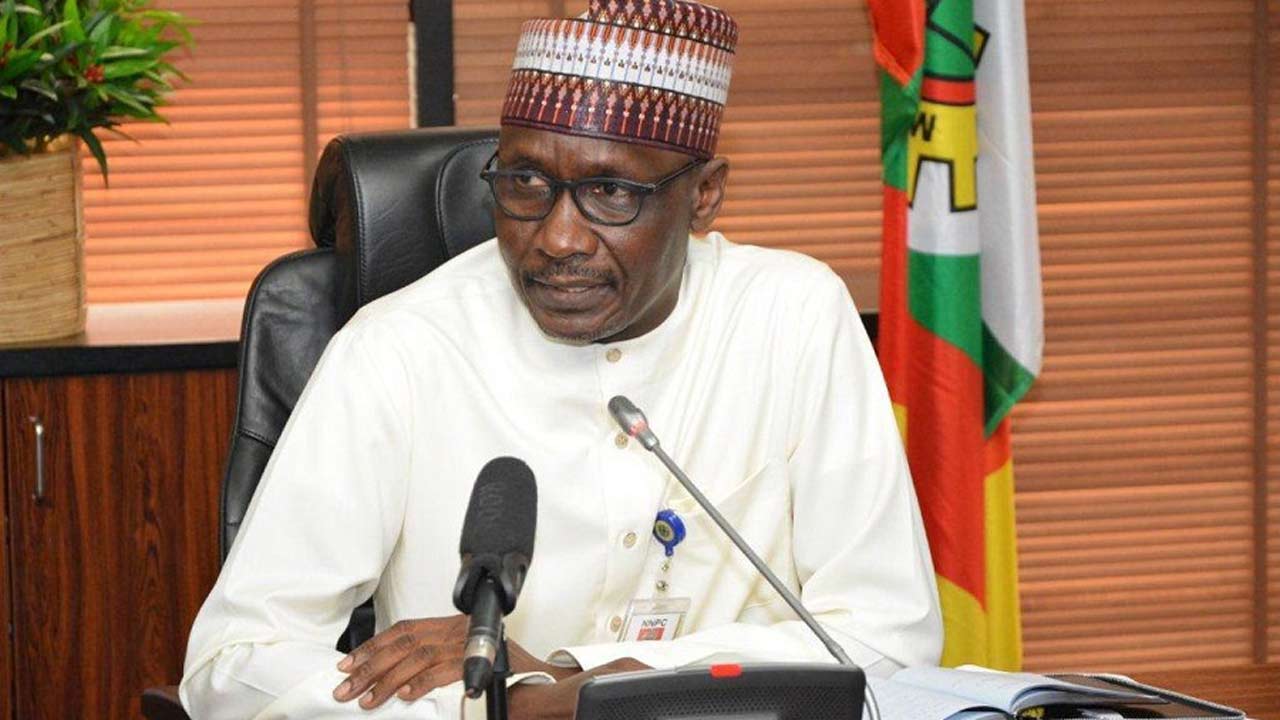
Mele Kyari, ex-Group Chief Executive Officer of the Nigerian National Petroleum Company Limited (NNPCL), has rejected a Senate arrest warrant against him, saying he is receiving medical treatment abroad and has never attempted to evade lawmakers.
In a strongly worded letter dated June 10, 2026, Kyari expressed shock and dismay at the committee’s decision to greenlight the warrant, arguing that he had proactively communicated his inability to attend hearings weeks before the order was issued.
His reaction came after the Senate Committee, in an increasingly assertive posture, directed that he be compelled to appear before it in connection with a sprawling investigation into over ₦210 trillion in financial transactions at NNPCL during his tenure.
The crux of Kyari’s grievance lies in what he describes as a failure by the committee to acknowledge prior correspondence. According to the former NNPC boss, he had written to the panel as far back as May 8, 2026, a letter he says was received by the committee on May 11, in which he explicitly disclosed that he was outside Nigeria receiving critical medical care and was physically unable to honor the invitation.
“I am deeply shocked by the issuance of the warrant, especially as I had earlier communicated with your committee via a letter dated and received on 11th May, 2026,” Kyari wrote, his words carrying the unmistakable weight of a man caught between illness and institutional pressure.
“In that letter, I informed the Committee that I was out of the country on medical grounds. I also expressed my willingness to honour the committee’s invitation as soon as I return to Nigeria.”
He went further, offering a concession that spoke to both his eagerness to cooperate and his awareness of the political gravity of the moment, proposing that the committee forward any questions to his legal representatives so that he could respond in writing without delaying the legislative probe.
The Senate Committee on Public Accounts is conducting what amounts to one of the most consequential financial audits in Nigeria’s recent legislative history, an examination of 19 audit queries raised by the Office of the Auditor-General of the Federation concerning NNPCL’s financial records spanning 2017 to 2023.
At the centre of those queries is an eye-watering figure: allegations that ₦210 trillion in financial dealings during the period under review could not be properly accounted for. The sheer scale of that sum running into hundreds of trillions of naira has lent the proceedings an urgency that legislators appear unwilling to let slip through procedural courtesies.
It was against this backdrop that Senator Victor Umeh moved the motion for the arrest warrant, with former Edo State Governor and now Senator Adams Oshiomhole seconding it, a pairing that signaled broad political appetite within the chamber to compel accountability, regardless of circumstance.
For his part, Kyari was equally forthright in defending his stewardship of Africa’s largest oil company. He maintained that all transactions executed under his watch were properly documented and remain available within NNPCL’s institutional records for independent verification, a claim that, if substantiated, could significantly alter the trajectory of the committee’s findings.
“I remain deeply grateful to my country for the opportunity afforded me to serve with utmost diligence and commitment,” he wrote, striking a tone that blended patriotism with defiance and pledging to appear before the committee at its convenience once he returned to Nigerian soil.
In his earlier May 8 letter, Kyari had noted, perhaps pointedly, that he had neither received nor sighted any formal invitation before learning of the committee’s directive through other channels.
Yet even without that formal notification, he indicated a willingness to cooperate, underscoring his position that his absence was circumstantial, not deliberate.
The episode has raised uncomfortable questions about the limits of legislative authority when pitted against claims of medical incapacity and whether the Senate Committee moved too hastily in reaching for one of its most coercive instruments.
Legal observers note that while the Senate’s power to summon individuals and issue warrants for non-compliance is well-established under Nigerian law, the exercise of such powers against someone who has formally communicated documented health concerns could face legal scrutiny, particularly if Kyari’s medical claims are corroborated.
For now, the ball is squarely in the committee’s court. Kyari has made his position plain: he is ill, he is cooperative in principle, and he intends to honour the invitation on his return.
Whether the Senate is prepared to wait or press forward with enforcement may well determine how this saga unfolds in the weeks ahead.
WHAT YOU SHOULD KNOW
Former NNPC CEO Mele Kyari is pushing back against a Senate arrest warrant, insisting he is receiving medical treatment abroad and had already notified the committee of his absence weeks before the warrant was issued.
While the Senate probes a staggering ₦210 trillion in unaccounted NNPCL transactions, one of Nigeria’s largest financial accountability investigations, the central question is not whether Kyari should face scrutiny but whether due process was followed before resorting to an arrest warrant.
His willingness to cooperate, documented in prior correspondence, suggests this confrontation may be less about evasion and more about a legislature moving faster than the facts require.