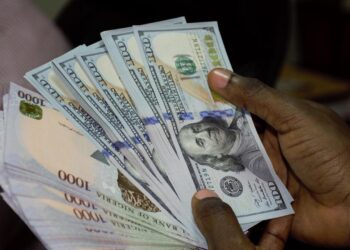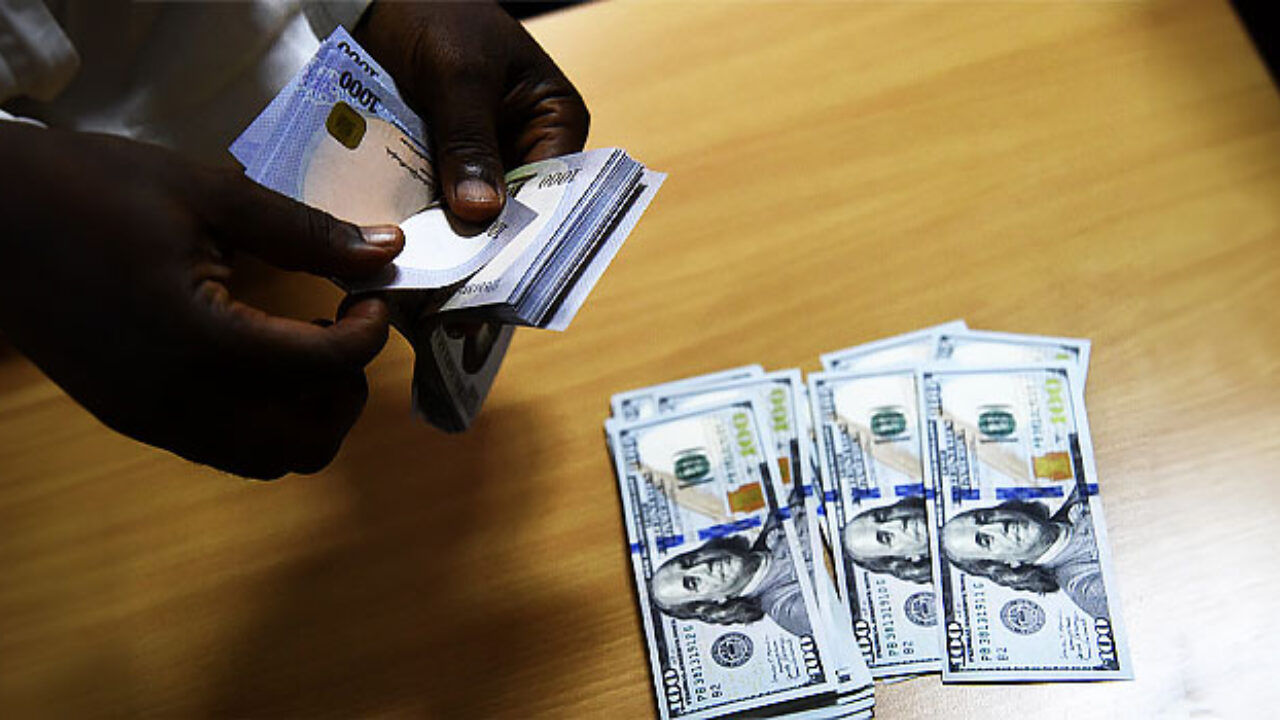
The naira traded steadily against the dollar on Wednesday in both the official and parallel markets, suggesting a fragile yet growing stability in Nigeria’s foreign exchange landscape.
Data from the Central Bank of Nigeria’s (CBN) exchange rate portal showed the naira closing at approximately ₦1,360.55 per dollar in the official Nigerian Foreign Exchange Market (NFEM) on June 9, the most recent official figure available, edging marginally up from the prior session’s close of ₦1,359.50.
The volume-weighted NFEM rate remains the CBN’s official benchmark for all formal foreign exchange transactions in Africa’s largest economy, and Wednesday’s data suggests that rate-setting authorities have, at least for now, succeeded in keeping volatility at bay.
Over the past week, the dollar has traded within a corridor of ₦1,360 to ₦1,375 in the official window, a range that currency watchers describe as unusually tight by Nigeria’s historically turbulent foreign exchange standards.
Beyond the regulated corridors of the NFEM, traders on the parallel market, the informal, street-level exchange network that for years operated at dramatically divergent rates from official figures, were exchanging the greenback at between ₦1,390 and ₦1,405 per dollar on Wednesday, depending on location and the volume of the transaction.
Market trackers reported average buying rates hovering between ₦1,390 and ₦1,395, with selling rates coming in between ₦1,400 and ₦1,405. These figures represent the going rate for ordinary Nigerians and small businesses who, for a variety of reasons, continue to source foreign currency outside the formal banking system.
Critically, the spread between the official and parallel market rates, a key barometer of confidence in Nigeria’s foreign exchange regime, stood at a relatively contained ₦30 to ₦45 per dollar.
That gap, while not negligible, is a far cry from the triple-digit and sometimes catastrophic differentials that plagued the naira in prior years, when the parallel market premium ballooned to well over ₦200 per dollar at certain points of acute economic stress.
Currency dealers were careful, however, to temper any euphoria. Multiple traders contacted on Wednesday noted that actual exchange rates vary considerably across Nigerian cities and between individual transactions, shaped by local dynamics of demand, supply, and deal size.
“The market is calm today, but calm does not always mean confident,” one Lagos-based bureau de change operator said. “People are watching. Businesses are watching. Everyone wants to see if the CBN can sustain this level of liquidity support.”
Market participants say they are closely monitoring foreign exchange liquidity conditions and the broader demand environment, particularly from manufacturers and importers, whose dollar appetite can swiftly tip the balance in either direction.
Wednesday’s subdued trading session fits into a broader narrative of cautious recovery for the naira, which has endured years of devaluations, policy reversals, and speculative pressure.
The CBN’s ongoing foreign exchange reforms, which unified multiple exchange rate windows and sought to attract foreign portfolio inflows, appear to be yielding some measure of stability, even if the road ahead remains uncertain.
For ordinary Nigerians, the relative calm may offer modest relief. Import-dependent businesses, school fees payable in foreign currency, and the rising cost of goods tied to the dollar-naira rate all feel the downstream effects of exchange rate movements. A stable rate, even at levels above ₦1,300, is widely regarded as preferable to the whiplash of unpredictable swings.
Whether Wednesday’s stability holds through the rest of the trading week and beyond will depend on a confluence of factors: dollar inflows from oil revenues, diaspora remittances, CBN intervention policy, and the ever-present wild card of global risk sentiment toward emerging market currencies.
For now, the naira is holding. And in Nigeria’s foreign exchange market, that alone is worth noting.
WHAT YOU SHOULD KNOW
The Nigerian naira is holding steady, trading at roughly ₦1,360.55 in the official market and between ₦1,390 and ₦1,405 on the parallel market, a narrow gap that signals meaningful progress toward exchange rate convergence.
While the calm is encouraging, it remains fragile. Sustaining it will depend on consistent dollar inflows, CBN policy discipline, and broader economic conditions.
For Nigerians, stability at any rate is welcome, but the real test lies in whether this holds.