Gold prices retreated on Tuesday, surrendering some of their recent gains as a resurgent U.S. dollar overshadowed the metal’s appeal as a safe-haven asset amid intensifying geopolitical strife in the Middle East.
The ongoing U.S.-Israeli air campaign against Iran has injected fresh uncertainty into global markets, fueling inflation concerns and bolstering the greenback, even as investors flock to gold for protection against broader economic fallout.
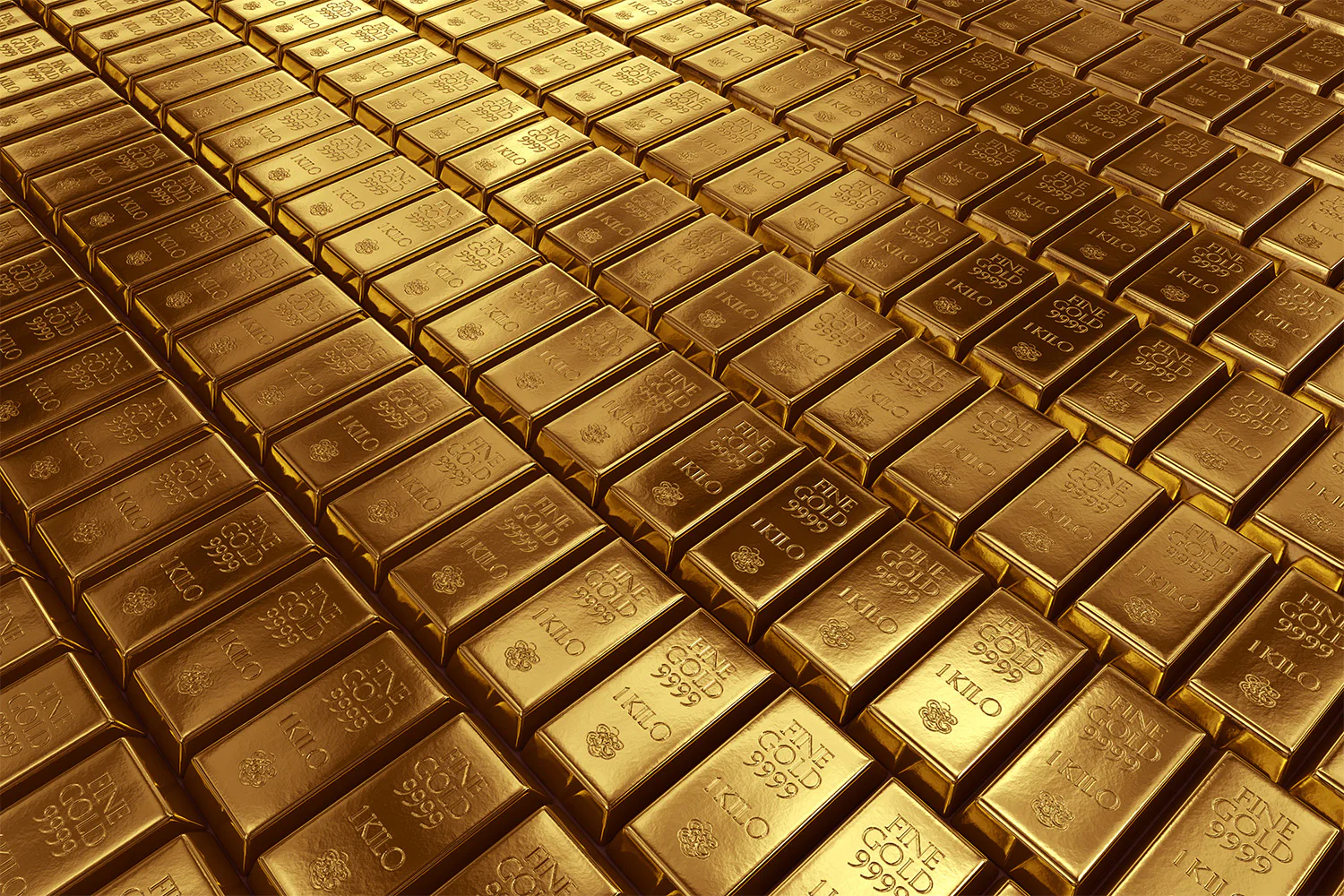
Spot gold, the benchmark for immediate delivery, slid 1.4% to $5,252.05 per ounce by 0931 GMT, extending a pullback from the lofty heights it scaled in recent sessions. Meanwhile, U.S. gold futures for April delivery fared slightly better but still declined 0.9% to $5,263.80, reflecting cautious trading in the futures market.
This downturn comes despite gold’s traditional role as a hedge during times of crisis, highlighting the complex interplay of currency dynamics and monetary policy expectations in the current environment.
The U.S. dollar’s ascent to a more than one-month high has been a key driver of the pressure on gold. Supported by robust demand and a prevailing air of market caution, the dollar’s strength renders dollar-priced commodities like gold less affordable for international buyers holding other currencies. This currency headwind has proven particularly potent, countering the safe-haven inflows triggered by the rapidly escalating conflict.
Analysts point to the war’s ripple effects on inflation as a central factor in the dollar’s rally. “The price decline is likely due to the market now placing greater weight on the inflationary risks resulting from the war in the Middle East and therefore raising its interest rate expectations,” explained Thu Lan Nguyen, a commodities strategist at Commerzbank. “This also explains why the U.S. dollar continues to gain ground.” Indeed, gold, which yields no interest, typically thrives in low-rate regimes but struggles when borrowing costs are expected to remain elevated or rise.
Market participants are closely monitoring the U.S. Federal Reserve’s upcoming two-day policy meeting, concluding on March 18, with the CME Group’s FedWatch tool indicating widespread expectations of steady rates.
The probability of the Fed holding rates in June has climbed above 60%, up from below 45% previously, underscoring a shift toward anticipating prolonged higher-for-longer interest rates amid persistent inflationary pressures.
These pressures were amplified by developments in global energy markets, where oil and gas shipping rates have surged dramatically. The spike follows a stark warning from an official in Iran’s Revolutionary Guards on Monday, declaring the Strait of Hormuz—a critical chokepoint for global oil flows—closed to marine traffic, with threats to target any vessels attempting passage. This rhetoric has stoked fears of supply disruptions, potentially exacerbating inflation worldwide and further entrenching the dollar’s dominance.
On the diplomatic front, Israeli Prime Minister Benjamin Netanyahu addressed the conflict’s trajectory in remarks on Monday, stating that the joint U.S.-Israeli effort against Iran “may take some time” but emphasized it would not drag on for years. Such statements have done little to quell market anxieties, as the air war shows no immediate signs of abating, leaving investors to grapple with prolonged uncertainty.
Despite the day’s losses, many experts maintain a bullish outlook on gold, viewing the current dip as a temporary setback rather than a reversal. BMI, a research unit of Fitch Solutions, forecasted that the metal could shatter records by surpassing $5,600 per ounce this week, barring any credible signals of de-escalation in the Middle East. This optimism stems from gold’s enduring allure in turbulent times.
“In an environment where geopolitical risks intersect with inflationary pressures and monetary policy complexities, gold becomes a tool for reallocating risk within investment portfolios,” noted Rania Gule, an analyst at XS.com. Her comments echo a broader sentiment among investors who see gold not just as a store of value but as a strategic asset in navigating multifaceted global challenges.
The weakness in gold extended to other precious metals, signaling broader sector strain. Silver plummeted 6.5% to $83.63 per ounce, retreating from a more than four-week peak achieved on Monday. Platinum fared worse, tumbling 7.5% to $2,131.30, while palladium shed 4.1% to close at $1,694.75. These declines underscore the interconnected vulnerabilities in the commodities space, where industrial metals like platinum and palladium are particularly sensitive to economic slowdown fears amplified by the conflict.
As the situation in the Middle East evolves, traders will be watching for any hints of resolution or further escalation, which could swiftly alter gold’s trajectory. For now, the metal’s path remains caught between the safe-haven pull of war and the gravitational force of a mighty dollar, a duality that continues to define this volatile chapter in global finance.
WHAT YOU SHOULD KNOW
Gold prices fell 1.4% to $5,252.05/oz on Tuesday as a sharply stronger U.S. dollar—driven by rising inflation fears from the escalating U.S.-Israeli air war against Iran and expectations of prolonged higher interest rates—outweighed safe-haven buying. The key factor to understand: in the current environment, dollar strength and anticipated tighter monetary policy are dominating gold’s traditional crisis appeal, at least in the short term.