Drones struck the United States embassy in Riyadh on Tuesday as Iran retaliated against industrial and diplomatic targets across the Middle East, prompting Washington to urge its citizens to evacuate the region.
Four days after coordinated US and Israeli strikes reportedly killed Iran’s Supreme Leader, Ali Khamenei, smoke damage was visible on the walls and roof of the US embassy in the Saudi capital.
Security was tightened across Riyadh’s diplomatic quarter, with police blocking roads and checking identification.
The United States Department of State had on Monday advised “Americans to DEPART NOW” from Middle Eastern countries and territories due to what it described as serious safety risks.
Regional Strikes and Oil Market Impact
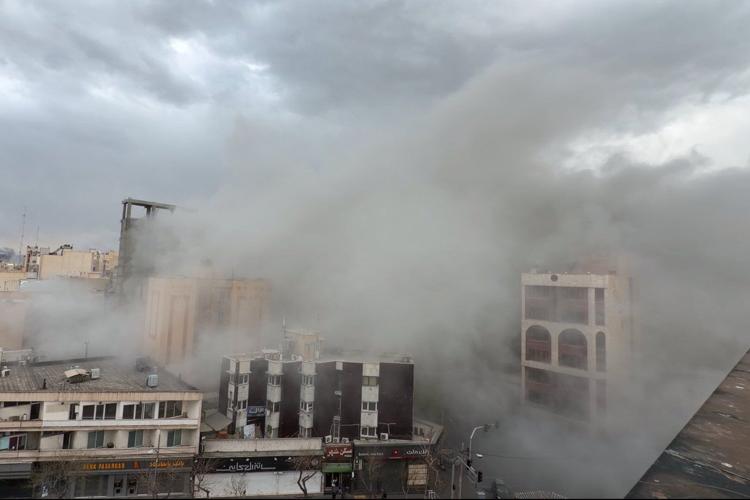
Explosions were also reported overnight in Tehran, while Israel announced it was taking new forward positions in southern Lebanon after Hezbollah launched missile attacks in support of Iran.
Israeli Defence Minister Israel Katz said troops were authorised “to advance and take control of additional strategic positions in Lebanon in order to prevent attacks on Israeli border communities.”
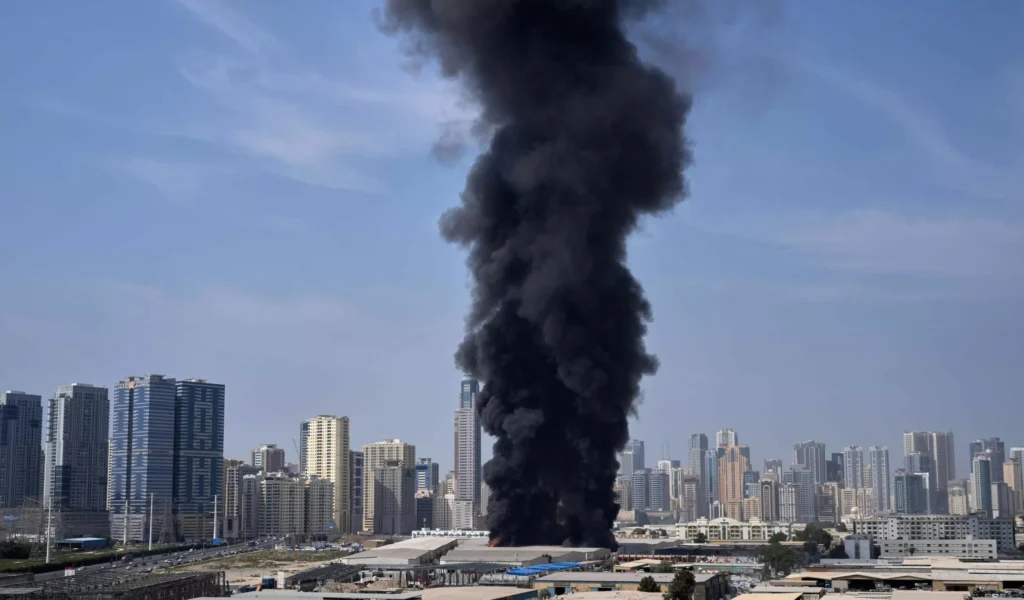
Iranian strikes continued to target energy infrastructure in Gulf cities and the Omani port of Duqm. The benchmark Brent crude price rose again as European markets opened, reflecting concerns about disruption to global oil supply.
A commander of Iran’s Revolutionary Guards, Sardar Jabbari, warned, “We will burn any ship that tries to pass through the Strait of Hormuz,” highlighting the potential threat to international shipping routes.
Trump Signals Prolonged Campaign
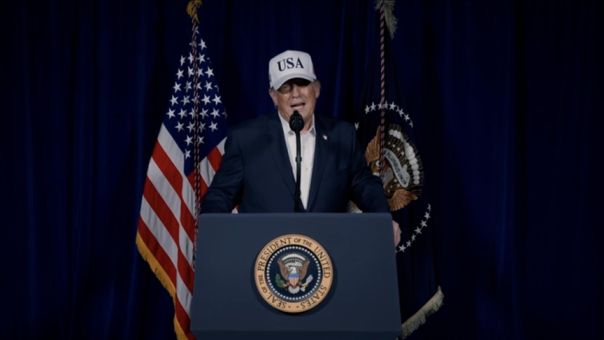
US President Donald Trump said the strikes could continue for weeks or months.
“From the beginning we projected four to five weeks, but we have capability to go far longer than that,” Trump said at the White House.
In earlier remarks to the New York Post, he declined to rule out deploying US ground troops to Iran “if they were necessary.” Speaking to NewsNation, he warned Iran would “find out soon” how Washington planned to respond to the Riyadh embassy attack.
Trump outlined objectives including dismantling Iran’s missile systems, naval capacity and nuclear programme, and halting its support for armed groups in the region. He did not state regime change as a formal objective.
Conflicting Narratives
US Secretary of State Marco Rubio said Washington intervened after learning that Israel planned to strike Iran and believed Tehran would retaliate against US forces.
“The imminent threat was that we knew that if Iran was attacked, and we believed they would be attacked, that they would immediately come after us,” Rubio told reporters.
Democratic Senator Mark Warner questioned the justification, describing the situation as “uncharted territory.”
Iran’s Foreign Minister Seyed Abbas Araghchi rejected the US narrative, stating that “there was never any so-called Iranian ‘threat’,” and accused Washington of entering a conflict of choice.
Rising Casualties
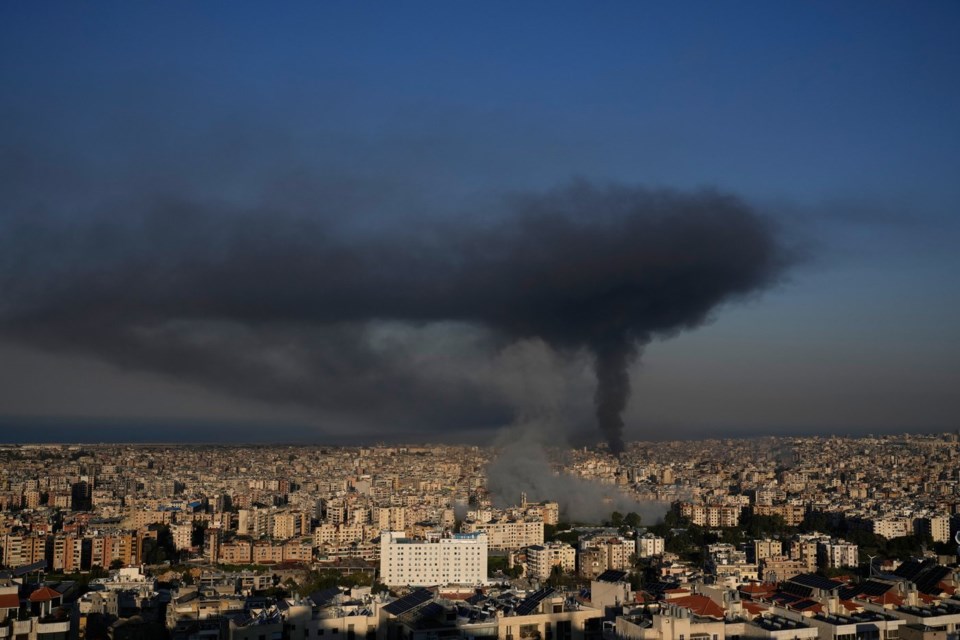
According to US Central Command, six US military personnel have been killed since the conflict began. Iranian media reported hundreds of casualties, though figures have not been independently verified.
The US-based Human Rights Activists News Agency (HRANA) said there were 101 casualties inside Iran on the third day of the war, including 85 civilians and 11 military personnel.
Residents in Tehran were seen preparing to leave amid ongoing air raids, with some expressing fear and uncertainty over the future.
What you should know
Drones struck the US embassy in Riyadh as Iran retaliated against US and Israeli actions, escalating the regional conflict.
Washington has urged Americans to evacuate the Middle East, while President Trump signalled that military operations could continue for weeks.
Oil markets have reacted sharply, and casualty figures continue to rise as tensions deepen across the region.