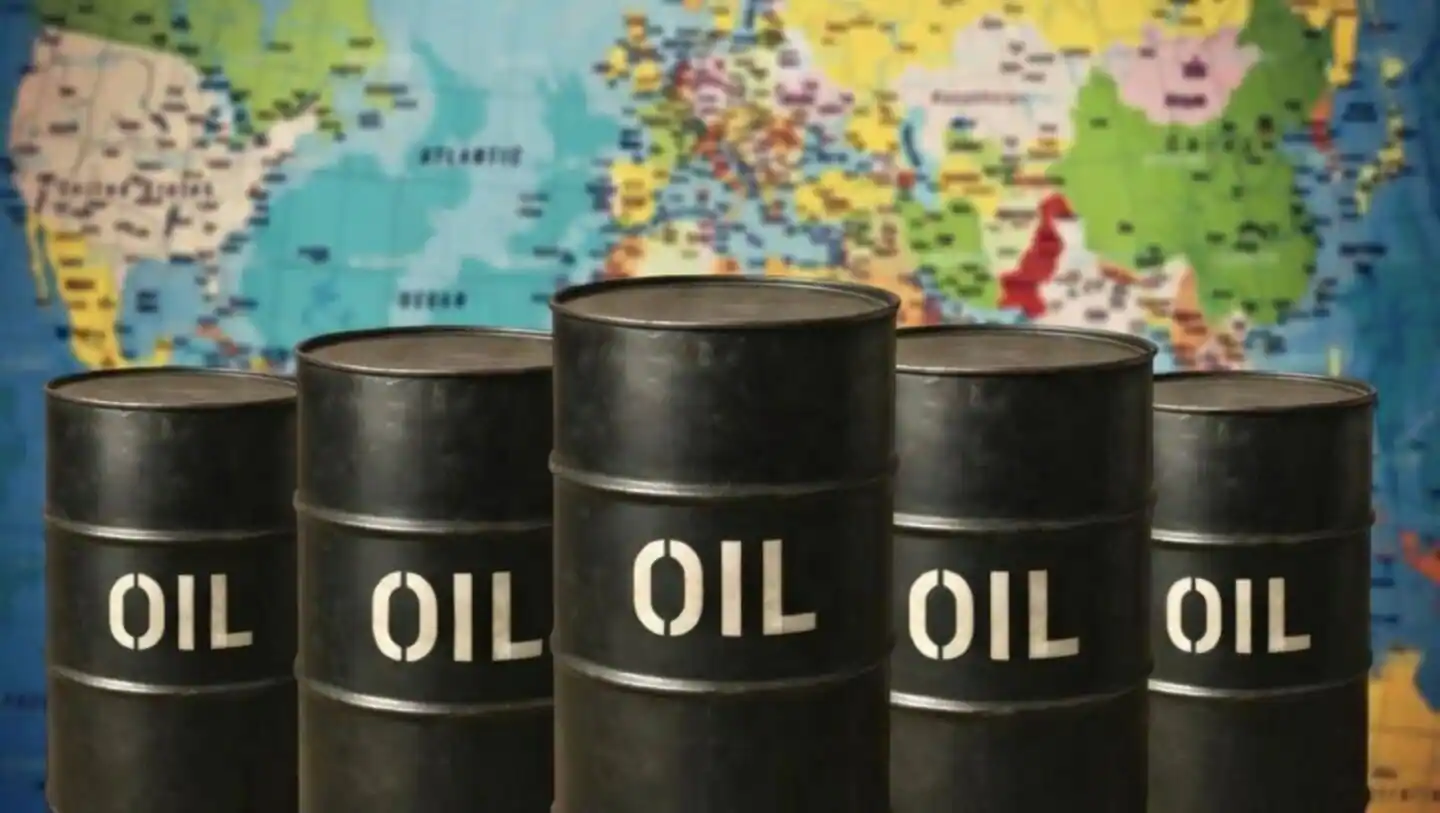
Oil markets surged on Monday as escalating tensions in the Middle East dashed hopes of a diplomatic resolution, driving Brent crude past $96 a barrel and stoking fears of a lasting global energy supply disruption.
The renewed market panic was triggered by a lethal combination of events: Israel’s resumption of strikes on Lebanon on Sunday, swiftly followed by reports confirmed by local Iranian media of explosions echoing across Tehran, Tabriz, and Isfahan in the early hours of Monday morning.
The sounds of blasts in three of Iran’s most strategically significant cities hit trading floors like a thunderclap, instantly erasing any goodwill that had briefly lifted markets on Friday.
Brent crude futures surged $3.20, or 3.39%, to $96.24 per barrel as of 03:33 GMT, while U.S. West Texas Intermediate crude climbed $2.87, or 3.17%, to $93.41 per barrel.
In a single session, Monday’s gains wiped out all of Friday’s modest declines. This retreat had itself been driven by cautious optimism that Washington and Tehran might be edging toward a settlement.
That optimism now lies in tatters.
“The market was beginning to price in a peace dividend,” said one London-based energy trader, who declined to be named. “What we heard this morning out of Iran has put that firmly back in the drawer.”
Oil prices have now risen more than 50% since March, a staggering climb that has redrawn the economics of everything from airline tickets to food production and threatens to embed a new inflationary wave across an already strained global economy.
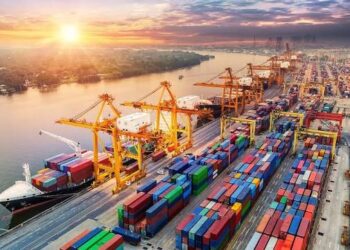
At the heart of the crisis lies the Strait of Hormuz, a narrow, 21-mile-wide waterway through which roughly one-fifth of the world’s oil supply transits daily. Since Iran moved to blockade the strait in early April, following a pause in direct U.S.-Israeli strikes on Iranian territory, global supply chains have been thrown into disarray.
Washington has responded with its own blockade of Iranian ports, creating a bilateral economic stranglehold that analysts warn could persist for months if diplomatic channels remain closed.
Monday’s explosions in Iranian cities, the source and nature of which had not been independently confirmed at the time of publication, appear to have dealt a serious blow to any near-term prospect of reopening the waterway.
The Strait closure has not only throttled physical crude flows but has also introduced an irreducible political premium into every barrel traded on global markets. Shipping insurers have dramatically raised war-risk surcharges, and several major tanker operators have suspended Hormuz transits altogether.
Against this volatile backdrop, U.S. President Donald Trump struck a notably defiant tone on Sunday, insisting that a comprehensive agreement to end the wider war remained firmly within reach even as his allies in the region appeared to be acting in direct contradiction to his diplomatic agenda.
In a pointed interview with the Financial Times, Trump pushed back sharply against suggestions that Israeli Prime Minister Benjamin Netanyahu was driving the military tempo of the conflict.
“It’s not going to have any impact on the deal,” Trump told the paper. “I call the shots. I call all the shots. He doesn’t call the shots.”
Trump also reportedly urged Netanyahu to halt further offensive operations, a request that appeared to carry limited sway, given Israel’s renewed strikes on Lebanon just hours later.
The remarks paint a portrait of a White House that remains publicly committed to a diplomatic endgame, even as the conditions on the ground grow increasingly inhospitable to one.
The renewed Israeli strikes on Lebanon are particularly alarming for peace prospects, given that Tehran has explicitly made a Lebanon ceasefire a precondition for any broader peace deal with Washington.
Lebanon and Israel had, as recently as June 3rd, announced a ceasefire agreement brokered through negotiations in Washington, a development that had been cautiously welcomed by markets and diplomats alike. But that agreement now appears to be unravelling with troubling speed, following a pattern already seen earlier this year.
The two countries had previously declared a cessation of hostilities in April, only for violence to resume within days.
Israel’s March invasion of Lebanon, launched in response to Hezbollah’s sustained rocket and drone campaign across the northern border, widely seen as a proxy offensive directed by Tehran, has drawn the country into the widest regional conflagration since 2006.
Iran’s missile salvo against Israeli targets on Sunday, described by Tehran as a retaliatory measure, has further complicated the diplomatic calculus, with each side now locked in a cycle of provocation and reprisal that shows little sign of self-correction.
In a move that might, in calmer times, have provided some relief to jittery markets, OPEC+ on Sunday agreed to its fourth consecutive monthly increase in oil output, a signal, in principle, of the bloc’s willingness to help stabilize prices.
In practice, analysts were scathing about its likely effect.
Jorge Leon, head of geopolitical analysis at Rystad Energy, told clients in a note that the decision would have virtually no real-world impact. “In the current market, the physical impact of such a decision would be close to zero,” Leon wrote a damning assessment that underscores how thoroughly the Hormuz crisis has overwhelmed the levers that ordinarily give OPEC+ its market influence.
The problem is brutally simple: most OPEC+ member states cannot physically move additional barrels to market while the Strait of Hormuz remains closed. Russia, meanwhile, a major OPEC+ producer, has seen its own output capacity eroded by sustained infrastructure attacks, further limiting the bloc’s ability to compensate for the supply shortfall.
With diplomatic talks stalled, military action escalating on multiple fronts, and the world’s most critical oil transit route still effectively shut, energy analysts are reluctant to call a ceiling on prices.
“We’ve been here before with geopolitical risk premiums, and they can fade quickly when a deal materializes,” one senior analyst at a major European investment bank told this correspondent. “But right now, there is no credible path to that deal that anyone can point to. And every explosion we hear makes that path longer.”
For consumers across the globe, already grappling with elevated fuel and food costs, Monday’s market moves offer a stark reminder of just how directly the fires of the Middle East can burn through household budgets thousands of miles away.
WHAT YOU SHOULD KNOW
The Middle East conflict has entered a dangerous new phase, and the world is paying for it at the pump.
With the Strait of Hormuz, the jugular vein of global oil supply effectively shut down, explosions now reported inside Iran, and a Lebanon ceasefire collapsing almost as fast as it was signed, oil markets have surged past $96 a barrel with no credible ceiling in sight.
Diplomatic assurances from Washington ring hollow against the drumbeat of fresh strikes, and OPEC+’s attempt to ease prices is, by analysts’ own admission, virtually meaningless while the crisis persists.