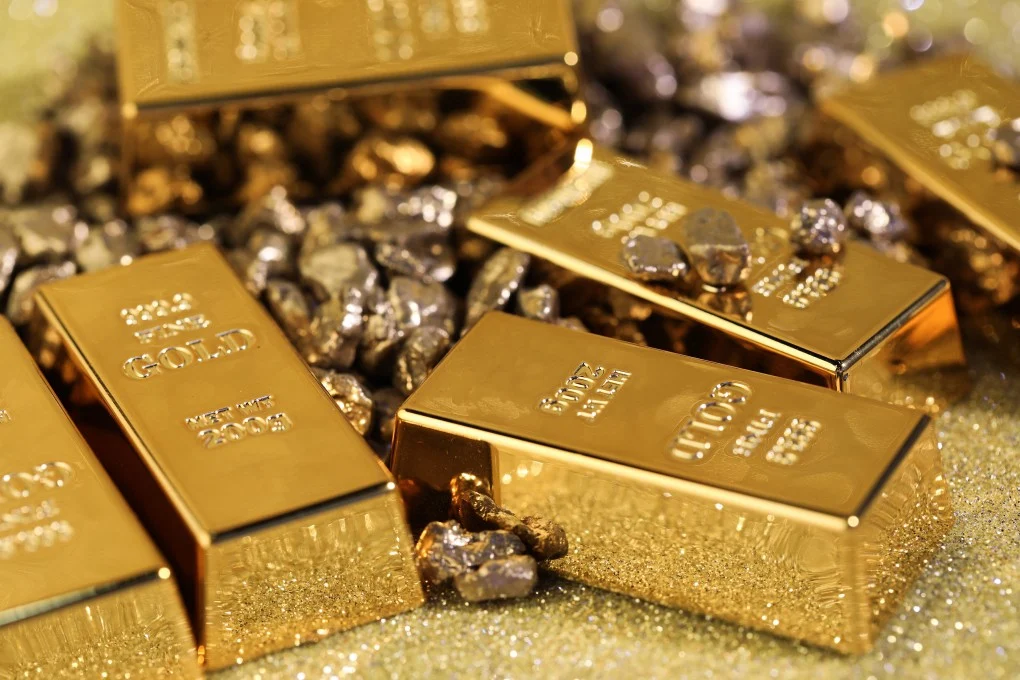
Gold climbed more than 1% on Tuesday, reclaiming ground as declining U.S. Treasury yields lowered the opportunity cost of holding the non-yielding metal.
At the same time, softer crude oil prices helped temper inflation worries that had been weighing on the market.
Spot gold rose 1% to $4,525.72 per ounce by 09:00 GMT. U.S. gold futures for August delivery performed even stronger, gaining 1.1% to $4,556.
The move marks a notable short-term recovery for the precious metal, which has faced headwinds from elevated interest rates that make zero-yield assets like gold less attractive compared to interest-bearing bonds and cash.
“Gold continues to take its cues from the oil market,” said Ole Hansen, head of commodity strategy at Saxo Bank. “Given crude’s influence on inflation expectations and, by extension, interest rates, bond yields, and the dollar.”
Hansen noted that while the metal remains in a short-term downtrend, a decisive break above $4,630 would be needed to shift sentiment and draw in fresh momentum buying.
A key driver behind Tuesday’s gains was a drop in U.S. Treasury yields. The benchmark 10-year note yield fell 1.1%, reducing the carrying cost for investors holding gold.
Weaker oil prices also played a supportive role by dialing back fears of a renewed inflationary spike. Higher energy costs have been a major concern for central banks as they navigate the delicate balance between controlling inflation and supporting economic growth.
Investors also welcomed signs of de-escalation in the Middle East. Lebanon announced a partial ceasefire between Hezbollah and Israel on Monday, a limited but meaningful step that could help reduce immediate tensions in a conflict that has already claimed thousands of lives and contributed to broader instability involving the United States, Israel, and Iran.
Gold, long viewed as a safe-haven asset during periods of geopolitical uncertainty, often benefits from such flare-ups but can also find support when tensions show signs of cooling if the move lowers associated inflation risks.
Market participants are now turning their attention to fresh U.S. economic indicators. The much-anticipated May nonfarm payrolls report, due on Friday, will be closely scrutinized for signs of labor market resilience amid ongoing inflation concerns tied to Middle East developments.
A host of Federal Reserve officials are also scheduled to speak this week, including Cleveland Fed President Beth Hammack, San Francisco Fed President Mary Daly, and Fed Governor Michael Barr.
Their comments could provide important clues about the central bank’s thinking on the timing and pace of potential interest rate adjustments.
Despite near-term volatility, many analysts remain constructive on gold’s prospects.
“We remain positive over the long term,” ANZ said in a research note. “Economic growth risks, worsening geopolitical relations, currency volatility, and downside risks to equity markets will continue to support gold’s role as a portfolio diversifier.”
The broader precious metals complex also posted solid gains. Spot silver jumped 2% to $76.32 per ounce, platinum rose 2% to $1,961.90, and palladium advanced 1.2% to $1,378.25.
As markets digest the latest mix of geopolitical, monetary policy, and commodity signals, gold appears to have found temporary support, though its next directional move will likely hinge on this week’s heavy slate of U.S. economic and central bank commentary.
WHAT YOU SHOULD KNOW
Gold rebounded over 1% today to $4,525.72 per ounce, primarily driven by falling U.S. Treasury yields and softer oil prices that eased inflation and interest rate concerns.
While the metal remains in a short-term downtrend, this relief in the bond and oil markets provided the key support for today’s gains.