The United States and Iran have announced a landmark peace agreement, bringing an apparent close to a conflict that has rattled the world economy, sent energy prices soaring, and pushed the two nations to the very edge of full-scale war.
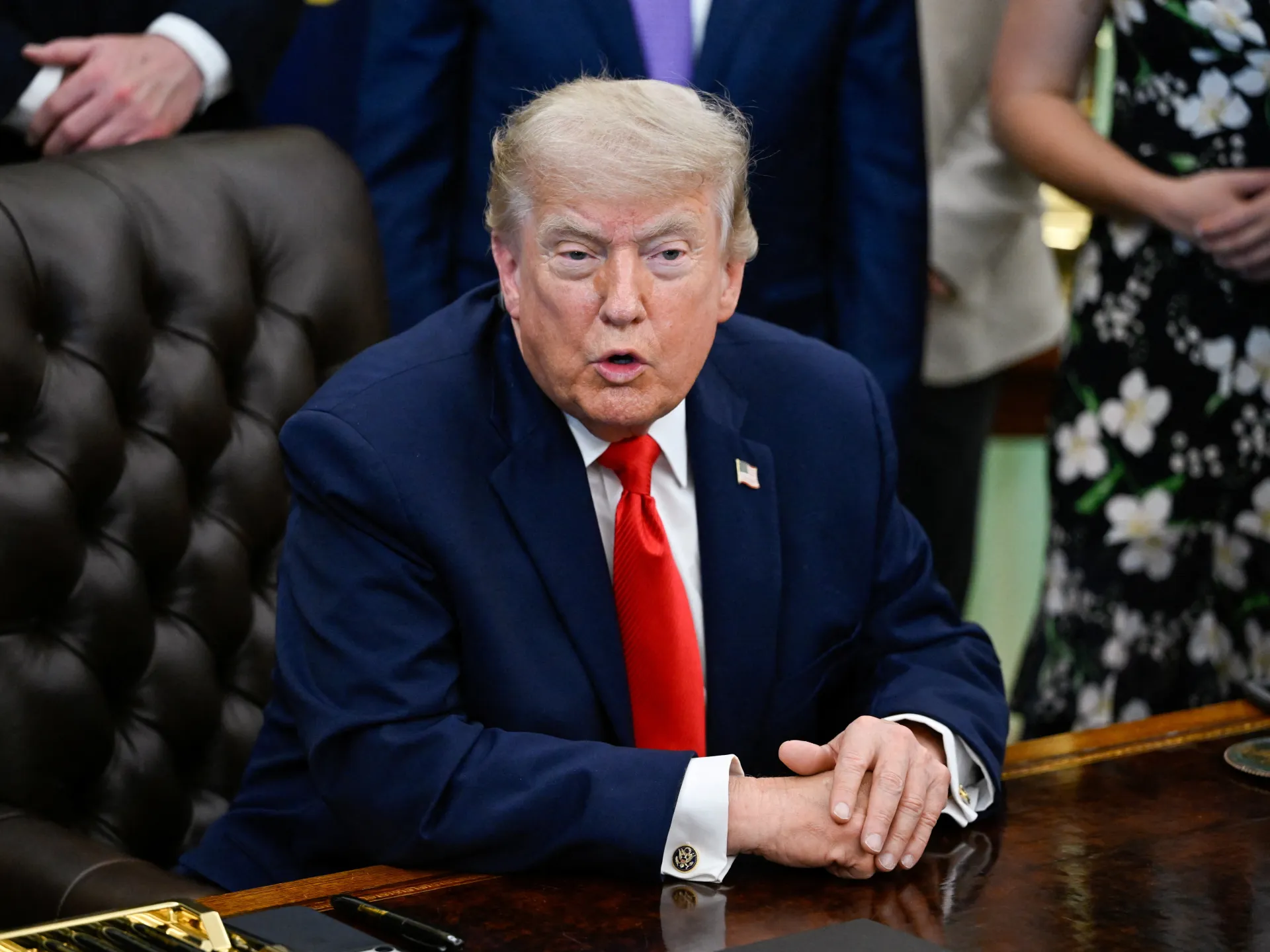
President Donald Trump, who turned 80 on Sunday, broke the news on his Truth Social platform, declaring that the Strait of Hormuz, largely closed since the United States and Israel launched an assault on Iran on February 28, would reopen immediately.
Characteristically, the announcement came not from a formal White House press briefing, but in the president’s own unfiltered voice:
“The deal with the Islamic Republic of Iran is now complete. Congratulations to all! I hereby fully authorize the toll-free opening of the Strait of Hormuz and, simultaneously herewith, authorize the immediate removal of the United States naval blockade. Ships of the World, start your engines. Let the oil flow!”
The markets listened. And then they moved fast.
To understand the significance of Sunday’s announcement, one must recall how close the world came to something far worse.
The road to conflict stretched back to April 2025, when the United States and Iran first entered negotiations aimed at a nuclear peace agreement, following a direct letter from President Trump to Iran’s supreme leader.
Those talks wound through Muscat, Rome, and Geneva across several rounds before collapsing in late February 2026, when the United States and Israel launched large-scale strikes on Iran, marking the start of what would become a grinding, multi-front war.
The Strait of Hormuz, the narrow chokepoint through which roughly a fifth of the world’s oil supply passes, became the conflict’s most consequential battleground, not with missiles alone, but with the threat of economic strangulation.
Its closure sent energy prices spiraling to multi-year highs and triggered inflationary shocks felt from Lagos to London.
The path to Sunday’s agreement was not smooth, even in its final hours. American officials believed Iran was preparing retaliatory strikes against Israel in the hours before the announcement, and worked to head off an attack through last-minute discussions about specific wording in the deal. “After the Israelis struck Beirut, we were very worried,” Vice President JD Vance acknowledged on Fox News.
The most striking diplomatic subplot of the entire episode was the role of Islamabad. It was Pakistani Prime Minister Shehbaz Sharif, not Washington or Tehran, who first publicly confirmed that a deal had been struck, posting the announcement on X before Trump’s own Truth Social message had fully circulated.
“Following intensive talks, we are pleased to announce that the Peace Deal between the United States of America and the Islamic Republic of Iran has been REACHED,” Sharif wrote. Both sides have declared the immediate and permanent termination of military operations on all fronts, including in Lebanon.”
Iran’s President Masoud Pezeshkian confirmed the development in two spare but historic words: “Agreement reached.”
That brevity, from a government not given to understatement in moments of national pride, spoke volumes. Iran’s deputy foreign minister, Kazem Gharibabadi, confirmed that the text of the memorandum of understanding had been finalized.
Analysts cautioned Sunday night against declaring total victory prematurely. The agreement, while historic in scope, is more framework than finished architecture.
The deal extends a ceasefire for 60 days, with a formal signing ceremony expected on Friday and nuclear talks to follow. Iran’s deputy foreign minister indicated that broader negotiations covering sanctions relief and other outstanding issues would continue during that 60-day window.
The question of Iran’s nuclear programme, the source of tension that set this entire crisis in motion, remains conspicuously unresolved, deferred to subsequent rounds of diplomacy.
European nations, including the UK, Germany, France, and Italy, signaled on Sunday that they were prepared to lift sanctions on Iran in exchange for the country taking concrete steps on its nuclear program, stating in a joint communiqué: “Iran must never acquire a nuclear weapon.”
Qatar’s Ministry of Foreign Affairs welcomed the agreement, describing it as “an important step towards consolidating sustainable peace and promoting economic growth regionally and internationally.” UN Secretary-General António Guterres congratulated both sides, calling it a “critical step towards the peaceful settlement of the conflict.”
For commodity traders who have spent the better part of three months hedging against worst-case scenarios, the news triggered an immediate and decisive response. Brent crude fell roughly 3.4 percent in the hours following the announcement.
West Texas Intermediate declined by approximately 4 percent as traders repriced global supply assumptions almost instantaneously.
A reopened Strait of Hormuz means millions of barrels of oil and liquefied natural gas that were bottled up behind a naval blockade can now flow freely to world markets. For energy-importing economies already grappling with elevated prices, the prospect of relief, however provisional, was enough to move markets sharply.
Whether those gains hold will depend entirely on whether the ceasefire holds. Traders and analysts will be watching Friday’s signing ceremony in Switzerland with the same intensity they once reserved for OPEC summits.
There is a crucial distinction, one that diplomats and historians will press between the announcement of an agreement and the durability of one.
British Prime Minister Keir Starmer, who welcomed the deal as a “hugely important step forward,” was careful to note that his government stood ready to support mine clearance in the Strait of Hormuz, a sobering reminder of just how militarised these waters have become.
Iran’s nuclear ambitions, the status of Hezbollah in Lebanon, the sanctions architecture that has calcified over decades, and the deep mutual distrust that no single memorandum of understanding can dissolve.
But on a Sunday afternoon in June 2026, for the first time in nearly four months, the guns fell silent, and the tankers prepared to sail.
WHAT YOU SHOULD KNOW
The United States and Iran have reached a landmark peace agreement, ending nearly four months of conflict that disrupted global energy markets and threatened broader regional stability.
The deal, brokered with Pakistan’s mediation and set to be formally signed in Switzerland on June 19, mandates an immediate and permanent cessation of hostilities across all fronts, including Lebanon, and reopens the strategically vital Strait of Hormuz to global shipping.