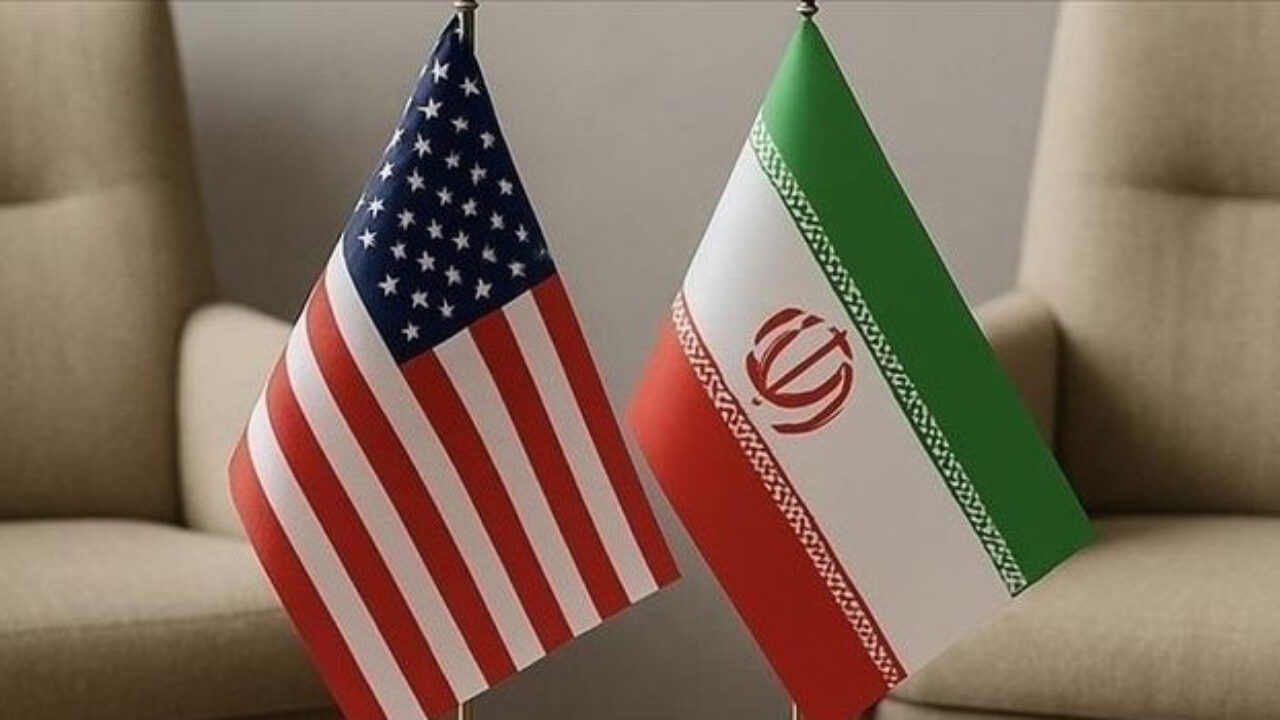
A senior Iranian official, speaking anonymously to media men, has revealed details of a draft MoU between the two countries, one that, if signed, would be the most significant U.S.-Iran diplomatic breakthrough since the 2015 nuclear accord, which Trump himself abandoned in his first term.
The current conflict traces its origins to late February 2026, when the United States and Israel launched a series of military strikes against Iran following the collapse of indirect nuclear talks and the triggering of so-called “snapback” sanctions against Tehran by Britain, Germany, and France under the 2015 nuclear deal framework.
The stated aims of the strikes were to induce regime change and to target Iran’s nuclear and ballistic missile infrastructure.
Iran’s response was swift and economically devastating. Tehran closed the Strait of Hormuz, the narrow passage through which, before the war, approximately 20% of global oil and liquefied natural gas transited, effectively holding the world’s energy markets hostage. Oil prices surged, inflation spiked across Western economies, and shipping companies rerouted vessels thousands of miles to avoid the blockade zone.
On 19 March, the United States launched an aerial campaign specifically targeting Iranian naval vessels and drone positions in the Strait. By 13 April, Washington had imposed a formal naval blockade on Iranian ports, following the breakdown of the Islamabad Talks during an earlier ceasefire window.
In early April, President Trump warned that he could target critical Iranian infrastructure, including power plants and bridges, if Tehran refused to reopen the Strait before both sides agreed to an initial two-week cease-fire. Global oil prices fell sharply on the news, with benchmark Brent crude dropping by nearly 16% within hours of the announcement.
That fragile truce has now apparently evolved into something far more substantial.
The document, as described by the Iranian official, is structured as an interim framework, a platform for a broader 60-day negotiating process rather than a final settlement. But its provisions are sweeping in scope.
On the most immediate and symbolically charged issue, the draft stipulates that Iran would reopen the Strait of Hormuz to commercial shipping without delay upon the memorandum’s adoption.
In return, the United States would begin lifting its naval blockade on Iranian ports, with that process initiated at the moment of signing and completed within 30 days.
During the initial 60-day period, the Strait would be open with no tolls, and Iran would also be required to clear the mines it deployed there to allow ships to pass freely.
The economic provisions are equally significant. The draft would grant Iran temporary waivers on oil-related sanctions, allowing Tehran to resume crude exports and access associated revenues, a lifeline for an economy battered by years of maximum-pressure policies and now months of active conflict.
Beyond that, the proposal envisions the release of approximately $25 billion in frozen Iranian assets through a combination of direct transfers, regional financial cooperation, and credit facilities.
Washington, for its part, would commit to refraining from imposing any new sanctions on Iran for the duration of the 60-day negotiating window. If a comprehensive agreement is ultimately reached, existing U.S. and United Nations sanctions would be lifted according to an agreed timeline.
The draft also calls for the development of an international reconstruction and economic recovery program for Iran, a recognition that the country’s infrastructure, energy sector, and broader economy have suffered significant damage during the conflict.
Perhaps the thorniest element of the draft and the one most likely to determine whether a final agreement is achievable is the nuclear dimension. The MoU stops well short of resolving the fundamental dispute over Iran’s enrichment program, instead threading a careful needle designed to freeze the current situation while leaving the hardest questions for the 60-day talks that follow.
Under the proposed terms, Iran would commit not to produce or acquire nuclear weapons and would refrain from additional uranium enrichment or expansion of its nuclear facilities during the negotiating period.
In return, the United States would permit Iran to dilute rather than ship out its stockpile of highly enriched uranium within the country under a future comprehensive agreement, a concession likely to face scrutiny from nonproliferation hawks in Washington and from Israel.
The specifics of enrichment levels, facility access, and stockpile management would all be subject to the 60-day negotiation.
For analysts who have watched Iran’s nuclear file for years, this is both the most promising and most precarious element of the deal. The framework acknowledges that the nuclear question cannot be settled in a memorandum, but it bets that a time-limited ceasefire and economic incentives can create the conditions for a more durable settlement.
In the days leading up to this disclosure, President Trump announced via social media that he had held calls from the Oval Office with the leaders of Saudi Arabia, the UAE, Qatar, Pakistan, Turkey, Egypt, Jordan, and Bahrain, as well as Israeli Prime Minister Benjamin Netanyahu all of them focused on finalizing the terms of a deal with Iran.
Pakistan, which has served as a key mediating channel throughout the conflict, has been central to facilitating the back-channel communications that produced the draft text.
As of Sunday evening, Pakistan’s prime minister confirmed that a deal to end the war was “now in place,” marking the most definitive public statement from any mediating power since the conflict began.
The MoU, if signed in a formal ceremony expected imminently, would mark the war’s biggest diplomatic breakthrough and buy critical time for negotiations over the unresolved nuclear questions that lie at the heart of the conflict.
Few veteran observers of U.S.-Iran relations are ready to declare victory. The history of diplomacy between Washington and Tehran is littered with agreements that collapsed under the weight of domestic politics, hardliner opposition, and shifting red lines.
The 60-day clock that the MoU would start ticking is ambitious, some would say unrealistic, for resolving questions that have defied resolution for two decades.
Iran’s new leadership, following the death of Supreme Leader Ali Khamenei in the February strikes, faces enormous pressure from hardline factions that view any agreement with the United States as capitulation.
In Washington, the agreement faces scrutiny from legislators and allies, particularly Israel, who believe the deal does not go far enough in constraining Iran’s nuclear capabilities.
But for the tanker captains who have spent months anchored in holding patterns, the traders who have watched energy markets convulse, and the millions of ordinary people on both sides who have borne the cost of this conflict, the draft memorandum represents something that has been in short supply for months: the possibility that a way out exists.
Whether both governments can navigate the next 60 days without the deal unraveling remains, as it has throughout this crisis, the defining question.
WHAT YOU SHOULD KNOW
After months of devastating conflict that closed the Strait of Hormuz and sent global energy markets into turmoil, the United States and Iran are on the brink of a landmark deal, but the hardest part still lies ahead.
The draft memorandum on the table offers something immediate and tangible: reopening a waterway that carries a fifth of the world’s oil and gas, lifting a naval blockade, and unlocking $25 billion in frozen Iranian assets. Those are real, measurable outcomes that markets and governments worldwide are desperate for.
But the agreement is fundamentally a pause, not a peace. The 60-day negotiating window it creates must still resolve the nuclear question of Iran’s enrichment program, which is the very issue that started this conflict in the first place. No memorandum of understanding, however carefully worded, settles that.
The single most important thing to understand is this: the deal buys time, but time alone solves nothing.