Iran’s Revolutionary Guard announced on Friday that over 35 commercial vessels transited the Strait of Hormuz within 24 hours, citing the figure as evidence its control of the waterway is functioning smoothly, a claim Washington has rejected as illegal and destabilizing.
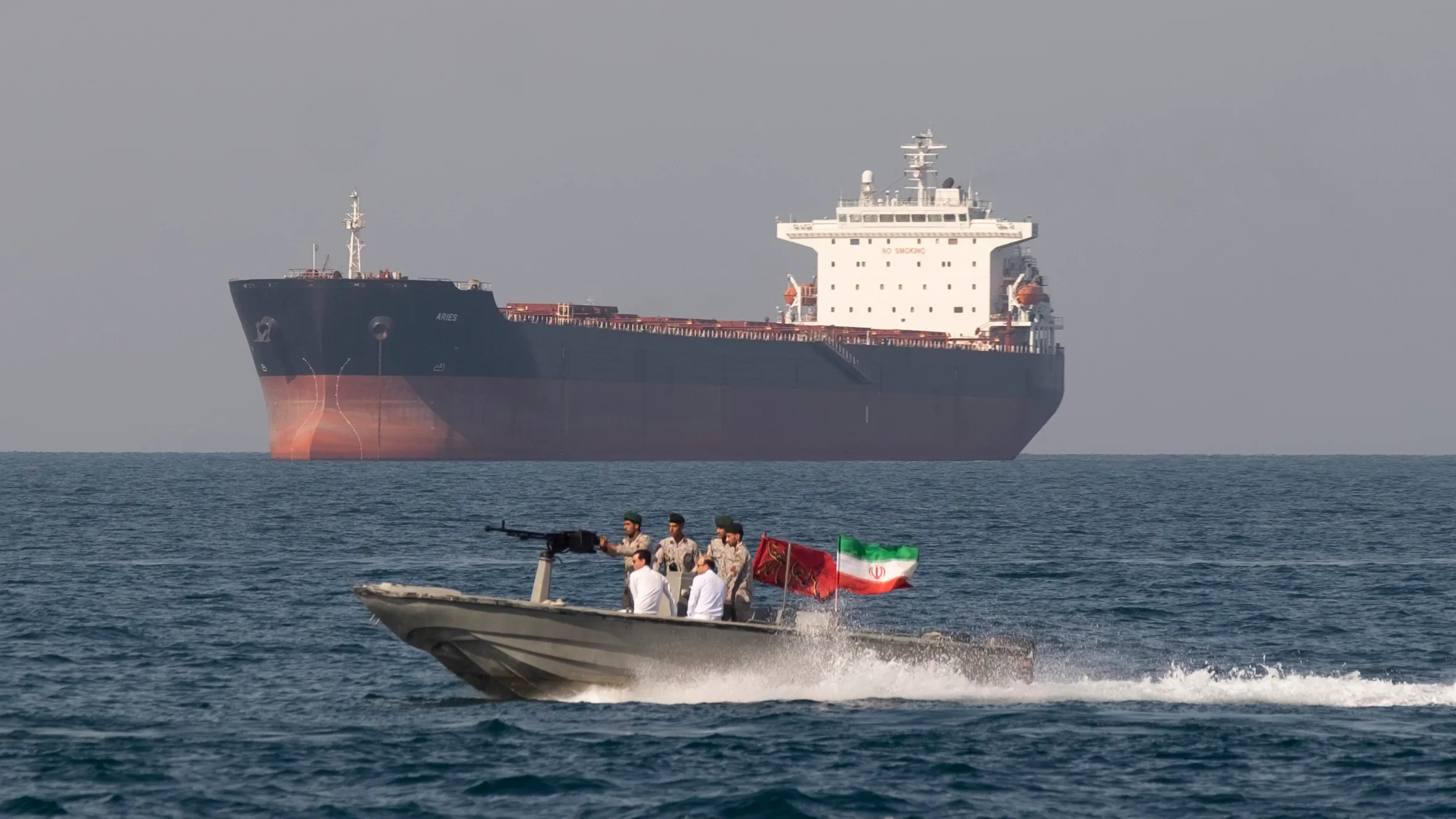
The IRGC said the vessels, a mix of oil tankers, container ships, and other commercial craft, had moved through the narrow waterway in coordination with the Iranian Navy. The statement was careful to frame Iran’s role not as an obstruction but as a security service. The implication was unmistakable: the strait is open, but open on Tehran’s terms.
Since mid-March, all tracked vessel transits through the Strait have followed a single IRGC-controlled corridor, with ships required to obtain specific clearance codes and accept Iranian naval escorts. There have been no transits recorded via the previously normal route since March 15, according to Lloyd’s List Intelligence data.
The architecture behind those 35 ships is elaborate. Iran has established the Persian Gulf Strait Authority (PGSA), a newly created body that vets and approves transits through the chokepoint, requiring vessels to submit ownership details, insurance, crew manifests, and cargo information before a permit is granted.
The PGSA formally announced its existence on social media on May 18, presenting itself as a sovereign regulatory body, a move that some analysts have compared to the Suez Canal Authority or Panama Canal Authority, though critics argue the parallel flatters what amounts to state-sponsored maritime extortion.
The financial terms of passage are striking. Reports indicate that vessels have been required to pay up to $2 million per transit, with payments accepted in Chinese yuan and Bitcoin transfers to IRGC-linked wallets, arrangements that appear specifically designed to bypass Western banking infrastructure.
Iran’s parliament is now pursuing legislation to formally codify the country’s sovereignty and control over the strait and to create a permanent revenue stream from the collection of these fees. One lawmaker defended the arrangement as entirely natural, arguing that since Iran provides security in the waterway, vessels should pay accordingly.
The policy did not emerge in a vacuum. The Strait of Hormuz has been effectively closed since a war between Iran and the United States and Israel broke out on February 28. A ceasefire took hold in early April, but few commercial ships have passed through despite that pause in hostilities.
Shipping traffic plummeted from an average of roughly 140 vessels per day before the conflict to as few as two to four, sending insurance premiums skyward and leaving thousands of seafarers stranded.
The Biden administration’s nightmare is now the Trump administration’s problem, and Washington made clear on Friday it has no appetite for accepting what Tehran is building.
Speaking to reporters on Thursday, Secretary of State Marco Rubio said that no country in the world supports the tolling scheme and that its pursuit would render any diplomatic agreement between Washington and Tehran impossible.
“No one in the world is in favor of the tolling system. It can’t happen. It would be unacceptable. It would make a diplomatic deal unfeasible if they were to continue to pursue that. So it’s a threat to the world if they were trying to do that, and it’s completely illegal,” Rubio said.
Speaking Friday at a NATO summit in Sweden, Rubio added that the US was still awaiting Iran’s response to the latest American peace proposal, conveyed earlier this week through Pakistani mediators. “We await word on those conversations that are ongoing. There’s been some slight progress,” he said.
President Trump was equally blunt, rejecting reported discussions between Iran and Oman over a joint payment system for managing strait traffic. “We want it open. We want it free. We don’t want tolls. It’s international. It’s an international waterway,” Trump told reporters Thursday.
The diplomatic stakes are considerable. Some countries, particularly Britain and France, have offered to help reopen and police the strait, but they are unwilling to participate in any offensive operations.
Efforts to restore normal passage, therefore, hinge on a durable ceasefire and a political deal. The US has also been pushing a coalition initiative called the Maritime Freedom Construct, aimed at building multilateral support for freedom of navigation through the waterway.
Iran, for its part, shows no sign of retreat. The PGSA’s public social media presence, the formal permit application process, and the bilateral safe-passage arrangements quietly negotiated with select nations, including a deal brokered directly by Iraq’s prime minister that allowed a 330-meter tanker laden with Iraqi crude to finally transit the strait after being bottled up near Dubai for weeks, all point to a government that is methodically institutionalizing what began as a wartime emergency measure.
The world’s energy markets are watching closely. In pre-conflict conditions, roughly 20 million barrels of oil passed through the Strait of Hormuz daily — approximately 20 percent of the world’s liquid petroleum supply.
Thirty-five ships in 24 hours is a fraction of the former daily norm, but it is the number Iran wants the world to see proof, in Tehran’s telling, that it is the indispensable manager of a waterway it has long argued the international community has never adequately recognized as subject to its sovereign interests.
For Washington, the logic runs in precisely the opposite direction. The Strait of Hormuz is international waters, governed by the UN Convention on the Law of the Sea.
No nation has the right to charge a toll. And if Iran will not relinquish that claim, Rubio signaled this week, the path to peace narrows considerably with options that, as he pointedly declined to specify, do not end with diplomacy.
WHAT YOU SHOULD KNOW
Iran is effectively treating the Strait of Hormuz, a waterway that carries roughly a fifth of the world’s oil supply, as its own toll road, charging ships up to $2 million per transit under a newly created bureaucratic authority. The United States calls it illegal and says it will kill any chance of a peace deal.
Iran is using the Strait not just as leverage in a war, but as a permanent revenue stream and assertion of sovereignty. How that standoff is resolved will determine whether global energy trade through the world’s most critical chokepoint returns to normal or gets rewritten on Tehran’s terms.