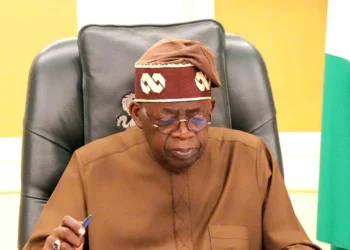
Charles Soludo has stirred fresh controversy after unveiling a strict policy targeting traders who fail to open their shops on approved business days in Anambra State.
The governor announced that shop owners who keep their businesses closed contrary to government directives would face severe sanctions, including fines running into millions of naira.
According to Soludo, the measure is part of efforts by the state government to strengthen commercial activities, improve economic stability and discourage repeated disruptions to business operations across Anambra.
Speaking while explaining the new enforcement plan, the governor warned that traders whose shops are sealed for violating the directive would face an even heavier punishment if they reopen the premises without official approval.
“If we seal your shop and you go ahead to open it, you are liable for the second offence, that is, another 20 million. The first offence of not opening the shop is 20 million naira, and the offence of opening it is another 20 million naira. We need money. If you want to close your shop every Monday for good reasons, it is okay, but we will make a plea bargain, and you will pay us no less than 5 million naira. Our commerce is the most important sector of our economy,” Soludo said.
The governor stressed that commerce remains the backbone of Anambra’s economy and argued that consistent trading activities are necessary to boost internally generated revenue and maintain economic growth within the state.
Officials of the Anambra State Government said the directive would be implemented through market monitoring teams and relevant enforcement agencies stationed across major commercial centres.

According to government sources, authorities believe the policy will help discourage arbitrary closure of shops and restore stability to market activities in different parts of the state.
However, the announcement has triggered widespread reactions online, with many Nigerians questioning the harshness of the penalties attached to the directive.
Critics argued that the policy fails to fully consider the insecurity concerns linked to Monday sit-at-home tensions that have affected commercial activities across parts of the South-East in recent years.
Some social media users also expressed concern over the financial burden such penalties could place on small business owners and traders already struggling with economic hardship.
Others, however, defended the governor’s position, insisting that restoring confidence in commercial activities is important for the economic survival of the state.
The latest development has once again placed the debate around sit-at-home enforcement, public safety and economic activity at the centre of political discussions in the South-East region.
As reactions continue to pour in, attention is expected to focus on how the Anambra State Government plans to implement the directive and whether traders’ associations will challenge or support the policy.
What you should know
Monday sit-at-home orders in parts of South-East Nigeria began years ago amid separatist tensions and security concerns in the region.
The situation has significantly affected economic activities, especially in commercial states like Anambra. Governor Charles Soludo has repeatedly opposed the disruption of businesses and has introduced measures aimed at restoring normal economic activities.
Critics, however, argue that insecurity fears still influence why many traders stay away from markets on Mondays. Anambra is widely regarded as one of Nigeria’s major commercial hubs, with cities like Onitsha hosting some of the largest markets in West Africa.
The governor’s latest directive has now intensified debate over security, governance and economic enforcement policies.