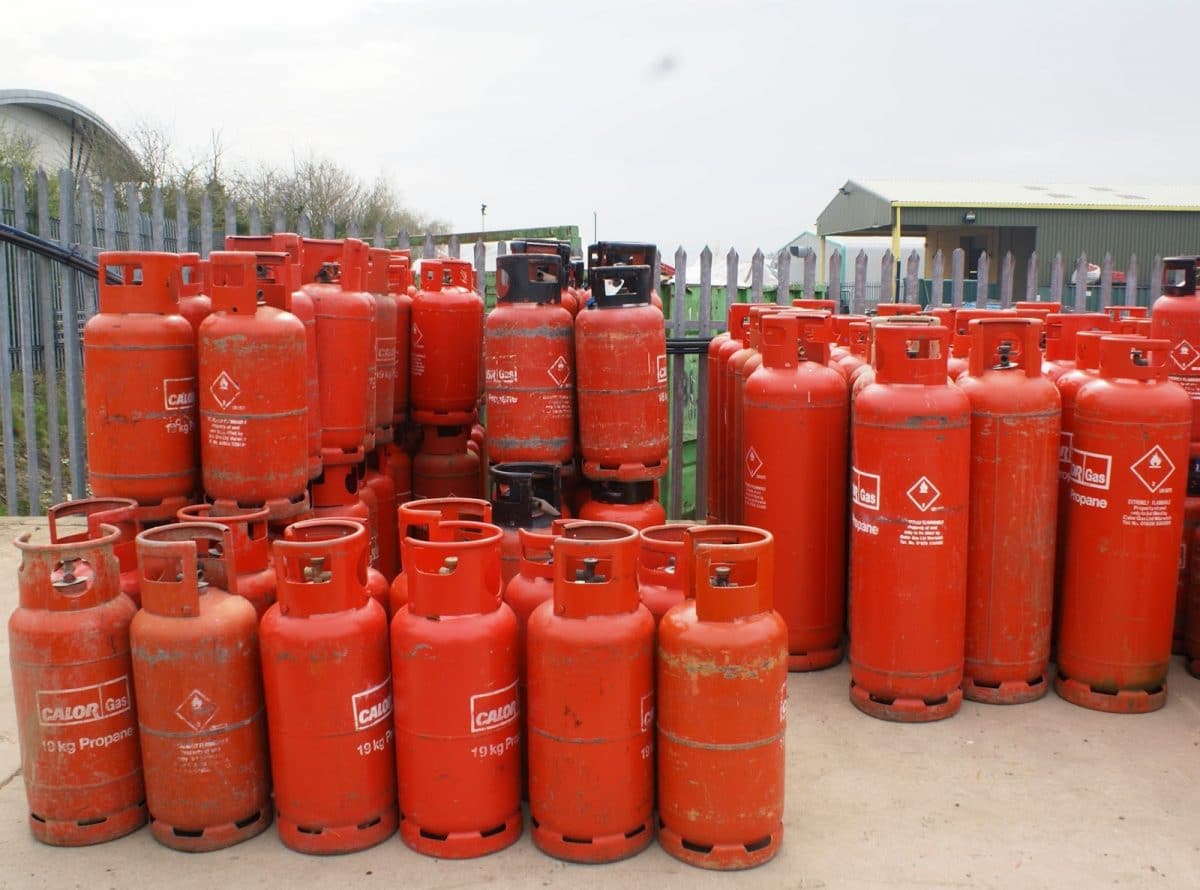
The Federal Government has directed Nigeria’s petroleum regulator to intensify engagement with gas producers and marketers to boost supply and stabilize a market that has left millions of households under severe financial pressure.
The directive, disclosed in an official statement by the Minister of State for Petroleum Resources (Gas), Ekperikpe Ekpo, on Monday, signals Abuja’s recognition that the current pricing crisis, one that has seen the cost of a standard 5-kilogram cylinder of Liquefied Petroleum Gas (LPG) jump by nearly 14 percent in a single month, has become a matter of urgent national concern.
At the heart of the government’s response is an instruction to the Nigerian Midstream and Downstream Petroleum Regulatory Authority (NMDPRA) to intensify its engagement with gas producers, importers, and other market stakeholders to accelerate the importation of LPG into the country.
The move is aimed at supplementing domestic production, which officials say has faced headwinds from a combination of infrastructure constraints and global market pressures.
In the statement signed by the minister’s spokesman, Louis Ibah, Ekpo said he had taken note of the widespread concerns expressed by Nigerians and offered a firm reassurance that the federal government remains “fully committed to ensuring adequate, reliable, and affordable gas supply for households, industries, and power generation across the country.”
That reassurance, however, comes against a backdrop of hard statistics that tell a sobering story of a market under severe strain.
Data released last month by the National Bureau of Statistics (NBS) in its Cooking Gas Price Watch for April laid bare the scale of the problem. The average retail price of a 5-kilogram cylinder of cooking gas climbed from N7,655.73 in March 2026 to N8,706.93 in April, a sharp month-on-month increase of 13.73 percent.
The figure is even more striking when placed in a year-on-year context: prices rose 10.42 percent compared to N7,855.60 recorded in April 2025.
According to the NBS, the average retail refill price for that size surged by 13.89 percent in a single month, climbing from N19,652.83 in March to N22,382.20 in April, a jump of nearly N2,730. Year-on-year, the increase stands at 10.43 percent, up from N20,268.06 in April 2025.
For millions of low-income Nigerians who rely on cooking gas as a cleaner and increasingly preferred alternative to firewood and kerosene, these price movements are not mere statistics; they represent genuine hardship, and in some cases, a forced retreat to more hazardous cooking options.
Minister Ekpo was quick to attribute the price surge to structural and global economic forces rather than government missteps. He cited foreign exchange volatility, rising logistics costs, infrastructure constraints, and fluctuations in international LPG prices as the primary drivers of the domestic price hike, factors largely external to government policy, he argued.
“The price-influencing factors should not be misinterpreted as evidence of policy failure,” the minister stated pointedly, in what appeared to be a direct response to voices in the public and civil society who have questioned the effectiveness of the government’s energy management approach.
The minister also moved to address concerns that Nigerian LPG producers may be diverting gas meant for domestic consumption to more lucrative export markets, a suspicion that has circulated among industry watchers.
Ekpo flatly denied this, stating that “no producer is exporting LPG volumes designated for the domestic market” and affirming that regulatory measures remain “firmly in place” to ensure local needs are prioritized.
This assurance, he noted, is backed by an existing directive requiring that all LPG produced in Nigeria be channeled first to the domestic market, a policy he credited with already helping to “strengthen domestic supply, reduce dependence on imports, and improve market resilience.”
On a more optimistic note, the minister pointed to a potentially significant development on the supply side: the imminent commencement of LPG deliveries from a new Seplat Energy gas facility, expected to begin operations in July 2026. Officials say this addition to the supply chain will “significantly boost national supply” and could, in time, exert downward pressure on pump prices.
In the interim, the government says marketers have already committed to increasing import volumes to complement existing domestic production, a short-term measure intended to plug supply gaps while longer-term infrastructure solutions are pursued.
“The outlook for LPG supply remains positive,” Ekpo declared, “and the federal government will continue to pursue measures that enhance availability, affordability, and long-term energy security for Nigerian consumers.”
For many Nigerians, however, government assurances of imminent relief in the energy sector are not new currency. The country has endured years of fuel subsidy controversies, pipeline vandalism, refinery underperformance, and forex-linked commodity shocks, all of which have repeatedly eroded consumer confidence in official commitments.
Whether this latest intervention translates into tangible price relief at the neighborhood gas depot will ultimately depend on how quickly imports can be scaled up, how effectively the NMDPRA enforces its regulatory mandate, and whether the Seplat facility delivers on schedule.
For now, Nigerian households counting their naira at the gas refill station will be watching and waiting.
WHAT YOU SHOULD KNOW
Nigeria’s cooking gas prices have surged sharply up by nearly 14% in just one month, squeezing millions of households already battling a difficult cost-of-living crisis.
The federal government has responded with directives to boost LPG imports and regulatory assurances, with hopes pinned on a new Seplat gas facility expected to increase supply from July 2026.
While officials blame global market forces and foreign exchange pressures rather than policy failures, the real test lies not in the statements made in Abuja but in whether Nigerians will actually feel relief at the gas depot.