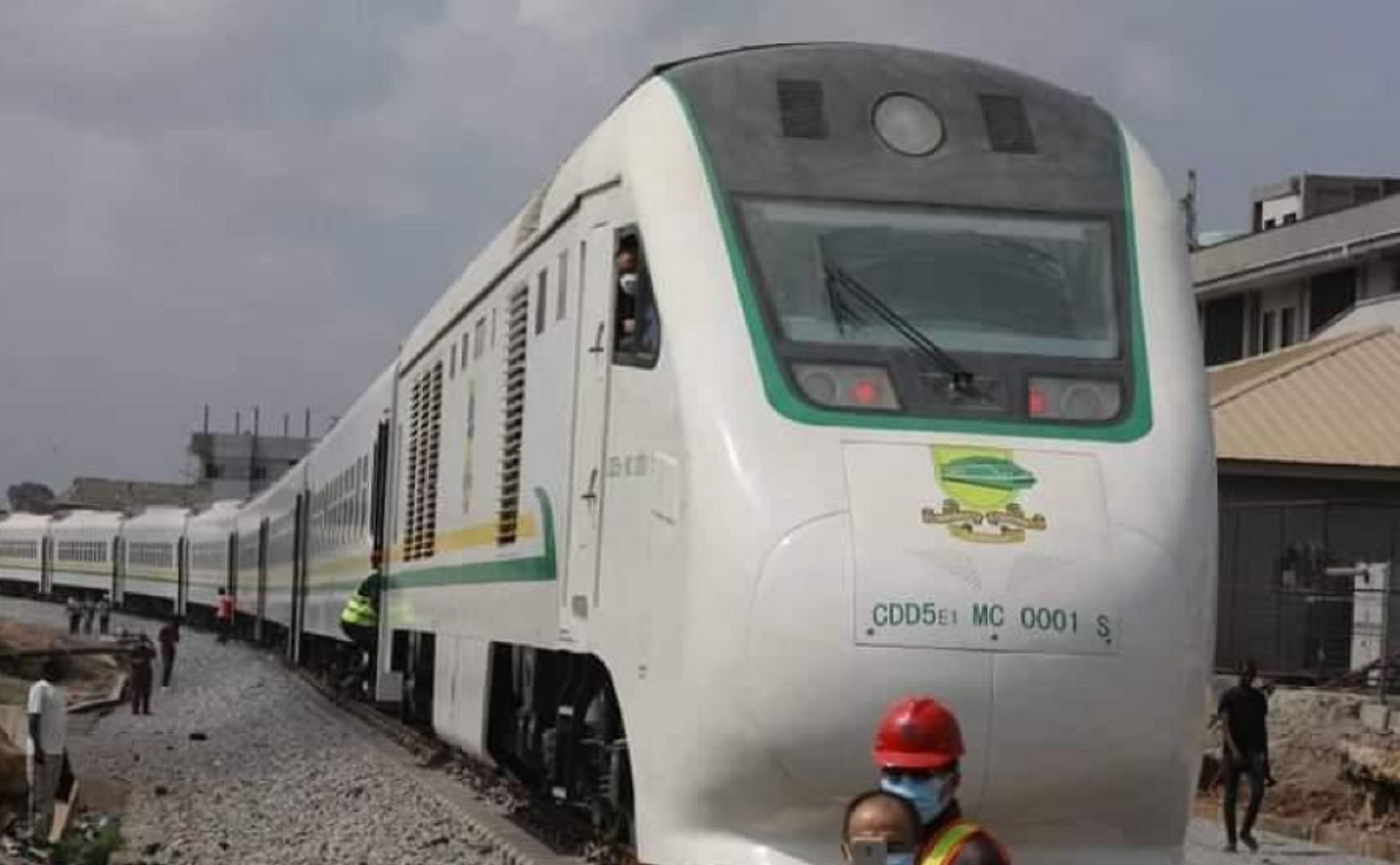
The Managing Director of the Nigerian Railway Corporation (NRC), Dr. Kayode Opeifa, has constituted a dedicated committee to accelerate the nationwide integration of ports with the rail network, relying heavily on private-sector capital and expertise.
Dr. Opeifa announced the quarterly stakeholders engagement of the Nigerian Ports Consultative Council (NPCC) held in Lagos, where maritime and rail operators gathered to forge a common roadmap for an integrated transport system.
The move, according to a statement issued by the NRC’s Chief Public Relations Officer, Callistus Unyimadu, underscores the federal government’s determination to end decades of road-dominated cargo haulage that has left ports congested and the economy bleeding billions in inefficiencies.
Speaking passionately to industry leaders, Dr. Opeifa declared that the time for half-measures was over. “The maritime sector reforms and the deep-sea ports without an efficient rail linkage would continue to yield marginal returns,” he warned. He stressed that only a “revolution of freight by rail” could deliver the reliable, cost-effective cargo movement Nigeria desperately needs.
The NRC boss revealed that the secretary to the government of the Federation has also constituted a high-level committee to drive the effective delivery of the initiative, signalling top-level political backing from the President Bola Tinubu administration.
He acknowledged the “strong collaboration” already existing between the NRC and port authorities, noting “significant progress” made in recent years, but insisted that “more work needed to be done”—especially in Lagos, the nation’s economic heartbeat, and along the eastern port corridor.
Persistent bottlenecks in moving cargo seamlessly from the ports via rail remain a major headache, Dr. Opeifa admitted. He called for deliberate and urgent efforts to eliminate these operational friction points, warning that without radical improvement, Nigeria’s ports would continue to choke on cargo while the rest of the country starved for efficient supply chains.
Looking east, the NRC chief highlighted the strategic importance of interconnectivity among ports in the region and disclosed plans to introduce new rail lines that will deepen port operations and unlock greater regional trade integration. He also gave concrete updates on flagship projects already in the pipeline.
“The Kaduna-Kano rail corridor will soon be completed,” Dr. Opeifa announced, drawing applause from stakeholders. He further disclosed that the federal government has approved several critical extensions to link existing rail lines directly to the ports—the single most effective way, he said, to evacuate cargo faster and drastically reduce the chronic congestion that currently plagues the port corridors.
In detailed remarks that painted a clear picture of the ambitious master plan, Dr. Opeifa listed the approved projects:
- On the standard-gauge western line, an extension of the Lagos-Ibadan rail from Apapa Port to TinCan Island Port.
- On the central line, the Warri-Itakpe rail will connect directly to Warri Port.
- On the eastern narrow-gauge flank, the line will link to the Port Harcourt Port at Onne.
- On the western narrow-gauge flank, the Lagos-Kano line will connect to Baro Port.
“Connecting all the ports by rail remains one of the sure pathways to boosting the nation’s economy,” he declared.
Dr. Opeifa was equally blunt with other stakeholders, particularly truckers and road-haulage operators. He urged them “not to sabotage the strategic drive of rail linkages,” reminding them that they too have a vital role to play: ferrying raw materials from farmlands to the ports and distributing imported freight from rail freight yards to final destinations across the country by road.
He also revealed exciting new plans for the Lekki Deep Sea Port—Nigeria’s newest and most modern facility. A dedicated rail line will be constructed to serve it, running through Ijebu-Ode and Sagamu to Kajola, where it will seamlessly join the Lagos-Ibadan western line. “This project most likely would take off this year,” he said, raising hopes of early relief for the rapidly growing Lekki corridor.
To crown the vision, Dr. Opeifa reiterated that every single port in Nigeria must eventually be connected by rail to guarantee seamless, efficient, and standardized freight movement nationwide.
He further called for a massive increase in the number of freight yards along both the narrow-gauge and standard-gauge networks to dramatically boost cargo-handling capacity and overall logistics efficiency.
The stakeholders’ engagement, which brought together maritime operators, rail executives, government officials, and private investors, was described as a “vital platform” to align strategies, strengthen partnerships, and collectively chart a path toward a truly modern, integrated transport system.
For a country whose economy still relies overwhelmingly on its ports for imports and exports, the message from Dr. Opeifa was unmistakable: the rail revolution is no longer optional—it is the only sustainable route to unlocking Nigeria’s full economic potential.
With committees now in place, concrete approvals secured, and private-sector muscle being actively courted, the race to put Nigeria’s ports on rails has truly begun.
WHAT YOU SHOULD KNOW
The Nigerian Railway Corporation, under Dr. Kayode Opeifa, is aggressively driving the connection of all major Nigerian ports to the national rail network, backed by a new high-powered committee and strong federal government approvals.
Efficient rail-port connectivity is now recognised as the critical game-changer for reducing port congestion, lowering logistics costs, boosting the economy, and creating a modern, integrated freight system across Nigeria.
With key extensions approved for Apapa-TinCan, Warri, Onne, Baro, and a new line planned for Lekki Deep Sea Port, the message is clear — rail linkage to every port is no longer optional; it is the surest pathway to unlocking Nigeria’s full economic potential.