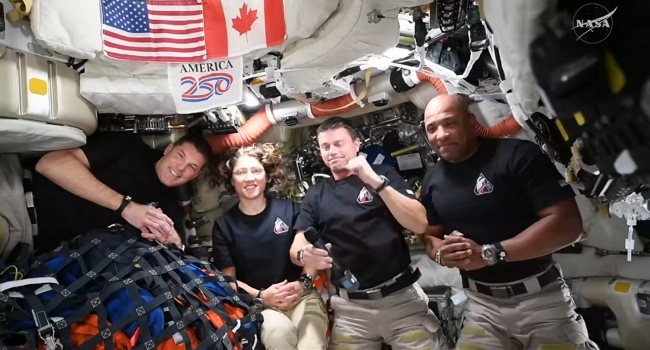
Following the successful completion of the Artemis II mission, NASA is now turning to private space giants Elon Musk and Jeff Bezos to achieve its next milestone—landing astronauts on the Moon.
The earlier Apollo program enabled the first human landings on the Moon between 1969 and 1972, but those missions were limited, allowing only two astronauts to stay for short durations. More than five decades later, NASA aims to significantly expand those capabilities by sending four astronauts for extended stays lasting weeks, with long-term plans to establish a lunar base.
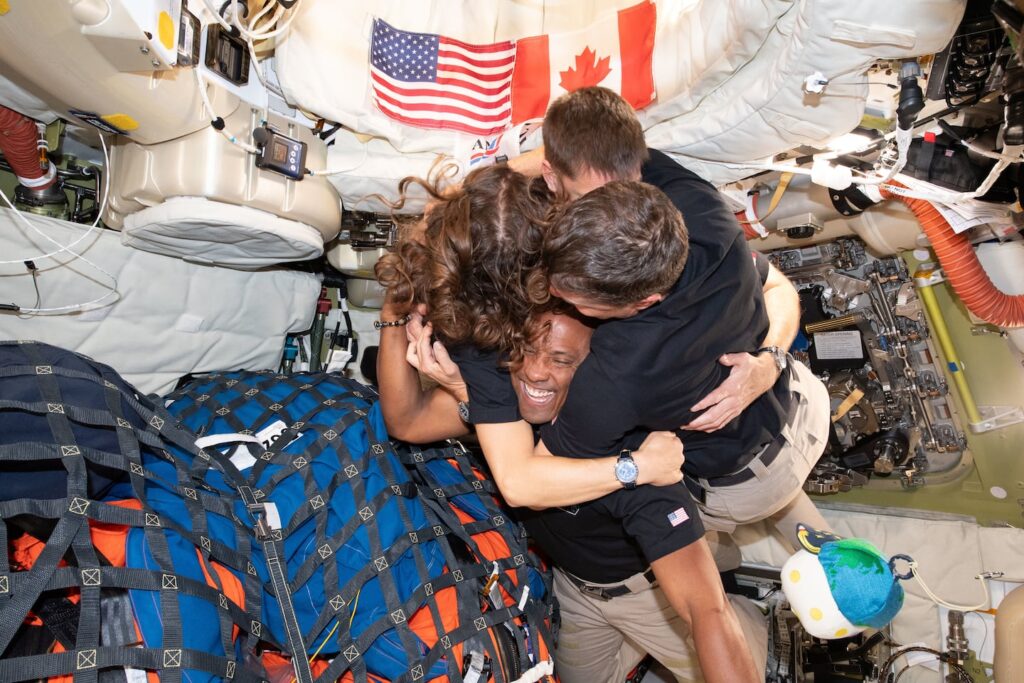
For this next phase, NASA is relying on commercial lunar landers being developed by SpaceX and Blue Origin to transport astronauts to the lunar surface.
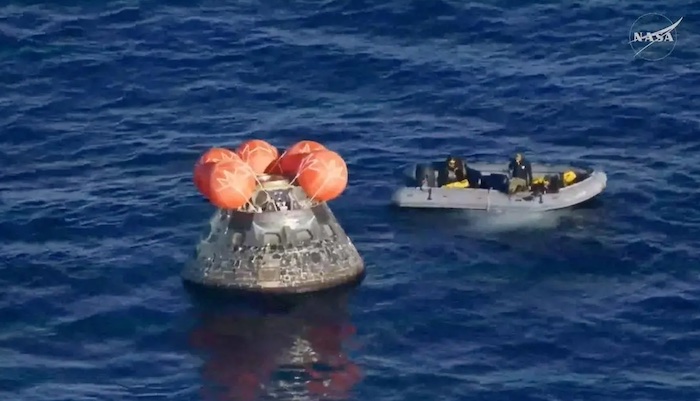
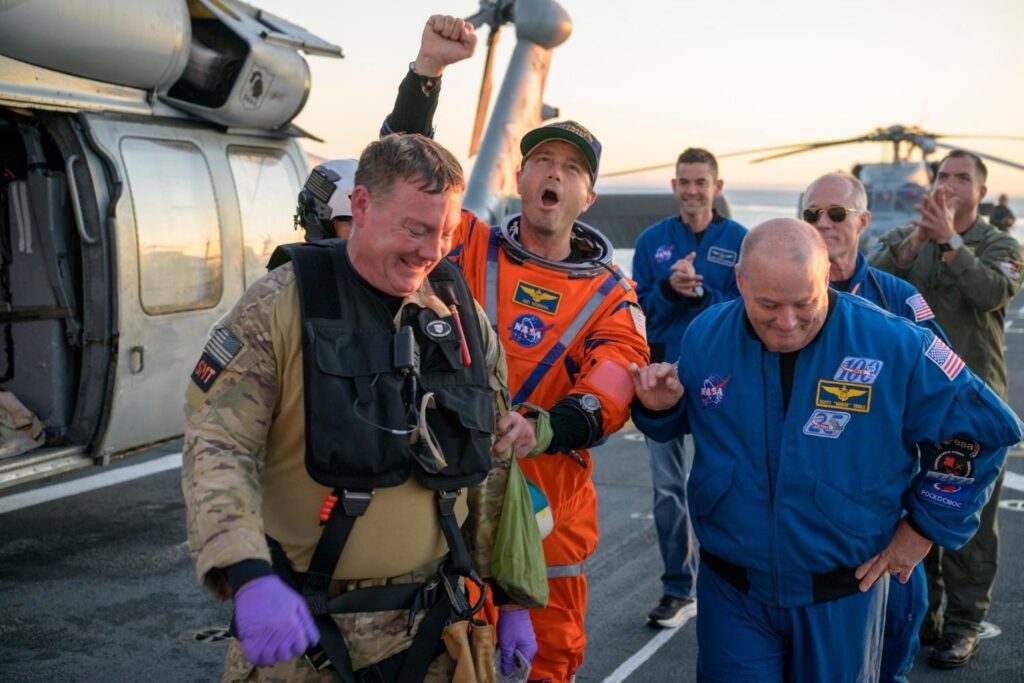
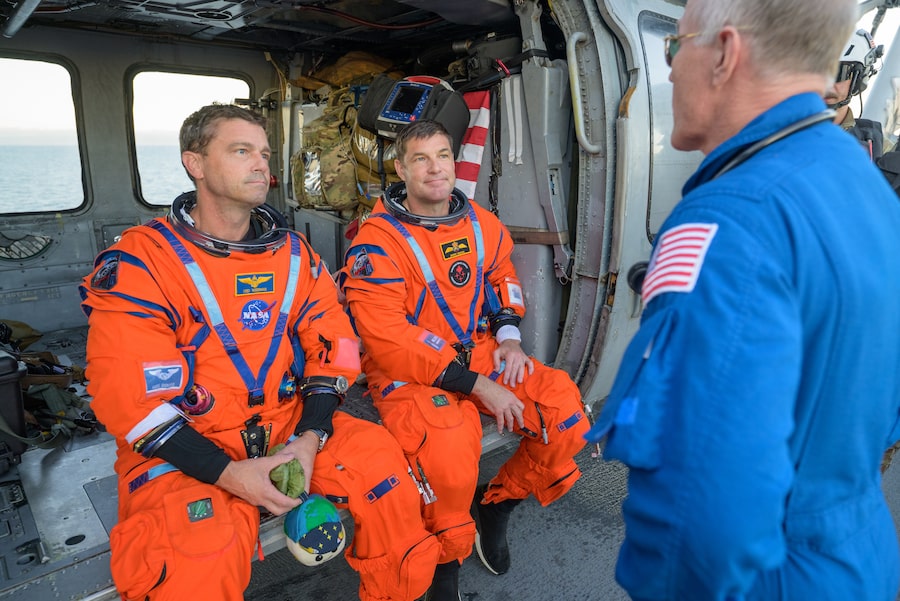
After Artemis II concluded its record-setting journey with a splashdown in the Pacific Ocean on Friday, NASA officials called for increased collaboration with industry partners ahead of a targeted crewed landing in 2028.
“We need all of industry to work and come along with us, and they need to accept that challenge and come with us and really start the production lines that are going to be required in order to achieve that goal,” said Lori Glaze, the acting associate administrator, during a press briefing.
Unlike the Apollo era, which depended on a single rocket—the Saturn V—to carry both astronauts and the lunar module, NASA’s Artemis program uses a dual-system approach. One system launches the Orion spacecraft carrying astronauts from Earth, while another launches a separately built lunar lander developed by private contractors.
According to Kent Chojnacki, the shift was necessary because the Apollo architecture could not support long-term missions. “It was very not expandable to long-term exploration and long-term stays,” he explained.
Experts say the earlier missions were limited in scope. Jack Kiraly of the Planetary Society described them as short-term expeditions rather than sustained exploration.
Modern systems, however, are far more advanced. Chojnacki noted that the new lunar landers under development are significantly larger—between two and seven times bigger than those used during Apollo. NASA is also collaborating with international partners, including European firms that contributed to the Orion spacecraft’s propulsion module.
While this approach increases available resources, it also adds complexity. One major technical hurdle is in-orbit refueling, a process that has yet to be fully tested at the required scale. The mission will require multiple launches to transport fuel into space before the lander can make the roughly 400,000-kilometre journey to the Moon.
Concerns about delays and feasibility have intensified, especially regarding SpaceX’s timeline for delivering its lander. In 2025, three former NASA officials warned that the United States risked falling behind in the renewed race to the Moon.
Competition from China, which plans to land astronauts on the Moon by 2030, has added urgency. The Trump administration has expressed concern that the U.S. could lose its lead in lunar exploration.
In response, NASA considered revisiting its contract strategy, potentially prioritising Blue Origin’s lander over SpaceX’s. This possibility prompted both companies to refocus their efforts on meeting NASA’s requirements and securing their contracts.
Despite uncertainties, NASA officials remain confident. “We do have a plan,” Chojnacki said, adding that contingency measures are in place if challenges arise.
The timeline remains tight. NASA plans to test orbital rendezvous operations in 2027 and proceed with a crewed Moon landing in 2028. Before that, companies must demonstrate in-orbit refueling capabilities and successfully land an uncrewed spacecraft on the Moon.
Experts caution that the schedule leaves little margin for error. Clayton Swope of the Center for Strategic and International Studies noted that the timeframe is ambitious given the technical complexity involved.
What you should know
NASA is preparing for a crewed Moon landing in 2028 following the success of Artemis II, relying on SpaceX and Blue Origin to develop lunar landers.
Unlike the Apollo missions, the new plan aims for longer stays and larger crews, with future goals of building a lunar base. However, major challenges remain, including in-orbit refueling and tight timelines. Competition from China’s lunar ambitions has increased pressure on the United States to deliver.
NASA plans key tests in 2027, but experts warn the schedule is ambitious, with little room for delays in achieving this next phase of space exploration.