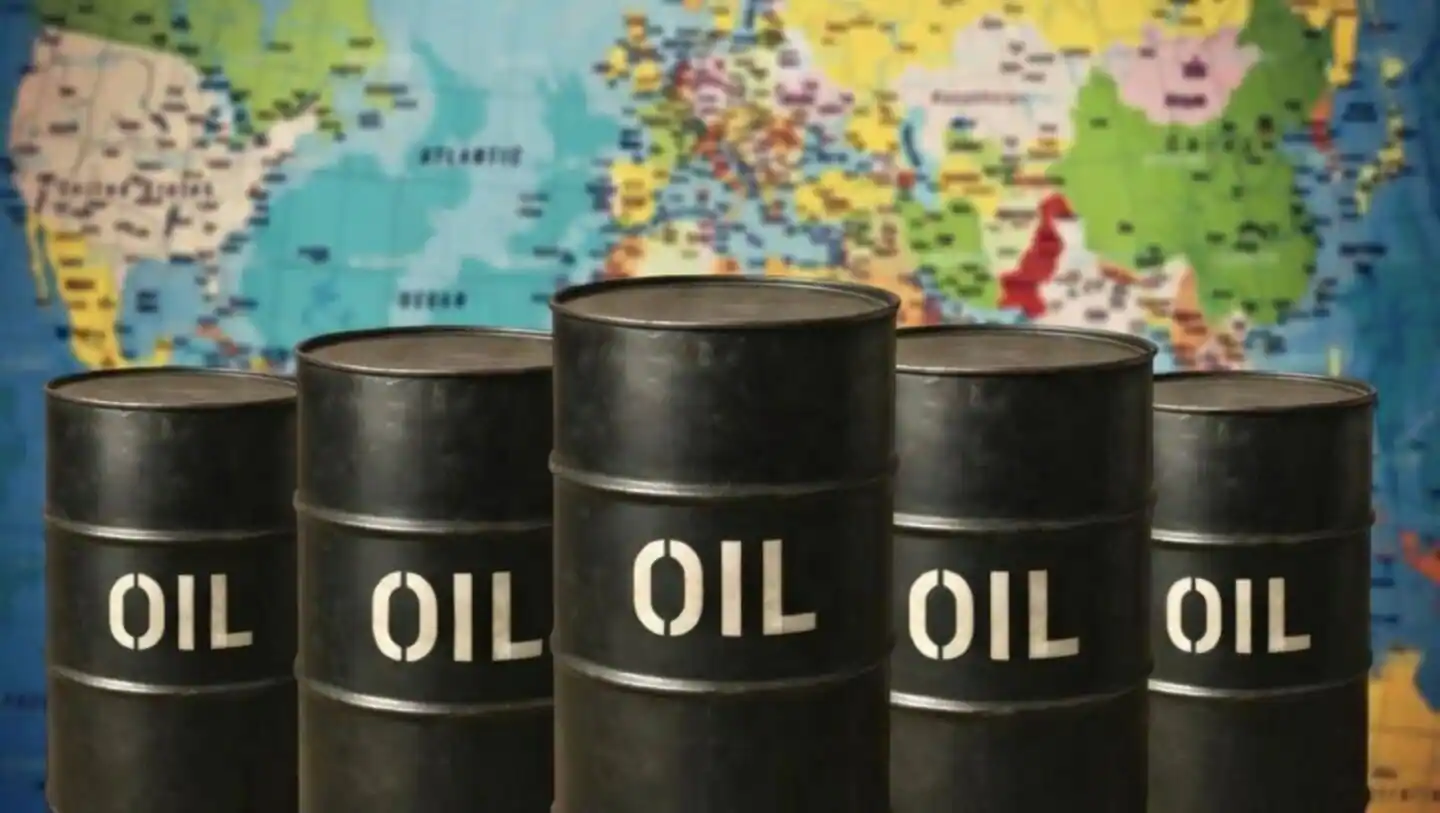
Oil prices jumped over 2% on Thursday after Iran’s Revolutionary Guards launched a retaliatory strike on a U.S. airbase, rattling global energy markets and undermining hopes for a diplomatic resolution to the ongoing conflict.
Brent crude futures, the international benchmark, climbed $2.34, or 2.48%, to $96.63 a barrel by 07:01 GMT, with the more actively traded August contract gaining $2.24, or 2.43%, to settle at $94.49. Meanwhile, U.S. West Texas Intermediate (WTI) futures rose $2.26, or 2.55%, to $90.94 a barrel.
The gains came just a day after both benchmarks suffered their steepest single-session losses in weeks, having shed more than 5% on Thursday on mounting optimism that Washington and Tehran were edging toward a deal that could end hostilities and reopen the strategically critical Strait of Hormuz.
That optimism, it now appears, was premature.
According to Iran’s state-affiliated Tasnim news agency, the IRGC stated that its strike on the U.S. airbase was a direct response to what it described as an early morning American attack near Bandar Abbas airport, Iran’s key southern port city sitting at the mouth of the Persian Gulf.
In a statement laced with defiance, the Guards warned that any further acts of what they termed “aggression” would draw a response that would be, in their words, “more decisive.”
The U.S. military, for its part, confirmed it had conducted fresh strikes inside Iran, targeting a military installation that American commanders assessed as posing an active threat to both U.S. armed forces and the flow of commercial maritime traffic through the Strait of Hormuz, the narrow waterway through which an estimated 20% of the world’s oil supply passes daily.
The dramatic reversal in oil prices from a five-week low to a sharp two-percent gain within a single trading session is a stark illustration of how deeply the U.S.-Iran standoff has embedded itself into global energy calculations.
Traders, who had rushed to sell crude on Wednesday amid talk of a ceasefire and the potential reopening of Hormuz, scrambled to reverse course as the prospect of a negotiated peace once again receded into the distance.
“The rise in oil prices highlights the fragility of the current ‘no peace, no war’ situation between the United States and Iran,” said Simon-Peter Massabni, head of business development at XS.com, capturing the prevailing sentiment on trading floors from London to Singapore.
“While the market holds onto hopes that the conflict is nearing an end, the increasing frequency of skirmishes between the two sides, coupled with Donald Trump’s evident frustration, suggests that this conflict may continue. As a result, the Strait of Hormuz is likely to remain closed.”
His assessment resonated widely. The Strait of Hormuz, barely 33 kilometers wide at its narrowest point, is the jugular vein of global oil supply. Its closure, even partial or threatened, has historically been enough to send energy prices spiraling, and the current standoff is proving no exception.
Adding fuel to the fire, fresh data from the American Petroleum Institute revealed that U.S. crude oil stockpiles fell by 2.8 million barrels last week — the sixth consecutive weekly decline.
The persistent drawdown in domestic inventories underscores how tight the global supply picture has become, leaving markets with precious little buffer against geopolitical shocks of the kind unfolding in the Gulf.
Traders are now awaiting official inventory figures from the U.S. Energy Information Administration, due on Thursday, a day later than scheduled, following Monday’s Memorial Day federal holiday. Those numbers, should they confirm the API’s drawdown estimates, could provide fresh upward momentum for crude prices in what is already proving to be one of the most turbulent weeks for energy markets this year.
With the July Brent contract set to expire on Friday, the timing could not be more sensitive. Market participants will be watching with acute attention for any fresh signals, diplomatic or military, from Washington and Tehran in the hours ahead.
A single statement, a backchannel communication, or, just as easily, another exchange of strikes could send prices lurching in either direction.
For now, however, the balance of risk tilts unmistakably upward. As long as Iranian and American forces continue trading blows in the Persian Gulf and as long as the world’s most critical oil chokepoint remains under threat, energy markets will remain, as one analyst put it, on a knife’s edge.
WHAT YOU SHOULD KNOW
The world’s oil supply is hanging by a thread. Escalating military exchanges between the United States and Iran with no credible peace deal in sight are keeping the Strait of Hormuz, the single most critical artery of global oil trade, firmly in the crosshairs.
With U.S. crude stockpiles shrinking for six straight weeks and both sides showing no signs of backing down, energy markets remain dangerously exposed. Until diplomacy replaces firepower in the Persian Gulf, expect oil prices to stay volatile and the global economy to feel every tremor.