Gold prices bounced back sharply on Thursday, recovering from a two-month low as U.S.-Iran diplomatic progress sparked optimism and gave the struggling metal a timely boost.
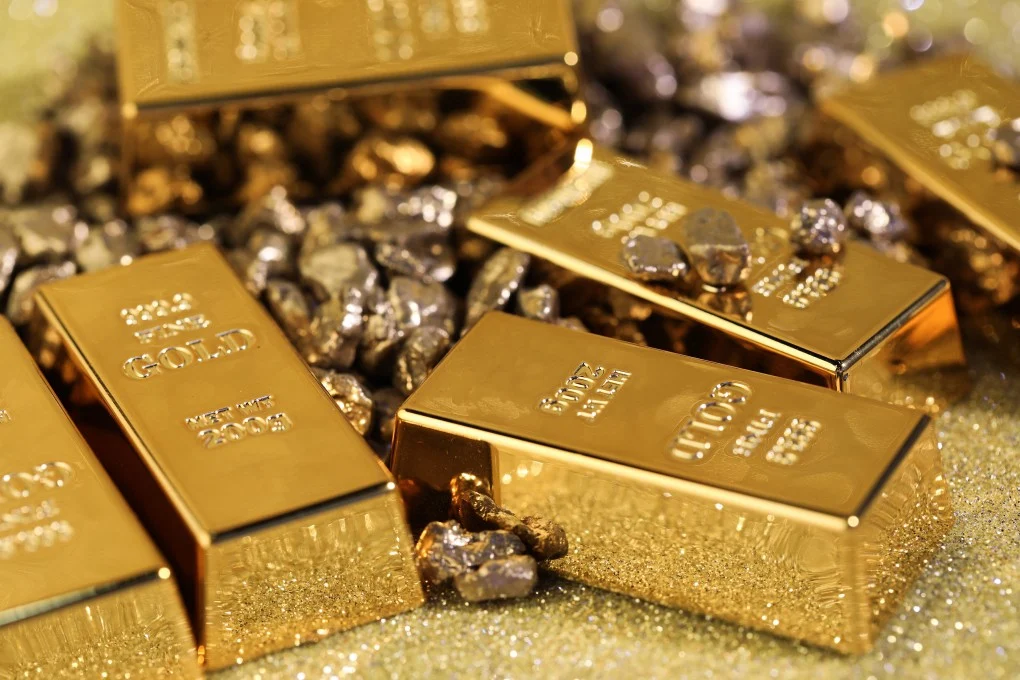
Spot gold climbed 0.5% to $4,477.59 per ounce by 11:08 a.m. EDT, reversing an earlier slide that had briefly dragged prices to their weakest level since late March. U.S. gold futures tracked the move, rising 0.6% to $4,475.60, a sharp turnaround from what had looked, just hours earlier, like the beginning of a more serious technical breakdown.
The catalyst came swiftly and from a familiar source of market-moving headlines: Axios reported Thursday that the United States and Iran had reached an outline agreement to extend their ceasefire, with the deal pending approval from President Donald Trump.
The report immediately rippled through commodity and currency markets, cooling oil prices and pulling the U.S. dollar index down 0.2%, a decline that made dollar-denominated gold more attractive to overseas buyers and helped fuel the rebound.
The ceasefire in question traces back to the onset of the U.S.–Israeli conflict with Iran in late February, a confrontation that has cast a long shadow over global energy supplies, inflation expectations, and financial markets ever since. The prospect of an extension, even a tentative one, was enough to send investors repositioning.
Independent metals trader Tai Wong captured the mood with characteristic color. “The trading gods seem to be intervening in gold today,” he said. “First, the weak PCE, and now reports of an imminent deal that would open Hormuz, are giving gold a much-needed reprieve.”
Wong’s reference to the Strait of Hormuz underscores just how precarious gold’s position had been heading into Thursday’s session. Earlier in the morning, the metal had been flirting dangerously with its 200-day moving average, a closely watched technical threshold that traders and institutional investors treat as a litmus test for whether a longer-term uptrend remains intact.
“Gold was threatening to drop below the 200-day moving average early this morning,” Wong noted, adding that breaching that level would have sent an alarming signal to momentum traders and could have triggered a cascade of algorithmic selling.
The timely arrival of positive geopolitical news effectively slammed the brakes on that scenario at least for now.
Thursday’s recovery was not built on geopolitics alone. Fresh economic data added a second pillar of support. The U.S. personal consumption expenditures price index, the Federal Reserve’s preferred inflation gauge, rose 3.8% in the twelve months through April, in line with market expectations. Every month, the index climbed 0.4% in April, a notable step down from the sharp 0.7% surge recorded in March.
For gold markets, the significance of that moderation lies in what it implies for monetary policy. Bart Melek, global head of commodity strategy at TD Securities, said the PCE reading suggests the Federal Reserve may opt to hold interest rates steady rather than pursue further tightening, a scenario that would ease one of the most persistent headwinds facing bullion.
That headwind has been considerable. Minutes from the Fed’s April 28-29 meeting, published last week, revealed a growing number of officials open to the possibility of raising rates further, a revelation that rattled gold markets and contributed to the sell-off that brought prices to this week’s lows.
Gold, which pays no yield, suffers in a rising rate environment as investors rotate toward interest-bearing assets such as Treasury bonds.
Despite Thursday’s reprieve, seasoned market observers were quick to warn against reading too much into a single session’s gains. The structural forces weighing on gold have not been dismantled; they have merely been interrupted.
“The problem for gold is that geopolitical instability is no longer operating in isolation,” said Fawad Razaqzada, market analyst at City Index. “Higher energy prices are once again feeding into inflation concerns, pushing Treasury yields modestly higher and strengthening the dollar at the same time.” That toxic combination of rising yields and a stronger greenback has been the defining feature of bullion’s difficult spring.
Indeed, the apparent paradox at the heart of gold’s recent struggles has frustrated many investors who had expected the metal to thrive in a period of heightened geopolitical risk.
While gold is traditionally regarded as a safe-haven asset in times of global uncertainty, its performance depends heavily on the broader interest rate environment. When inflation drives central banks toward tightening, as has been the case since the Iran conflict stoked energy prices, gold’s appeal dims considerably.
The metal has consequently remained under sustained pressure since late February, caught between its safe-haven instincts and the cold arithmetic of real yields.
Elsewhere in the precious metals market, the picture was mixed. Spot silver edged up 0.3% to $74.80, drawing modest support from the same dollar weakness that lifted gold.
Platinum, however, moved against the grain, losing 0.8% to $1,902.64, while palladium, more sensitive to industrial demand dynamics, fell more sharply, slipping 1.9% to $1,364.10.
With the ceasefire deal still awaiting presidential sign-off and the Federal Reserve’s next policy meeting looming on the horizon, gold traders face a market that remains binary in its potential outcomes.
A confirmed extension of the Iran ceasefire, combined with cooling inflation data, could provide the conditions for a sustained recovery. A breakdown in negotiations or a hotter-than-expected inflation reading could swiftly erase Thursday’s gains and resume the metal’s descent.
For now, gold has bought itself time. Whether Thursday marks a genuine turning point or merely a brief pause in a deeper correction is a question the market will be answering in the days ahead.
WHAT YOU SHOULD KNOW
Gold’s rebound on Thursday was ultimately a story of two forces briefly aligning in the metal’s favor: a softer dollar driven by Iran ceasefire hopes and inflation data that took some pressure off the Federal Reserve to raise rates further.
However, investors should not mistake a single day’s recovery for a trend reversal. As long as geopolitical tensions continue fueling inflation, keeping Treasury yields elevated and the dollar strong, gold remains structurally challenged despite its safe-haven reputation.