New data from Nigeria’s Budget Office has exposed a vast gulf between government projections and reality in Q3 2025, and the numbers make for uncomfortable reading for Africa’s largest economy.
Gross oil revenue for the July-to-September period came in at N4.87 trillion, a figure that sounds substantial on paper but represents a crushing N7.88 trillion shortfall against the prorated quarterly projection of N12.76 trillion.
That is a 61.8% miss, not a rounding error, not a minor variance, but a near-catastrophic gap in the revenue line that underwrites much of Nigeria’s public spending.
To put this in perspective, the federal government entered 2025 projecting that oil alone would generate N51.05 trillion across the full year, roughly 65 kobo of every naira it expected to collect. In a single quarter, the reality fell short of that plan by an amount larger than the GDP of many African nations.
Drilling into the individual revenue components only deepens the concern. Petroleum profit tax and gas taxes, ordinarily among the government’s most reliable oil-linked earners, delivered just N1.97 trillion against a target of N7.85 trillion, a shortfall of nearly N5.87 trillion, or 74.82%. Oil and gas royalties were missing by N1.42 trillion.
Crude oil and gas sales fell almost exactly halfway below expectations, generating N622.99 billion against a projected N1.18 trillion.
Incidental oil revenue royalty recoveries and marginal field license earnings performed perhaps the worst of all, yielding a mere N37 billion against a N295.88 billion forecast.
There were scattered bright spots. Concessional rentals surged to N7.89 billion, more than six times their N1.03 billion budget estimate, a 667.5% overperformance that, while impressive in relative terms, does little to plug a multi-trillion-naira hole.
Gas flared penalties and exchange gains also contributed a combined N210 billion outside original budget lines, a reminder that ad hoc windfalls cannot substitute for structural revenue generation.
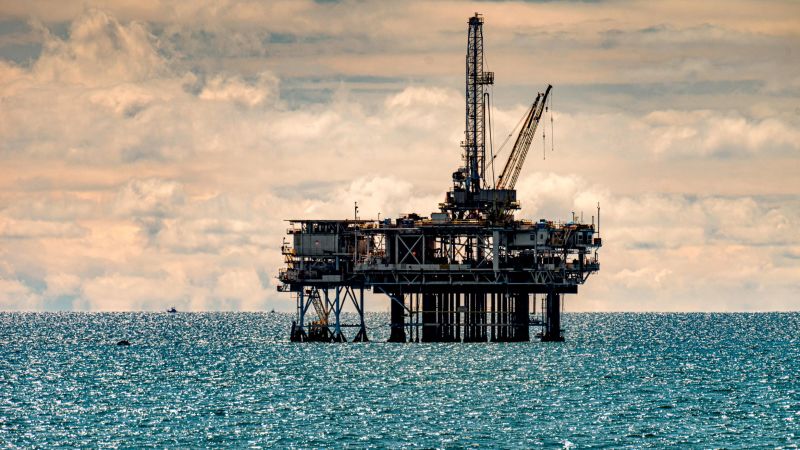
Behind every revenue figure lies a barrel count, and Nigeria’s barrel count has been deeply troubling. The 2025 budget was anchored on a crude oil production benchmark of 2.06 million barrels per day, an ambitious but not unreasonable target for a country sitting on some of the world’s richest hydrocarbon reserves. Reality, however, has been less cooperative.
Figures from the Nigerian Upstream Petroleum Regulatory Commission reveal that total crude oil and condensate production between January and September 2025 stood at 454.28 million barrels, translating to an average daily output of just 1.66 million barrels.
Nigeria has also persistently failed to meet its OPEC production quota, a fact that carries both economic and diplomatic weight for a founding member of the cartel.
The culprits are familiar and stubbornly persistent: oil theft, which security agencies have struggled to curb despite high-profile interventions; pipeline vandalism that disrupts output from the Niger Delta; chronic underinvestment in aging upstream infrastructure; and operational inefficiencies that have resisted years of reform efforts. Until these structural problems are decisively addressed, any optimistic production projection risks becoming a political fiction.
It would be tempting to view the expenditure side of the ledger as further evidence of dysfunction; total government spending came in at N8.03 trillion, a full 41.57% below the prorated quarterly estimate of N13.75 trillion. But there is a more nuanced interpretation.
With revenues severely constrained, restrained spending is not only inevitable but arguably prudent. The alternative borrowing aggressively to maintain planned expenditure levels would only deepen Nigeria’s already strained debt profile.
Non-debt recurrent expenditure stood at N2.66 trillion, N739 billion below the estimate, though still 31.2% above the same period in 2024, a sign that operational costs continue to creep upward even as the government attempts to consolidate. Statutory transfers reached N360.32 billion during the quarter.
The resulting fiscal deficit of N0.33 trillion translated to a deficit-to-GDP ratio of 2.29%, comfortably within both the statutory 3% ceiling and the ECOWAS convergence benchmark. That this threshold was maintained despite enormous revenue shortfalls is a testament to spending restraint, but it should not be mistaken for fiscal health.
The deeper issue is one that successive Nigerian administrations have diagnosed, debated, and deferred: an economy and a government budget that remain dangerously tethered to oil.
Despite years of rhetoric about diversification and genuine recent progress through tax reforms, digitized collection platforms, and efforts to expand the non-oil base, hydrocarbons continue to account for the overwhelming majority of federally collectible revenue.
The current administration has intensified non-oil revenue mobilization, and the results are not without merit. But the pace of that diversification remains far slower than the pace at which oil revenue volatility can destabilize the budget.
When a single commodity accounts for more than 65% of projected government income, a 62% quarterly miss in that commodity’s receipts is not merely a budgetary inconvenience; it is a systemic shock.
Analysts have been warning for years that Nigeria’s fiscal assumptions rest on optimistic oil projections that rarely materialize. The Q3 2025 data is not an anomaly; it is a confirmation.
The marginal improvements: Q3 oil revenue was 2.1% higher than Q2 and 5.41% above Q3 2024, offering a thin thread of encouragement, but they are improvements measured against an already weak baseline.
As Nigeria heads into the final stretch of its fiscal year, the arithmetic is unforgiving. With oil projected to contribute N51.05 trillion annually and Q3 alone producing less than N5 trillion, the government faces a growing gap between its development ambitions and the resources available to finance them.
Borrowing has already risen sharply to plug earlier deficits, and the debt service burden continues to crowd out capital spending in critical sectors.
The path forward demands more than incremental reform. It requires a frank renegotiation of Nigeria’s relationship with oil, not an abandonment of the sector, which remains a vital near-term revenue source, but a credible, time-bound plan to reduce the budget’s structural dependence on it.
That means aggressive pursuit of non-oil tax revenue, a serious reckoning with production-side challenges in the upstream sector, and fiscal projections that reflect achievable reality rather than aspirational arithmetic.
For now, the gap between what was promised and what was delivered tells its own story, and it is one Nigeria can ill afford to keep repeating.
WHAT YOU SHOULD KNOW
Nigeria’s oil revenue crisis in Q3 2025 is not a temporary setback; it is a structural warning. The government collected barely 38 cents of every naira it projected from oil, missing its target by N7.88 trillion in a single quarter.
At the root of this is a budget built on production assumptions that reality consistently refuses to meet, compounded by theft, vandalism, and underinvestment in the upstream sector.
Nigeria cannot keep designing its national budget around an oil sector it cannot control, while diversification remains a talking point rather than a measurable fiscal reality.
Until the gap between oil dependence and non-oil revenue growth is seriously closed, these quarterly shortfalls will not be news; they will be routine.