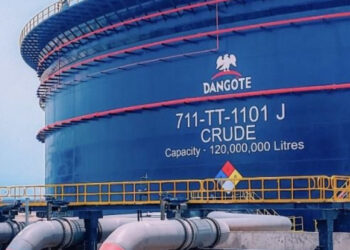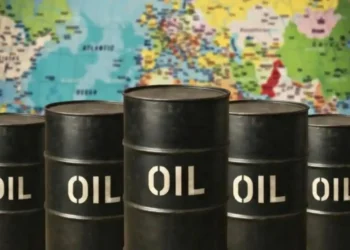
Nigeria generated approximately N55.5 trillion from crude oil sales in 2025, representing a 9.1% increase from the N50.88 trillion earned the previous year, according to an analysis of official data from the Nigerian Upstream Petroleum Regulatory Commission and the Central Bank of Nigeria.
The revenue boost came despite persistent production challenges that kept the country below its OPEC quota for nine months of the year, underscoring how favorable pricing conditions helped offset volume shortfalls in Africa’s largest oil producer.
Nigeria produced 530.41 million barrels of crude oil throughout 2025, with output exhibiting significant volatility across the year. Production opened strongly in January at 47.70 million barrels but experienced sharp fluctuations, dropping to a yearly low of 41.69 million barrels in September before recovering modestly in the final quarter.
The country’s production remained substantially below ambitious government targets. The 2025 budget projected a daily output of 2.1 million barrels of oil and condensate, which would have yielded 766.5 million barrels annually. Instead, Nigeria managed only 599.64 million barrels total—530.41 million barrels of crude and 69.23 million barrels of condensate—falling short by 166.86 million barrels.
Daily production rates told a similar story. Nigeria exceeded its 1.5 million barrel per day OPEC quota only in January, June, and July. December production stood at 1.422 million barrels per day, representing 95% of the quota and reflecting a 14,000-barrel-per-day decline from November.
While production disappointed, crude oil prices provided crucial support to revenue generation. Bonny Light, Nigeria’s benchmark crude grade, averaged $72.08 per barrel across the ten months for which CBN data was available.
Prices peaked early in the year at $80.76 per barrel in January before declining through the spring to a low of $65.90 in May. Markets stabilized in the third quarter, with prices hovering around $70-73 per barrel, before softening again to $66.15 in October.
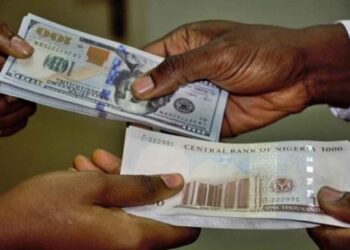
Converting the 530.41 million barrels at the average price of $72.08 yielded gross revenue of approximately $38.23 billion. At an exchange rate of N1,450 to the dollar, this translated to the N55.5 trillion figure.
Industry analysts emphasized that this represents gross revenue—not actual government receipts—as it excludes production costs, joint venture obligations, cost recovery under production-sharing contracts, losses to oil theft, domestic crude supply commitments, and deferred liftings.
The analysis comes as the Nigerian National Petroleum Company Limited continues servicing substantial debt obligations. According to the company’s 2024 financial statements, NNPC repaid N991 billion worth of crude oil toward a $3 billion forward-sale loan from the African Export-Import Bank.
The loan, secured in August 2023 under “Project Gazelle,” was intended to support federal government efforts to stabilize Nigeria’s exchange rate. NNPC is committed to delivering 90,000 barrels per day from Production Sharing Contract assets to back the facility, which carries an interest rate of 3-month LIBOR plus 6.5%, with additional margins.
By year-end 2024, drawdowns had reached N4.9 trillion of the N5.1 trillion available, with N991 billion in crude repayments, leaving an outstanding balance of N3.8 trillion. The volume of crude committed to servicing this debt throughout 2025 could not be ascertained.
Economists and energy experts point to multiple factors constraining Nigeria’s production capacity, many beyond immediate government control.
Professor Segun Ajibola, an economist, cited unresolved conflicts in host communities, persistent pipeline vandalization, oil theft—allegedly consuming 30% of potential production annually—pervasive insecurity, and corruption as critical obstacles. “The government can be more decisive in addressing those problems that are right on its table to jack up production levels and meet planned targets,” Ajibola said. “It does not appear that the government is doing enough at the moment.”
Muda Yusuf, CEO of the Centre for the Promotion of Private Enterprise, identified insecurity and policy uncertainty as the two primary limitations on investment in the upstream sector. While acknowledging government efforts to protect pipelines through military and private community-based security, he noted that results remain insufficient.
On the policy front, Yusuf stressed that even the long-awaited Petroleum Industry Act requires refinement, particularly in fiscal terms, to compete globally for investment capital. “We are competing with many other oil-producing countries that are offering far better incentives to investors,” he explained.
Professor Dayo Ayoade, an energy expert, highlighted Nigeria’s exceptionally high production costs as a competitive disadvantage. “The cost of doing business in Nigeria is very high. You can’t compare it to any of our competitors,” he said, adding that achieving 2026 targets requires addressing these cost structures.
Ayoade questioned whether oil theft has genuinely been eliminated, noting the government no longer emphasizes the issue publicly. He stressed that sustained investment requires good governance, well-implemented programs, adherence to regulations, and long-term investor confidence.
Reflecting these realities, the 2026 budget adopts considerably more conservative assumptions. Rather than the 2.1 million barrel daily target set for 2025, the 2026 revenue estimate assumes 1.84 million barrels per day, a benchmark price of $64.85 per barrel, and an exchange rate of N1,400 to the dollar—adjustments intended to account for global market uncertainties and ongoing domestic constraints.
Despite the challenges, experts noted positive developments. President Bola Tinubu‘s engagement with Shell’s global executives yielded a commitment of $20 billion in new investment. Shell’s continuing investments in the Bonga field are expected to boost production significantly once operational.
Support for indigenous producers developing marginal fields and stricter enforcement of work program requirements for license holders also drew approval. “There are lots of good things the government has done that will take time to achieve their objectives,” Ayoade said. “It’s not all bad news. But the government can do more to ensure that we meet our targets.”
The N55.5 trillion revenue figure—generated by NNPC, international oil companies, and indigenous producers combined—demonstrates both the enduring importance of petroleum to Nigeria’s economy and the urgent need to address the structural impediments preventing the country from realizing its full production potential.
WHAT YOU SHOULD KNOW
Nigeria earned N55.5 trillion from crude oil in 2025—a 9% increase from 2024—but this achievement masks a troubling reality: the country produced only 530.41 million barrels, falling 166.86 million barrels short of its 2.1 million barrels-per-day target.
Nigeria’s oil revenue rose not because production improved, but because global prices stayed favorable at an average of $72.08 per barrel. The country missed its OPEC quota in 9 out of 12 months, hampered by oil theft (costing 30% of potential output), pipeline vandalism, insecurity, and prohibitively high production costs that discourage investment.