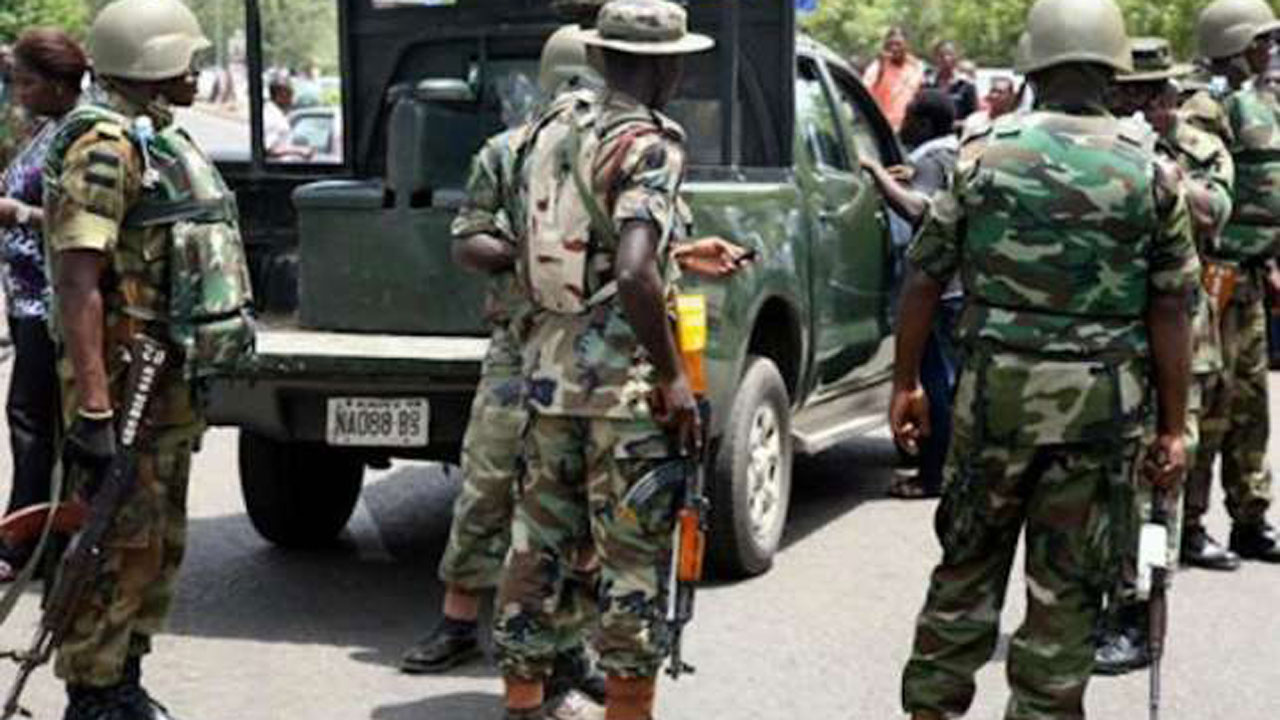
Troops of the 1 Brigade, Combat Team 6, have rescued 31 kidnapped victims during a patrol operation along the Bagega–Kawaye road in Anka Local Government Area of Zamfara State.
The rescue, which unfolded in the early hours of Wednesday, May 28, marks one of the more notable successes for the Nigerian military in a region that has endured years of sustained violence at the hands of armed groups who have terrorized rural communities with kidnappings, cattle rustling, and deadly raids.
According to details shared on Friday night by prominent security analyst Zagazola Makama via his widely-followed X account, ground troops conducting routine patrol duties along the Bagega–Kawaye corridor discovered at approximately 6:33 a.m.
The soldiers came upon the victims as they fled through the bush, gaunt, disoriented, and visibly traumatized, sources suggest, following what would prove to be a pivotal intervention from the air.
The victims, whose exact identities and communities of origin had not been officially disclosed as of the time of this report, are said to have endured several weeks in captivity deep within forested areas in Zamfara State territory that have long served as a sanctuary for criminal elements and armed gangs locally referred to as bandits.
According to Makama’s account, a Nigerian Air Force helicopter gunship conducted an airstrike on suspected bandit positions in the western part of the Bagega forest. This strike appears to have thrown the captors into disarray and created the opening the victims needed to break free.
“The fleeing victims were later intercepted and secured by ground troops during follow-up operations in the area,” Makama stated in his post, giving a rare, granular account of how the operation played out on the ground.
This kind of joint military operation, where air assets flush out or neutralize armed elements and ground forces consolidate gains, has become an increasingly relied upon template in the Nigerian military’s approach to tackling banditry in the North-West. This sprawling and largely ungoverned terrain poses unique operational challenges.
While the Nigerian military has not yet released a full breakdown of the victims’ demographics, sources indicate the rescued individuals had been held for several weeks, a period that, for families back home, would have been defined by agonizing uncertainty and fear.
Zamfara State, long considered the epicenter of the banditry crisis in North-West Nigeria, has witnessed thousands of abductions over the past decade. Victims are routinely held in forest camps, often subjected to harsh conditions, as criminal gangs demand ransoms from desperate relatives and local communities. Many victims do not survive. Those who do often return bearing deep physical and psychological scars.
The fact that 31 individuals have been brought out alive in a single operation is, by any measure, a significant outcome.
Security authorities confirmed that the rescued victims are currently undergoing medical evaluation and are being processed through necessary security screening protocols before reunification with their families can take place.
This procedure, standard in such operations, serves the dual purpose of ensuring the victims receive immediate care and allowing intelligence operatives to debrief them on the locations, numbers, and activities of their former captors.
For the families of the rescued, the wait, though now laced with hope, continues.
In the wake of the rescue, military authorities have used the opportunity to reinforce their message to communities across Zamfara and the broader North-West region. Sustained air and ground operations, they insist, remain firmly on the agenda, with the ultimate objective of dismantling the criminal infrastructure that has made daily life a precarious ordeal for millions of ordinary Nigerians.
Critics have long pointed to the cyclical nature of military successes in the region’s operations that yield results but are rarely followed by the kind of sustained presence needed to prevent armed groups from regrouping and re-establishing their grip on rural communities.
For now, however, 31 men and women who went to sleep in captivity will soon wake up at home. In a region where such outcomes are far from guaranteed, that is a story worth telling.
WHAT YOU SHOULD KNOW
A coordinated military operation in Zamfara State’s Bagega forest has resulted in the rescue of 31 kidnapping victims who had spent weeks in the grip of armed bandits.
The decisive factor in their freedom was a Nigerian Air Force helicopter gunship airstrike that destabilized the captors, allowing the victims to flee and be secured by waiting ground troops.
The most effective weapon against entrenched banditry in Nigeria’s Northwest is not ground force alone but the seamless integration of air and land power. Until such coordinated operations become consistent and sustained rather than episodic, lasting peace in Zamfara will remain elusive.