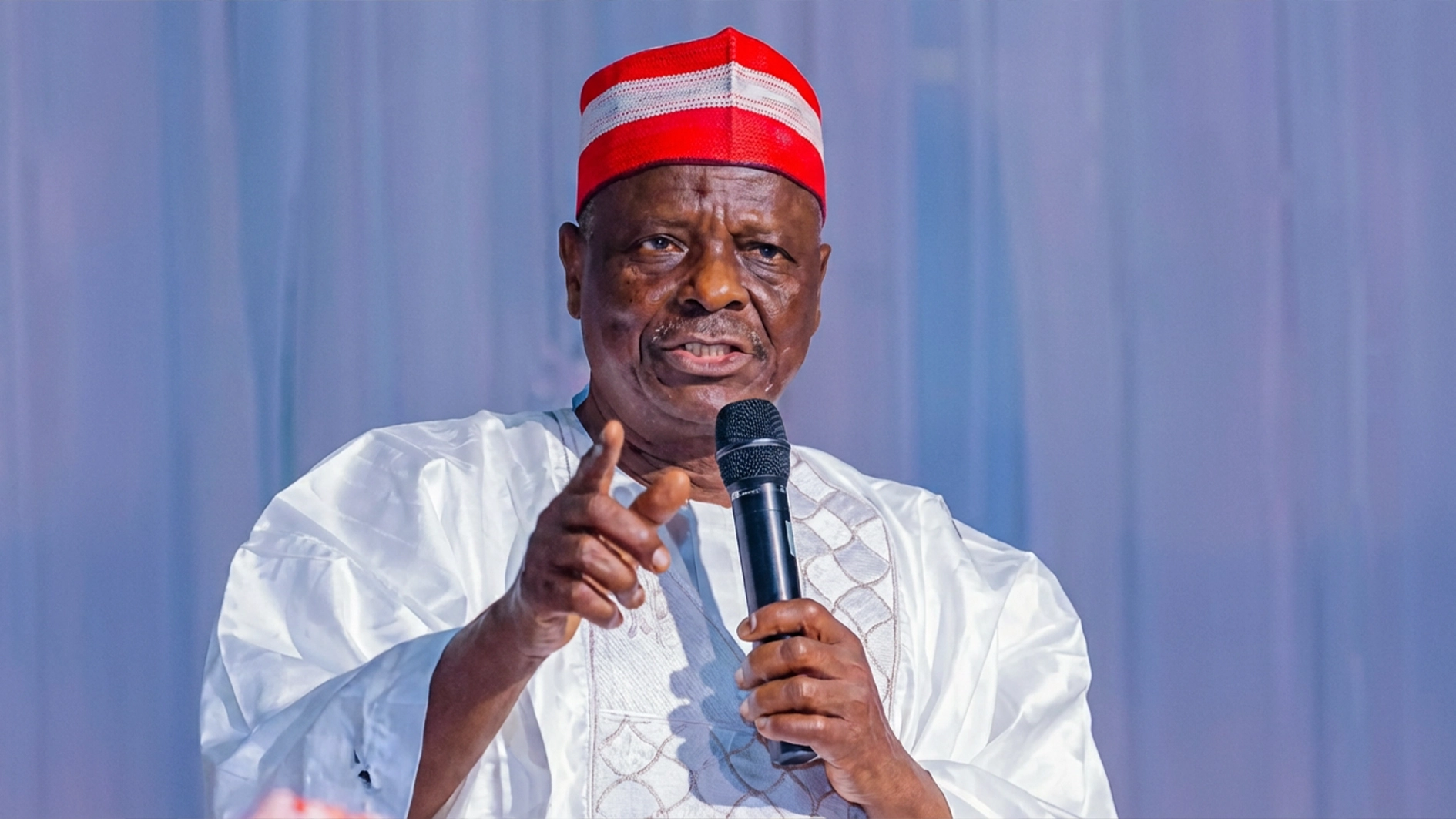
Former Kano State Governor Rabiu Musa Kwankwaso on Sunday formally accepted his ratification as the vice-presidential candidate of the Nigeria Democratic Congress (NDC), completing a high-profile ticket that opposition watchers say could fundamentally reshape the country’s electoral landscape.
The announcement followed the NDC’s presidential primary on Saturday, where former Anambra Governor Peter Obi emerged as the party’s flagbearer, then immediately extended an olive branch to the north by picking Kwankwaso, a man with deep political roots in Kano and a fiercely loyal grassroots following across the Northwest.
Taking to X (formerly Twitter) on Sunday, Kwankwaso struck a tone of measured humility, describing his selection as “a profound honor.” He expressed gratitude to NDC’s national leader, Senator Seriake Dickson, and party leadership for what he called “a bold and visionary decision” that reflects the party’s commitment to national unity and democratic consolidation.
But behind the carefully worded statement lies a story of strategic political maneuvering that has been months in the making.
Both Obi and Kwankwaso recently joined the NDC after departing the African Democratic Congress (ADC), citing internal disagreements and prolonged legal disputes within their former party. Their arrival under one banner had long been the subject of intense political speculation, and Saturday’s convention in Abuja made it official.
At the ceremony, Obi wasted no time in signaling the kind of partnership he envisages. Speaking at the NDC national convention, Obi declared that his administration would depart from the traditional structure where vice presidents are often reduced to ceremonial figures.
“The government we plan to build will not treat the vice president as a spare tire,” Obi said. “The vice president will be a true partner. We will govern through consultation, shared responsibility, and collective decision-making.”
The former governor has argued that Kano State, despite its massive population and deep political history, has never produced a vice presidential candidate since the First Republic, a gap he says the NDC ticket will now correct.
In recent weeks, he has been using his platform to convince his loyal northern base that backing a southern presidential candidate is not a concession but a calculated step toward eventually delivering the presidency to Kano.
Obi, who confirmed that Kwankwaso shares his core beliefs on governance, particularly in the areas of education, security, equity, and national development, also reaffirmed his commitment to serving only one term if elected, saying a four-year administration would be enough to implement reforms aimed at reducing the cost of governance, curbing wasteful spending, and repositioning the economy.
The emergence of the Obi-Kwankwaso ticket is expected to alter the dynamics of the 2027 presidential race by bringing together two influential opposition politicians with strong support bases in different parts of the country.
Obi is widely regarded as popular among young voters and enjoys significant support in the South-East and parts of the South-South, while Kwankwaso remains a major political force in Kano State and across sections of Northern Nigeria.
Both men participated in the 2023 presidential election, finishing third and fourth, respectively, behind former Vice President Atiku Abubakar and President Bola Tinubu, who was announced as the winner. Kwankwaso ran under the New Nigeria Peoples Party (NNPP) and won only in Kano State.
Now, with the wounds of 2023 behind them and a new platform beneath their feet, the duo appear determined to present a united front. Kwankwaso had earlier stated that he and Obi had already reached an understanding on addressing Nigeria’s worsening security situation, saying: “Both of us have agreed to tackle the issue of insecurity head-on to ensure there is peace and stability in this country.”
Party leaders have expressed optimism that the alliance will significantly boost the NDC’s electoral fortunes, describing the Obi-Kwankwaso ticket as a strategic combination capable of attracting broad national support.
Whether it will be enough to unseat the ruling All Progressives Congress remains to be seen, but for now, Nigeria’s opposition has its most formidable ticket in years.
WHAT YOU SHOULD KNOW
The Obi-Kwankwaso alliance under the Nigeria Democratic Congress marks Nigeria’s most significant opposition partnership ahead of the 2027 elections.
By uniting Obi’s strong southern and youth appeal with Kwankwaso’s formidable northern influence, the NDC has assembled a ticket deliberately designed to challenge the ruling APC on a national scale.
With both men pledging a governance model built on shared responsibility and Kwankwaso framing the ticket as a historic milestone for Kano and the North, the 2027 presidential race just got a lot more competitive.