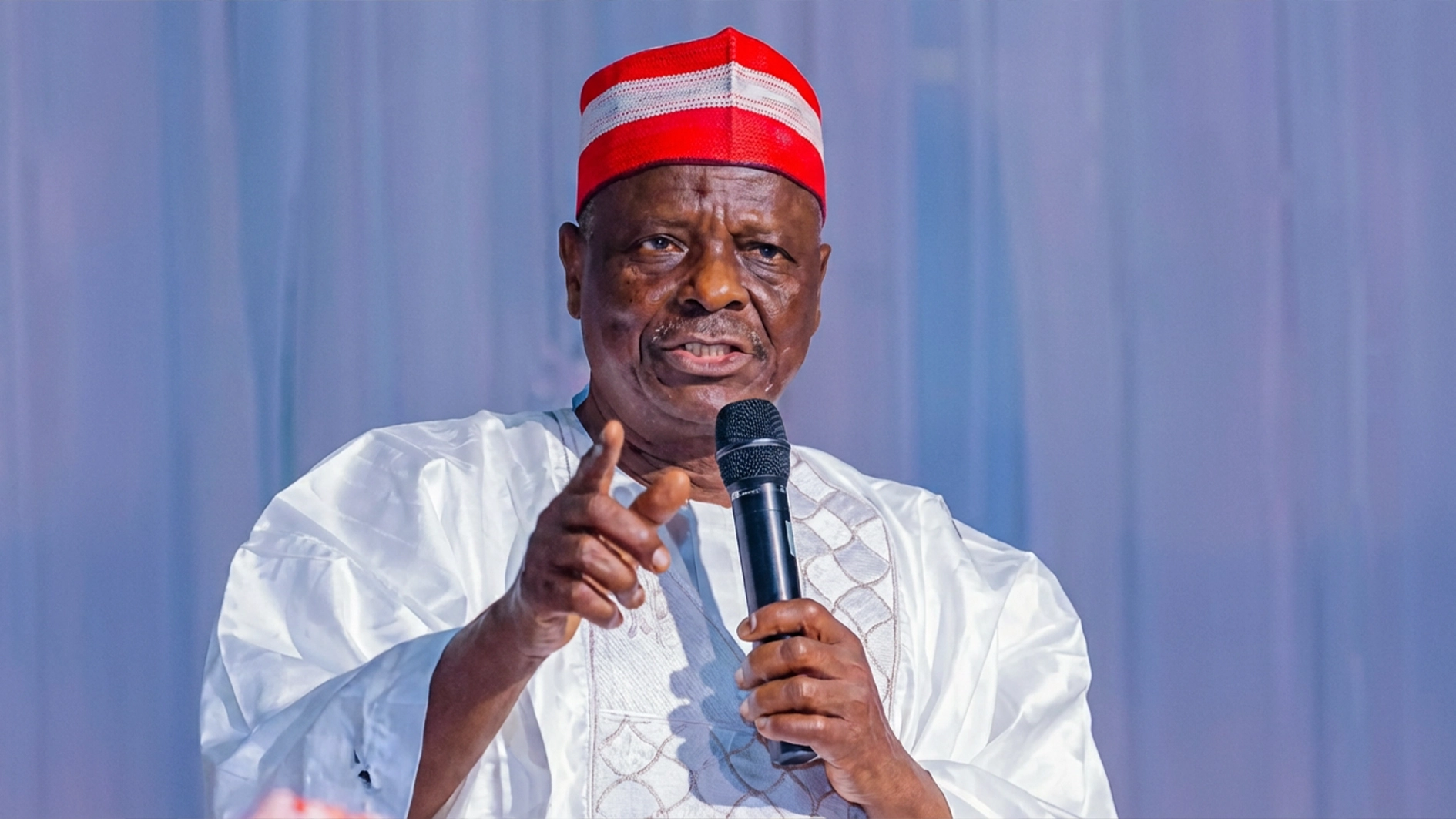
Fresh political tensions have erupted in Nigeria’s opposition landscape after a top aide to Kano State Governor Abba Yusuf leveled explosive allegations against former Kano governor Rabiu Musa Kwankwaso.
Sanusi Bature accuses the former governor of covertly engineering support for President Bola Tinubu‘s 2027 reelection bid while publicly positioning himself as a leading opposition figure.
Bature, the official spokesman for Governor Yusuf, made the incendiary claims on Wednesday during an appearance on Arise Television’s “Morning Show,” painting a picture of a politician he described as deeply conflicted, politically rudderless, and ultimately serving the interests of the very administration he claims to oppose.
At the heart of Bature’s allegations is the assertion that Kwankwaso, now a vice presidential hopeful under the Nigeria Democratic Congress (NDC), is not the opposition heavyweight he presents himself to be, but rather a behind-the-scenes facilitator for Tinubu’s political machine.
“There are those working for Tinubu openly, directly in the public space, and there are those who work for Tinubu behind the scenes,” Bature stated pointedly. “I believe whatever Kwankwaso is doing will favour Tinubu at the end of the day because Kwankwaso worked for Tinubu in 2023. I believe that Kwankwaso is working for Tinubu in 2027 behind the scenes.”
These are damning words that, if substantiated, could severely undermine Kwankwaso’s credibility within opposition circles and raise serious questions about the authenticity of the NDC‘s challenge to the ruling All Progressives Congress (APC) ahead of the 2027 general elections.
Bature did not stop at the broad accusation. He zeroed in on what he characterized as a glaring ideological contradiction, Kwankwaso’s recent political pilgrimages to the Southwest, a region whose presidential aspirations the Kano politician has historically resisted.
“Kwankwaso is getting confused,” Bature said bluntly. “Somebody who does not believe in a Yoruba presidency has been moving from Abeokuta and Ibadan to seek political fortune. He has been engaging Obasanjo and the Oyo State governor to secure a political alliance.”
The reference to former President Olusegun Obasanjo and Oyo State Governor Seyi Makinde, two of the most influential political figures in the Southwest, suggests that Kwankwaso has been engaged in a quiet but ambitious courtship of southern political powerbrokers.
For a man whose political base has been firmly rooted in the Northwest, particularly Kano, such overtures represent either a bold strategic pivot or, as Bature suggests, an act of political desperation.
“This is an element of political confusion,” Bature continued, “because if you believe in something, you have to work for it. If you don’t, you can’t work on it.”
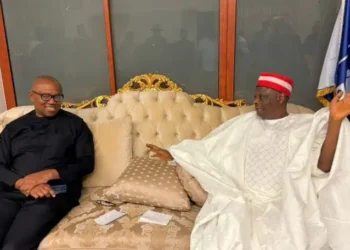
Perhaps the most pointed element of Bature’s critique was directed at Kwankwaso’s apparent rapprochement with the Labour Party’s Peter Obi, a figure he had previously dismissed in contemptuous terms.
“He went to Obi, the same Obi he has been calling names,” Bature said with barely concealed disdain. “He saw Obi as an inferior political leader whom he couldn’t even work with in 2023.”
The suggestion is that Kwankwaso’s political alliances are guided not by principle or ideology, but by whatever arrangement best serves his personal ambition at any given moment.
For a politician who has long cultivated an image as a man of conviction and popular appeal in northern Nigeria, such characterizations strike at the very core of his political identity.
Bature also lifted the curtain on what he described as secret negotiations between Kwankwaso and the Tinubu administration, negotiations that reportedly went right to the brink before collapsing at the eleventh hour.
According to Bature, Kwankwaso dispatched none other than Governor Abba Yusuf himself, his own political protégé, to meet with President Tinubu to lay the groundwork for a formal defection to the APC.
“Somebody who said Tinubu is his friend ordered his political godson, the governor, to meet the president to discuss the issue of partnership and defection to the APC,” Bature revealed. “He withdrew at the very last hour to pursue another separate movement.”
The claim is remarkable on multiple levels. If true, it means that as recently as a period close to the current political season, Kwankwaso was negotiating to join the very ruling party he now ostensibly opposes — before choosing instead to align with the NDC, a comparatively smaller platform.
The allegations come at a particularly delicate moment for Nigeria’s fragmented opposition. With the 2027 elections on the horizon and the APC government facing growing public scrutiny over economic hardship, opposition parties have been scrambling to present a united and credible front.
Accusations of this nature, whether proven or not, threaten to further fracture anti-government coalitions and sow distrust among opposition ranks.
Kwankwaso’s camp had not issued an official response to the allegations at the time of filing this report.
However, political watchers in Abuja noted that the accusations carry particular weight given that they come not from an APC loyalist seeking to discredit the opposition but from within the same political family. Bature himself is closely aligned with Governor Yusuf, who was widely regarded as Kwankwaso’s political son before their relationship reportedly soured.
“What makes this remarkable,” one Abuja-based political analyst told this reporter, “is that Bature is not speaking as an outsider.” He knows the inner workings of that political relationship. That gives his words a certain gravity that cannot be easily dismissed.”
Rabiu Kwankwaso served as Kano State governor from 1999 to 2003 and again from 2011 to 2015, building a formidable grassroots movement known as the “Kwankwasiyya.” He ran for president in the 2023 elections under the NNPP banner, coming in fourth place.
His latest alignment with the NDC and positioning as a vice presidential aspirant signals his continued ambition to remain a central figure in Nigeria’s national politics.
Whether Bature’s allegations amount to a calculated political hit or a revelation of genuine backroom dealings remains to be seen. But one thing is clear: the battle lines within Nigeria’s opposition are being redrawn, and the fallout is likely to intensify as 2027 draws nearer.
WHAT YOU SHOULD KNOW
Sanusi Bature’s allegations against Kwankwaso paint a portrait of a politician whose actions consistently contradict his public posturing, secretly courting Tinubu’s APC while presenting himself as opposition; dismissing Peter Obi only to later seek his alliance; and preaching northern solidarity while touring Yoruba political corridors for personal gain.
Whether or not every allegation holds water, the damage is already done.
In politics, perception is power, and the perception being aggressively pushed is that Kwankwaso is not a principled opposition leader but a political opportunist whose ultimate moves may end up benefiting the very administration millions of Nigerians are counting on the opposition to challenge in 2027.