A political storm is brewing in the heart of Nigeria’s Confluence State as key stakeholders of the All Progressives Congress (APC) in Kogi East have formally rejected the outcome of the district’s senatorial primary election held on May 18, 2026.
In what is shaping up to be one of the most contentious intra-party disputes in Kogi State’s recent political history, the stakeholders have declared the entire exercise null and void, describing it as a carefully choreographed fraud that made a farce of democratic principles, and they are not mincing words.
In a strongly worded statement released on Tuesday and signed by Ibrahim Mohammed on behalf of the group, the Kogi East APC stakeholders asserted, in no uncertain terms, that no valid primary election was conducted within the senatorial district.
The group condemned the exercise as, in their own words, “a blatant mockery of internal democracy and an embarrassment to the party.”
But beyond the fiery rhetoric lies a more specific and damning allegation, one that strikes at the very heart of the process and its reported results.
According to the stakeholders, the election’s credibility collapsed under the weight of its own implausibility. At the center of the controversy is a startling claim: that incumbent Senator Jibrin Isah Echocho, a sitting lawmaker with established roots and political machinery in the district, was returned with “zero votes” in his own polling unit.
Also, Prominent political heavyweights, including Dr. Kashim Akor and former gubernatorial aspirant Muritala Ajaka, were, according to official results, similarly credited with “zero votes” in their respective units.
“It defies logic for anyone to claim that a serving senator scored zero votes in his own polling unit,” the statement read, a line that encapsulates the raw incredulity of the stakeholders.
The group pressed further with pointed, rhetorical questions that cut to the bone: “Does this imply that the candidate, along with his relatives, aides, and supporters, failed to vote? Furthermore, how can it be asserted that figures like Dr. Kashim Akor or Muritala Ajaka received zero votes? Are we to believe these candidates did not vote for themselves?”
It is a charge that, if substantiated, would represent a breathtaking act of electoral manipulation, one seemingly conducted without even a superficial attempt at credibility.
The stakeholders were careful to frame their grievances not merely as a local dispute, but as a systemic threat to the APC’s long-term viability in Kogi State and beyond.
With general elections on the horizon, the group sounded a grave warning: that if the alleged irregularities are swept under the carpet and those responsible shielded from accountability, the fallout could be catastrophic for the party’s electoral fortunes in the state.
“The blatant audacity of this electoral fraud poses a significant threat to the party’s future,” the statement warned, drawing a direct line between the conduct of internal primaries and the party’s ability to present a united front when it matters most, at the general polls.
In perhaps the most evocative passage of the statement, the group invoked a cautionary historical parallel that will resonate deeply with any student of Nigerian politics: the fall of the Peoples Democratic Party, once the dominant force in the land, undone in no small measure by the very same disease, the erosion of internal democracy.
“The downfall of the Peoples Democratic Party (PDP) began with the erosion of internal democracy. The APC must not tread the same path,” the statement read.
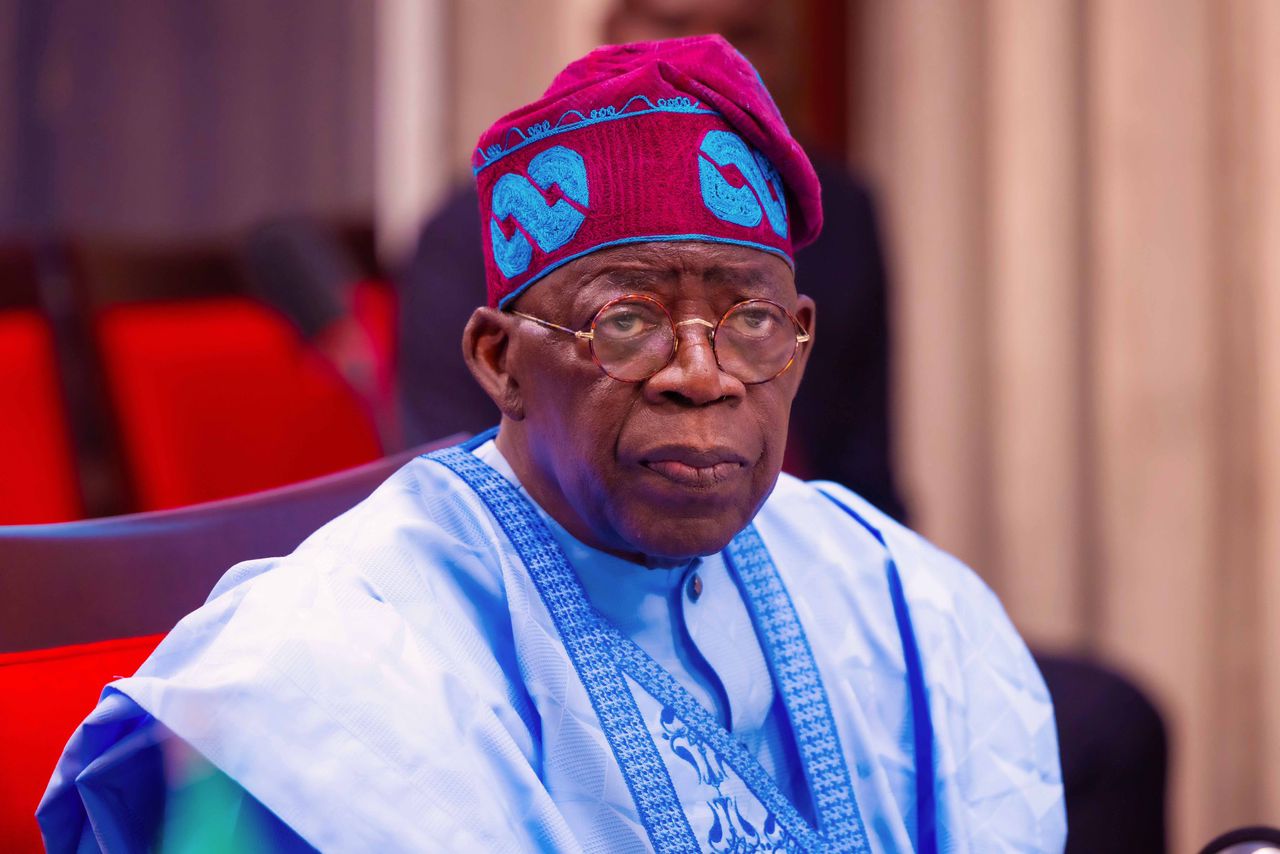
In a move that signals the seriousness with which the group views the situation, the stakeholders have escalated the matter to the very top of the Nigerian political hierarchy, calling on President Bola Ahmed Tinubu to personally intervene and bring order to the increasingly volatile situation in Kogi East.
Significantly, the group specifically called on the President to rein in two of the state’s most powerful political actors: incumbent Governor Ahmed Ododo and his predecessor, Yahaya Bello, the latter of whom, despite his well-publicised legal battles, continues to cast a long political shadow over Kogi State’s internal party dynamics.
The Kogi East APC stakeholders have laid out an unambiguous position: there was no primary election. And if there were no primary election, there would be, by logical extension, no winners and no losers.
It is a position that, if upheld, would require the APC’s national leadership to either order a fresh primary or risk presiding over a candidate selection process that a significant and vocal section of its own membership regards as illegitimate.
For the APC, a party that rode to power on a wave of promises to do politics differently, the events in Kogi East represent an uncomfortable mirror.
The party now faces a critical test of whether its internal mechanisms are robust enough to self-correct, or whether the culture of impunity that felled its predecessor will, once again, prove stronger than the institutions designed to check it.
As the dust settles and the battle lines are drawn, one thing is clear: the Kogi East senate ticket is far from settled, and the political temperature in the Confluence State is rising fast.
WHAT YOU SHOULD KNOW
APC stakeholders in Kogi East have rejected the May 18 senatorial primary, calling it a sham rigged against credible candidates, including a sitting senator who was reportedly awarded zero votes in his own polling unit.
The group warns that this kind of internal electoral fraud, if left unchecked, could fracture the party ahead of the general elections, drawing a direct parallel to the collapse of the PDP.