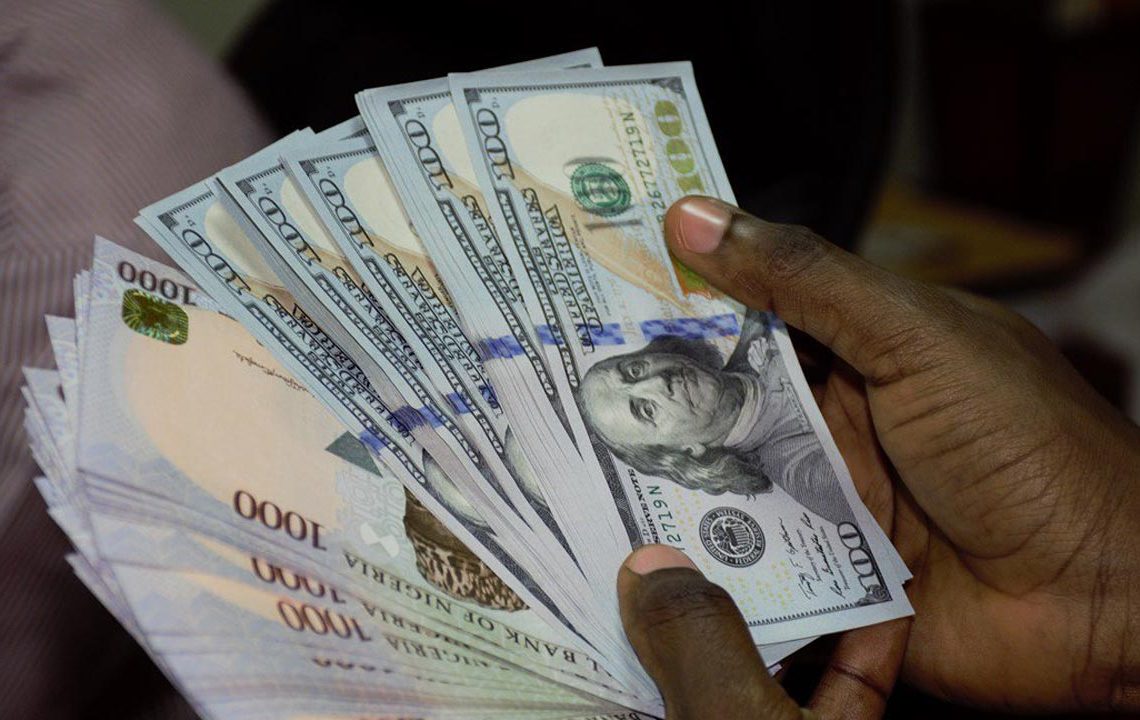
Nigeria’s naira maintained a composed footing in the official foreign exchange market on Thursday, trading at approximately ₦1,375.41 to the dollar at the Nigerian Foreign Exchange Market (NFEM) window, according to data published by the Central Bank of Nigeria.
The relative calm in Thursday’s trading is no isolated event. Market data shows the naira has largely held within the ₦1,370 to ₦1,390 band over the past week, a narrowing of the volatility that once saw the currency lurch by double-digit percentages within days.
Currency traders on the floor attributed the steadiness to a combination of improved foreign exchange supply and the gradual, if sometimes painful, structural reforms that the CBN has been pushing through the system.
“The market is finding a rhythm,” one Lagos-based currency dealer said, speaking to the reduced speculative pressure that had previously driven wild swings. “When supply is consistent, and the rules are clear, people don’t panic.”
That clarity is precisely what the Central Bank has staked its credibility on. Under Governor Yemi Cardoso, the apex bank has pursued a sweeping overhaul of Nigeria’s forex architecture, unifying exchange rate windows, cracking down on round-tripping, and committing to a more market-reflective rate.
The CBN has said that its ongoing FX market reforms are designed to improve transparency and efficiency, narrow the premium between official and parallel market rates, and help maintain exchange rate stability.
CBN Governor Cardoso disclosed in February that Nigeria’s external reserves had risen to approximately $49 billion, describing the development as a clear sign of improving confidence in the country’s economy, a remarkable turnaround from the net reserve figure of roughly $3 billion when the current leadership took over the apex bank.
Nigeria’s external reserves are now projected to reach $51.04 billion in 2026, supported by stronger oil earnings, FX market reforms, and improved external inflows.
That reserve cushion matters enormously to currency stability. A well-stocked war chest gives the CBN the firepower to intervene when demand spikes threaten to push the naira off its footing, lending credibility to its stated commitment to market-driven stability.
The IMF noted in mid-2025 that Nigeria’s gross and net international reserves had increased on the back of a strong current account surplus and improved portfolio inflows, and that FX market reforms had brought greater stability to the naira.
Beyond the reserves story, the naira’s appreciation has also been linked to a recent interest rate adjustment by the Central Bank aimed at stimulating economic growth. Yet not everyone is ready to uncork the champagne.
Some financial analysts caution that pockets of the naira’s strength may reflect speculative positioning rather than purely fundamental improvements, warning that sustained stability will depend on whether the structural reforms outlast the favorable conditions that currently surround them.
Analysts at EBC Financial Group have noted that the next phase of Nigeria’s FX story is likely to be judged by whether policy narrows the disparity between parallel and official rates, improves FX recycling, and broadens access without rebuilding the distortions that plagued earlier regimes.
For ordinary Nigerians and businesses, the day-to-day implications are tangible. Governor Cardoso has noted that forex has become more accessible to ordinary Nigerians traveling abroad, with Nigerians now able to use their naira cards internationally without scrambling for foreign currency, a shift he attributed directly to the competitiveness reforms.
Financial analysts continue to urge vigilance. Liquidity levels, the trajectory of external reserves, and upcoming monetary policy committee decisions remain the key variables that will determine whether the naira’s current steadiness deepens into durable stability or proves to be another false dawn in a market that has known many.
For now, at ₦1,375 to the dollar, Nigeria’s currency is doing something it has rarely managed with consistency: holding its ground.
WHAT YOU SHOULD KNOW
Nigeria’s naira is showing rare signs of stability, trading around ₦1,375 per dollar, a calm that reflects more than just a good week in the market.
The real story is the CBN’s sweeping forex reforms, which have helped push external reserves toward $49 billion, improved market transparency, and restored a measure of investor confidence that the currency had long lost.
The naira’s steadiness is not accidental; it is the product of deliberate policy choices.
But analysts are clear that sustaining it will require the CBN to stay the course, because in Nigeria’s forex market, the distance between stability and crisis has historically been razor-thin.