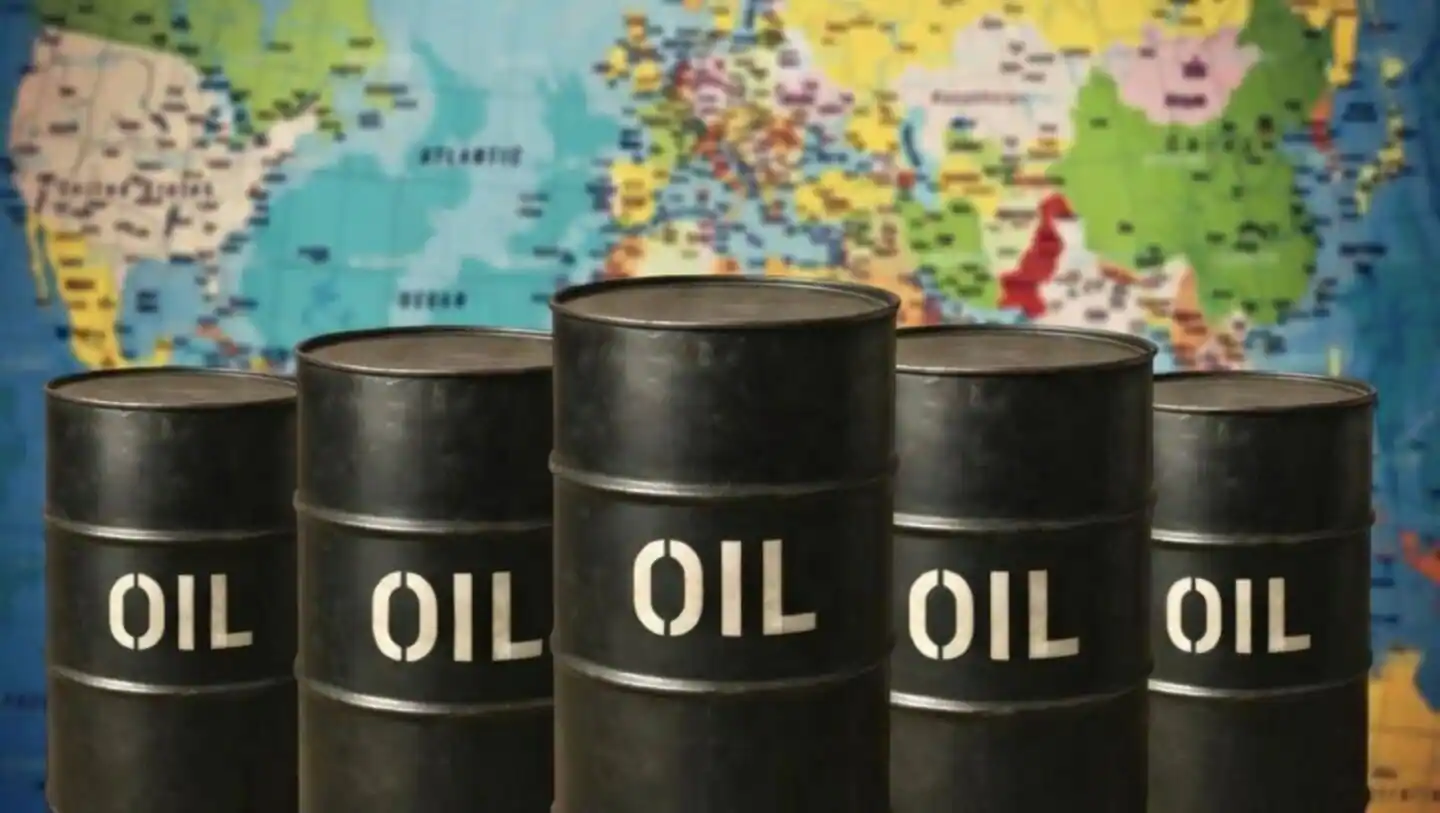
Oil prices fell sharply on Wednesday, erasing most of the previous session’s gains as traders weighed renewed U.S.-Iran hostilities against the slim but growing possibility that the Strait of Hormuz could reopen to global shipping.
Brent crude futures fell $1.52, or 1.53%, to $98.06 a barrel as of 06:33 GMT, while U.S. West Texas Intermediate (WTI) shed $1.90, or 2.02%, to $91.99 a barrel, erasing a significant portion of Tuesday’s 4% surge and pulling the international benchmark back below the psychologically critical $100 threshold.
“Markets are being whipsawed between fear and hope in almost equal measure,” said one London-based energy analyst. “Every development in this conflict is capable of moving prices by five dollars in either direction within hours.”
The volatility follows a torrid few months for global energy markets. A two-week ceasefire between the U.S. and Iran, brokered by Pakistan and officially announced on April 8, was the first pause in hostilities since airstrikes began on February 28.
Key terms of that truce included a framework for talks on Iran’s peace plan, which incorporated demands such as the unfreezing of U.S. assets and toll rights in the strait. But compliance was shaky from the outset.
The fragile truce has done little to restore confidence for tankers to traverse through the strait, particularly as signs of the ceasefire collapsing loomed with Israel escalating some of its deadliest attacks on Lebanon on the same day the truce was announced.
Now, fresh U.S. military strikes near the contested waterway have shattered what little goodwill remained. Iran declared the strikes a violation of the ceasefire agreement; Washington countered that its actions were purely defensive in nature. The exchange of accusations has once again cast a pall over negotiations that, just days ago, had appeared to be edging toward a breakthrough.
At the heart of the crisis lies the Strait of Hormuz, a narrow sliver of water between Iran and the Arabian Peninsula through which, in normal times, roughly one-fifth of the world’s oil and gas supplies flow daily. Its effective closure since the outbreak of hostilities earlier this year has sent energy prices soaring and upended global supply chains.
The critical strait’s disruption affects approximately 20% of worldwide petroleum transport. Qatar’s Ras Laffan terminal, the world’s largest LNG export facility, has been effectively landlocked, with global LNG supply down around 20%. For energy-importing nations from Japan to Germany, the implications have been profound.
Despite the ceasefire, maritime traffic through the Strait of Hormuz remains restricted, with shipping activity still far below normal levels. Industry estimates indicate traffic has dropped by nearly 95% compared to pre-crisis levels, with only a limited number of vessels moving under tight Iranian supervision.
Most ships currently transiting are Iranian-linked, part of the so-called dark fleet, or flying flags of countries Tehran considers non-hostile, including Russia and China.
A backlog of roughly 3,200 vessels, among them 800 tankers and cargo ships, has built up west of the strait, with ships idling as operators wait for clarity on whether it is safe to pass.
Wednesday’s sell-off was not entirely driven by gloom. Reports that some LNG tankers had managed to pass through the strait in recent days introduced a note of cautious optimism into markets, a signal, however faint, that the waterway might inch toward a more meaningful reopening. Analysts warned, however, against reading too much into limited transits.
Shipping executives say they have “no information” on how to transit the strait and are not in contact with Iranian authorities. Shippers want “explicit approval from the people that may do you harm,” as one industry veteran put it.
Maersk, the world’s second-largest container shipping operator, stated that while the ceasefire may create transit opportunities, it does not yet provide full maritime certainty and that decisions on any transits would depend on continuous risk assessments and close monitoring of the security situation.
Iranian authorities have indicated that vessels may transit the waterway, but passage must be coordinated with Iranian forces for security reasons, effectively maintaining Tehran’s control over shipping movements.
The geopolitical backdrop remained treacherous. The warring sides remain at loggerheads over Tehran’s enriched uranium stockpile and tolls on the strategically vital Strait of Hormuz. The International Energy Agency has warned that as travel demand grows during the summer season, oil markets could enter a “red zone” soon as global stocks deplete.
Israel’s continued bombing campaign in Lebanon, a theater of conflict now intertwined with the broader regional confrontation, has further complicated peace efforts and rattled diplomatic channels that had been slowly building toward a potential agreement.
Market observers caution that this is not the first time a deal seemed close, only for negotiations to break down, and a large segment of the market remains skeptical about the positive signals seen in recent days.
For now, oil traders are left parsing every military communiqué and diplomatic signal for clues about what comes next, a task that, in this conflict, has proven as perilous as it is necessary.
WHAT YOU SHOULD KNOW
Oil markets remain hostage to a single, unresolved question: will the Strait of Hormuz truly reopen? Despite tentative ceasefire efforts and a trickle of LNG tankers passing through, renewed U.S. strikes on Iran have reignited hostilities and derailed negotiations, leaving the world’s most critical energy chokepoint effectively shut, over 3,000 vessels stranded, and global oil and gas supplies severely strained.
Until Washington and Tehran reach a durable agreement, energy markets will remain volatile, and the world will continue paying the price at the pump.