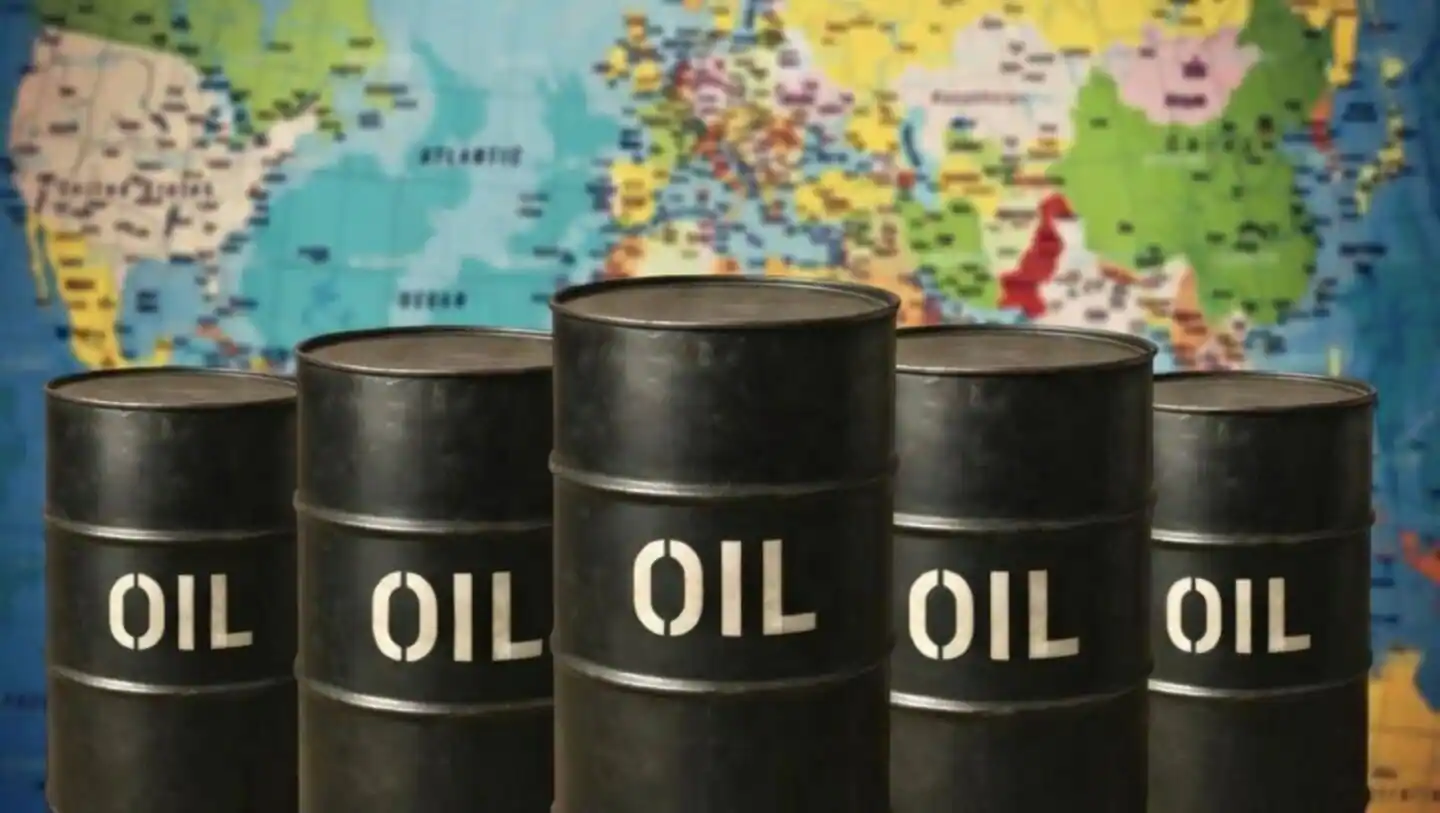
Oil markets jumped sharply on Tuesday after U.S. military strikes in southern Iran rattled traders, erasing the previous session’s gains and driving Brent crude back toward $100 a barrel.
Brent futures were trading at $98.50 a barrel as of 06:30 GMT, up $2.36, or 2.5 percent on the day, after a gut-wrenching 7 percent sell-off in the prior session had briefly kindled hopes that diplomatic breakthroughs were at hand. U.S.
West Texas Intermediate was slightly firmer at $91.95 but remained nearly 5 percent below Friday’s close, a yawning spread with Brent, analysts say reflects the unique physical exposure of European and Asian buyers to blocked Persian Gulf shipping lanes. There was no settlement on Monday due to the U.S. Memorial Day holiday.
Washington described the attacks on Iranian territory as “defensive” in nature, but the optics of military action landing while Iranian negotiators were sitting across the table from Qatar’s prime minister in Doha sent an unmistakable signal through trading floors from London to Singapore.
Michael McCarthy, chief executive of online trading platform Moomoo Australia, said the strikes, combined with renewed Israeli attacks on Hezbollah, had boosted Brent prices and widened the spread with WTI, a divergence that reflects how directly European and Asian importers are exposed to Gulf shipping risks.
The timing could not have been more delicate. Iran’s top nuclear negotiator and foreign minister had been in the Qatari capital for what officials on both sides described as substantive talks toward a memorandum of understanding, a framework that would halt hostilities and buy negotiators a 60-day window to hammer out a final agreement.
Japan’s Nikkei, citing a diplomatic source in the region, reported that under the draft terms, Tehran would clear mines from the Strait of Hormuz within 30 days, restoring freedom of navigation for vessels of all flags and ending its controversial transit fee regime.
Any lingering optimism was swiftly tempered by U.S. Secretary of State Marco Rubio, who told reporters on Tuesday that sealing a deal with Iran could “take a few days,” a phrase that may sound modest but, in the compressed timeline of energy markets, was enough to shatter expectations of an imminent ceasefire.
President Donald Trump added a further complication, publicly repeating his demand that Tehran surrender its enriched uranium stockpile for destruction, a precondition Iranian officials have thus far shown no willingness to accept.
“It’s a sharp reminder that the deal could still collapse at the eleventh hour, much like the five previous attempts before it,” warned Tony Sycamore, a market analyst at IG, capturing the sentiment of a trading community grown weary of false dawns.
At the heart of the crisis lies the Strait of Hormuz, the narrow neck of water between Iran and Oman through which roughly a fifth of global oil and liquefied natural gas ordinarily flows.
Since the war began some three months ago, Tehran has effectively halted nearly all non-Iranian commercial shipping through the waterway, a chokehold that has driven up freight rates, forced tanker owners to divert thousands of miles around the Cape of Good Hope, and left dozens of laden vessels stranded in the Gulf in legal and logistical limbo.
There were tentative signs of movement on Tuesday: ship-tracking data showed three LNG carriers had threaded the strait in recent days, bound for Pakistan, China, and India, respectively.
A supertanker carrying Iraqi crude to China, one that had been anchored in place for nearly three months, was also reported to be underway. Analysts cautioned, however, that isolated transits fall well short of the sustained reopening that energy markets need to stabilize.
“Traders are betting heavily that a breakthrough will finally free up the long-paralyzed tankers stuck in and around the Strait of Hormuz,” said Tim Waterer, chief market analyst at KCM Trade, a sentiment that explains why even a whisper of progress can send prices swinging by several percent within hours.
For now, energy traders are operating in a market defined as much by rumor and diplomatic body language as by supply fundamentals. The questions that will determine whether oil climbs toward $105 or retreats toward $85 are straightforward, if not easily answered: Will Washington and Tehran formally sign a memorandum of understanding? Will Iran’s insistence on retaining its enriched uranium kill the deal at the final hour? And will Israeli military activity against Hezbollah, an independent variable that neither Washington nor Tehran fully controls, inject a wildcard that unravels months of painstaking diplomacy?
With six rounds of negotiations having already failed to produce a durable ceasefire, the mood across trading desks is one of cautious skepticism, a market that wants to believe in peace but has learned, painfully, to hedge against disappointment.
WHAT YOU SHOULD KNOW
Oil markets remain deeply unsettled as U.S. military strikes on Iran and stalled peace negotiations continue to choke off roughly a fifth of the world’s oil and gas supply through the Strait of Hormuz.
Brent crude climbing back above $98 a barrel tells the real story: until a verified, durable deal is signed, one that reopens the strait and resolves the standoff over Iran’s enriched uranium, prices will stay volatile, and the global energy supply chain will remain at risk.