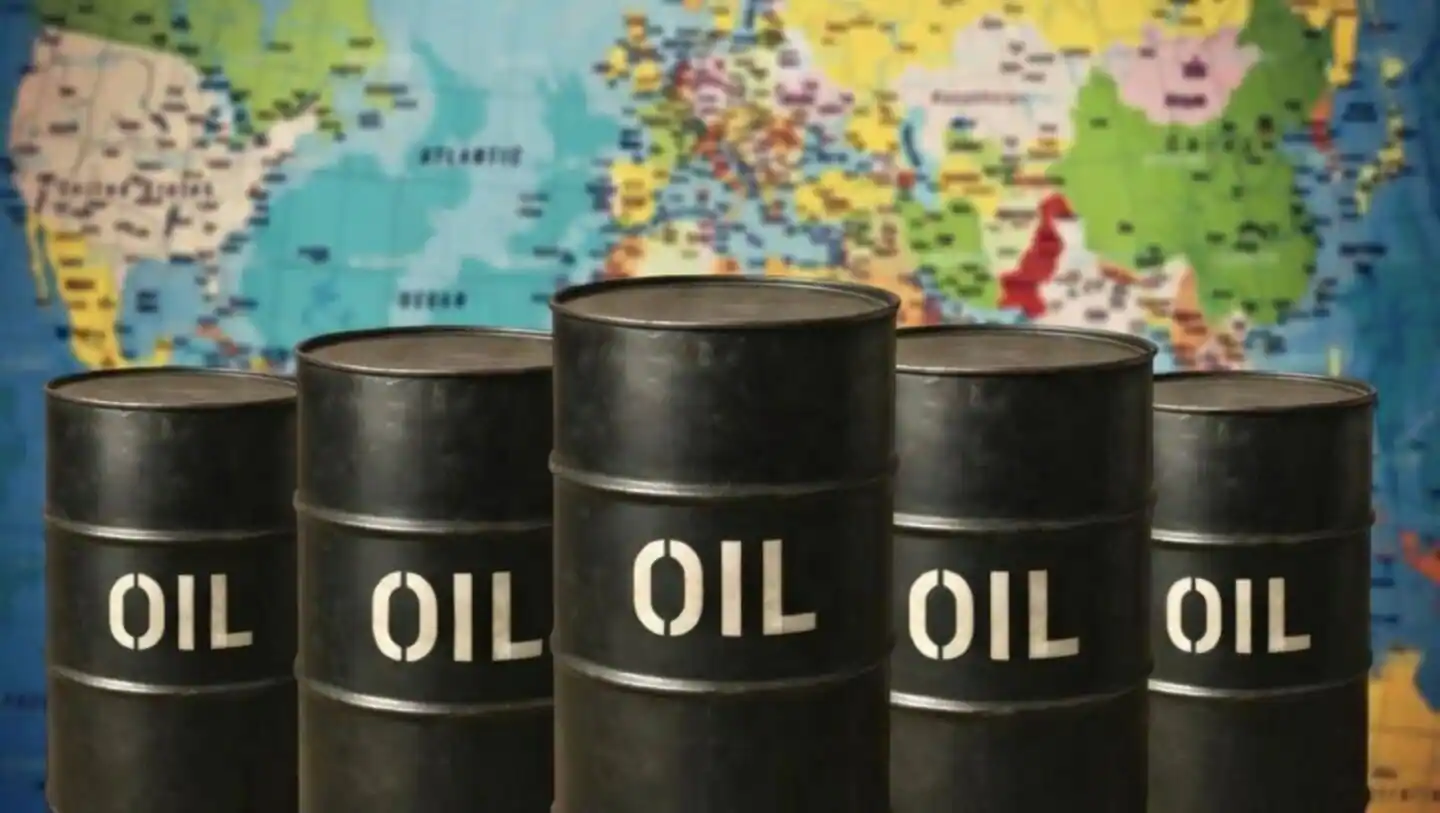
Oil prices edged higher Friday on faint hopes of a U.S.-Iran deal, but the modest rebound couldn’t disguise a brutal week for crude as investors remained deeply unconvinced that a breakthrough was anywhere near.
Brent crude futures rose $2.46, or 2.4%, to $105.04 a barrel in early trading, while U.S. West Texas Intermediate gained $1.82, or 1.9%, to $98.17.
The modest Friday rally, however, could not undo the broader damage of the week; Brent was on track for a loss of more than 4%, with WTI down over 7%, reflecting the volatile swings that have characterized crude trading since the fragile ceasefire between the United States and Iran took effect six weeks ago.
At the heart of the market’s unease is the slow and stuttering pace of U.S.-Iran peace negotiations. A senior Iranian official told Reuters that the gap between the two sides has “narrowed,” and U.S. Secretary of State Marco Rubio offered guarded encouragement, citing what he called “some good signs” in the latest round of talks. Yet for all the diplomatic language, the fundamental sticking points remain firmly in place.
The two sides are still sharply divided over the size and disposition of Iran’s uranium stockpile and, critically, over who controls access to the Strait of Hormuz, the narrow waterway through which approximately 20% of the world’s energy supplies once flowed before hostilities erupted.
That passage has effectively been strangled since the war began, removing an estimated 14 million barrels per day from global markets, equivalent to roughly 14% of total world supply. The ripple effects have been felt from the trading floors of New York to the fuel pumps of Lagos, London, and beyond.
Even in the most optimistic scenario, an immediate end to the conflict offers little prospect of swift relief, according to industry insiders and analysts alike.
The head of ADNOC, the Abu Dhabi National Oil Company and one of the region’s most powerful state-owned energy firms, stated bluntly this week that full oil flows through the Strait of Hormuz will not resume before the first or second quarter of 2027 at the earliest.
The reason is not simply geopolitical: decades of infrastructure investment across Saudi Arabia, Iraq, the United Arab Emirates, and Kuwait have been significantly damaged during the conflict. Repairing refineries, pipelines, and loading terminals, many of which sustained direct or indirect damage, will take months regardless of when a peace deal is signed.
BMI, a unit of Fitch Solutions, factored this grim reality into revised forecasts this week, raising its average 2026 Brent price estimate to $90 per barrel from $81.50, citing the ongoing supply deficit, infrastructure damage, and what it described as a “six-to-eight week post-conflict normalization window” before any meaningful recovery in exports can begin.
The prolonged elevation in oil prices has not gone unnoticed by policymakers and economists watching an already fragile global economy with mounting anxiety. Six weeks into a ceasefire that many had hoped would mark the beginning of the end, the reality on the ground has proven stubbornly resistant to diplomatic optimism.
“Oil prices would only trend lower when oil market fundamentals materially improve, which looks destined to stretch into 2027,” said David Oxley, Chief Commodities Economist at Capital Economics, a sobering assessment that underscores just how structural, rather than speculative, the current supply crisis has become.
Elevated energy costs have fed directly into broader inflationary pressures, complicating monetary policy decisions for central banks already navigating uncertain terrain.
For traders navigating the week-to-week volatility, the near-term picture remains one of cautious containment rather than directional clarity. Satoru Yoshida, a commodity analyst with Rakuten Securities, described the current environment as one in which WTI is “likely to remain in a $90–$110 range next week, as it has largely done since late March”—a wide band that reflects both the genuine uncertainty of geopolitical developments and the market’s inability to price in any firm resolution.
Against this backdrop, seven leading OPEC+ producing nations are expected to meet on June 7 to discuss a modest increase in July output quotas, according to four sources familiar with the matter.
The anticipated hike signals that the group is not entirely indifferent to the pressures facing consuming nations, but the gesture may prove largely symbolic: for several member states, actual delivery remains severely constrained by the ongoing disruption caused by the Iran war, meaning any paper agreement on output levels may bear little resemblance to what physically reaches the market.
What emerges from this week’s trading is a market caught between hope and hard reality. Diplomatic signals flicker, but the deep structural damage to Middle Eastern energy infrastructure, combined with the unresolved political questions over Iran’s nuclear program and the Strait of Hormuz, means that meaningful relief for oil consumers remains, at best, a story for 2027.
WHAT YOU SHOULD KNOW
Despite a modest Friday rally, oil markets endured a painful week as hopes for a swift U.S.-Iran peace deal faded.
Until the Strait of Hormuz fully reopens and damaged Middle Eastern energy infrastructure is repaired, neither of which is expected before early 2027, global oil supply will remain critically short by 14 million barrels per day.
Diplomatic talks are inching forward, but unresolved disputes over Iran’s uranium stockpile and control of the Strait mean prices will stay elevated and volatile well into next year.
For consumers and economies worldwide, expensive energy and the inflation that comes with it is not a temporary shock. It is the new reality for the foreseeable future.