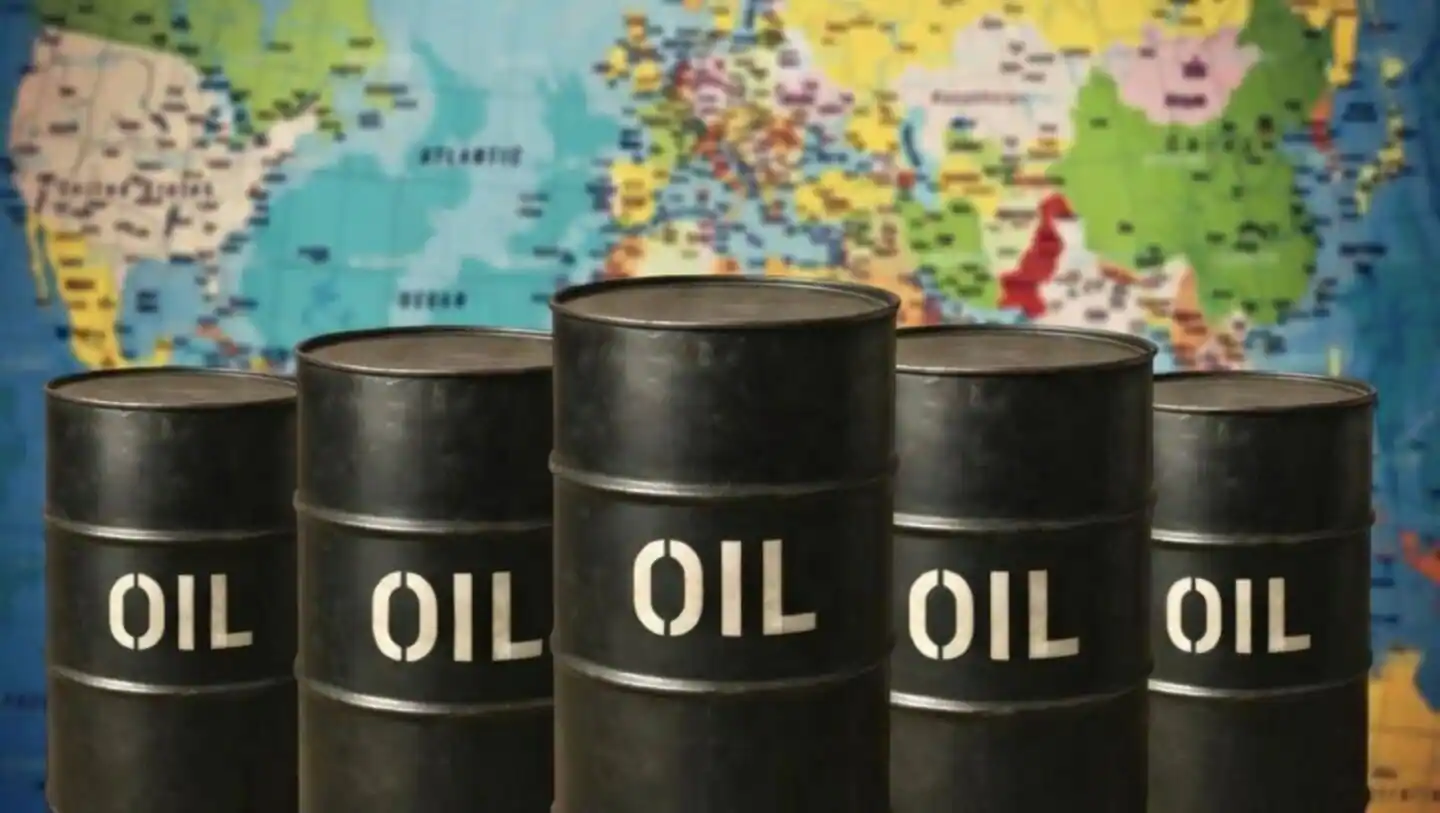
Oil prices edged up more than one percent on Thursday, as cautious hope over U.S.-Iran peace talks collided with mounting fears over tightening global supply, a standoff analysts warn could grip energy markets for the foreseeable future.
Brent crude futures climbed $1.27, or 1.21%, to $106.29 a barrel in early trading. In contrast, U.S. West Texas Intermediate futures advanced $1.29, or 1.31%, to $99.55, a modest but meaningful gain after one of the most turbulent weeks of trading in recent memory.
The recovery follows a bruising session on Wednesday, when both benchmarks plummeted more than 5.6%, their sharpest single-day decline in over a week, after President Donald Trump announced that diplomatic talks with Tehran were entering their “final stages.”
While the statement appeared to signal progress, the president simultaneously threatened renewed military strikes should Iran refuse to agree to terms, sending mixed signals that rattled an already fragile market.
The whiplash reaction is fast becoming a familiar pattern. Analysts at ING were pointed in their assessment Thursday morning, noting that “the oil market remains overly sensitive to Iran-related headlines, with participants continuing to pin considerable hope on reports that talks between the U.S. and Iran are progressing.”
The bank’s analysts were equally blunt about the risks of misplaced optimism. “We’ve been in this situation multiple times before, which ultimately led to disappointment,” they wrote, maintaining a forecast of an average Brent price of $104 a barrel for the current quarter, a figure that implies continued volatility rather than sustained relief.
Far from signaling a willingness to back down, Iran on Wednesday made what many observers are reading as a deliberate strategic escalation. Tehran announced the creation of a new “Persian Gulf Strait Authority,” declaring a “controlled maritime zone” in the Strait of Hormuz, a move widely interpreted as Tehran formally institutionalizing its stranglehold over one of the world’s most critical energy chokepoints.
The strait, which before the war served as a conduit for oil and liquefied natural gas shipments representing approximately 20% of global energy consumption, has been effectively closed by Iran since the United States and Israel launched coordinated strikes on February 28, the opening salvo of a conflict that has since reshaped the geopolitical landscape of the Middle East.
Though a ceasefire took hold in April and most active fighting has ceased, the Hormuz corridor remains shut. Iran continues to limit maritime traffic through the strait, while the United States has imposed a naval blockade along Iran’s coastline. What was once the jugular vein of global energy supply is now, for all practical purposes, a disputed military zone.
With supply from the Persian Gulf region severely disrupted, importing nations have been burning through both commercial and strategic petroleum reserves at a pace that is alarming energy economists worldwide.
The scale of the drawdown became starkly apparent on Wednesday when the U.S. Energy Information Administration revealed that the United States withdrew nearly 10 million barrels from its Strategic Petroleum Reserve in a single week, the largest drawdown on record.
Compounding the picture, EIA data also showed a larger-than-expected decline in U.S. commercial crude oil inventories over the same period.
“The drawdown in oil inventories will make it difficult for oil prices to remain low,” said Mingyu Gao, chief researcher for energy and chemicals at China Futures, giving voice to what many in the market are quietly acknowledging.
His projections were stark: with the Strait of Hormuz remaining blocked, he forecast that global refined-product and onshore crude inventories could fall below the lowest seasonal levels recorded in the past five years, potentially by as early as late May for refined products and late June for crude.
What emerges from Thursday’s market action is a commodity market caught between two powerful and contradictory forces: the fleeting hope of a diplomatic resolution and the cold arithmetic of a global supply system under historic stress.
For now, the bulls and bears are locked in a standoff, with prices bouncing between the floor set by shrinking inventories and the ceiling imposed by the promise, however unreliable, of an eventual peace deal reopening Hormuz.
Seasoned observers are urging caution. The history of this conflict, as ING’s analysts pointedly remind us, is one of dashed hopes. And with winter demand still months away, governments, refiners, and strategic planners alike are watching reserve levels with growing unease, knowing that every barrel pumped from emergency stockpiles today is one less buffer against the disruptions of tomorrow.
WHAT YOU SHOULD KNOW
Global oil markets remain caught in a dangerous balancing act. While diplomatic talks between the U.S. and Iran have sparked brief price relief, the real and growing crisis is one of supply.
The Strait of Hormuz remains effectively closed, strategic reserves are being drained at record rates, and inventories are on course to hit five-year lows within weeks.
Peace talk optimism has disappointed before, and until the world’s most critical energy chokepoint reopens, oil prices will remain dangerously elevated and vulnerable to every headline out of Tehran.