Troops of the Nigerian Army under Operation HADIN KAI have defended their decision to carry out an airstrike on a suspected terrorist location in Jilli village, Gubio Local Government Area of Borno State.
The clarification follows reports that at least 30 people were feared killed after a military airstrike allegedly struck a busy weekly market in Jilli, a border community between Borno and Yobe State, on Saturday evening.
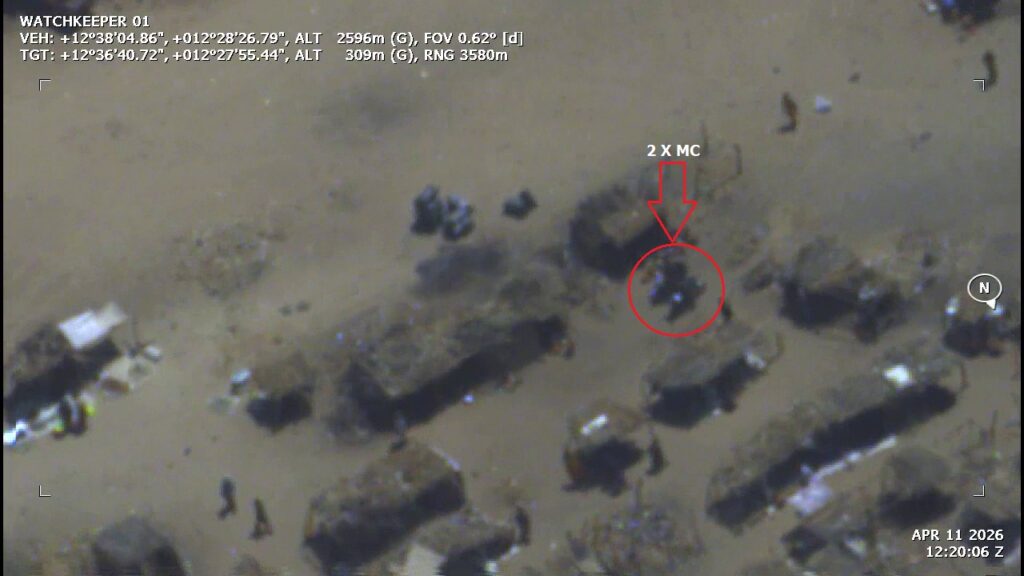
The strike, carried out on April 11, 2026, was executed by the Air Component of Operation HADIN KAI in coordination with the Nigerian Army, following earlier operations targeting terrorist positions in the area.
In a statement issued on Sunday, the Media Information Officer of the Northeast Joint Task Force, Sanni Uba, said the targeted location was a known terrorist enclave and logistics hub associated with the Islamic State West Africa Province.
“The Air Component of Joint Task Force (North East) Operation HADIN KAI (OPHK), in a carefully, well-coordinated, planned, and intelligence-driven operation, has successfully conducted a precision air strike on a known terrorist enclave and logistics hub located near the abandoned village of Jilli in Gubio Local Government Area of Borno State. The successful strike, executed on 11 April, 2026, followed sustained Intelligence, Surveillance and Reconnaissance (ISR) missions over the Bindul–Jilli axis, an area long identified as a major terrorist movement corridor and convergence point for Islamic State West Africa Province terrorists and their collaborators,” he said.
Uba referenced previous attacks in the area, including a January 2026 improvised explosive device (IED) incident that killed eight soldiers and left several others injured. He also cited coordinated attacks on April 9 in Ngamdu and Benisheik, which were linked to the same terrorist network.
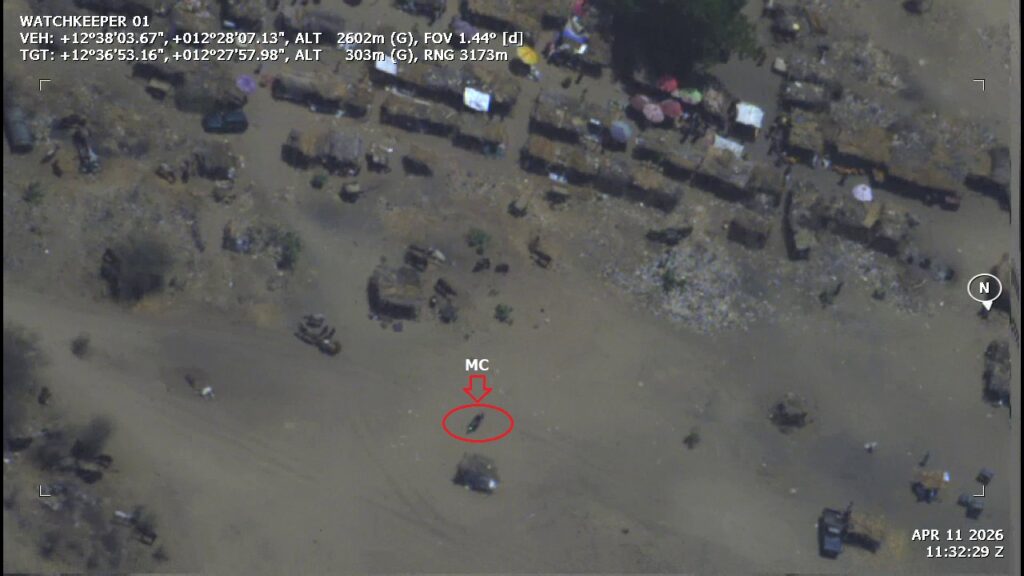
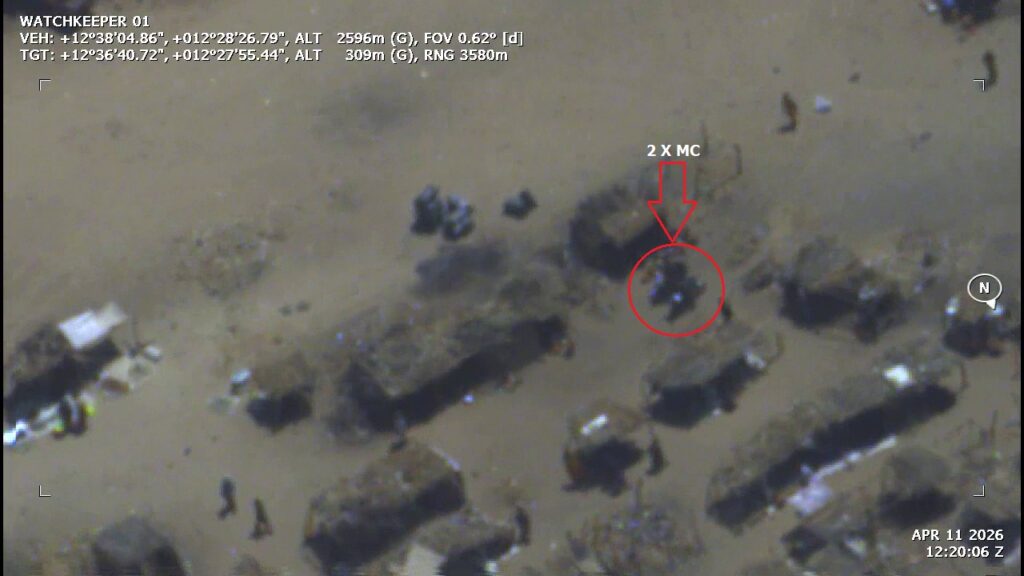
According to him, intelligence reports on April 11 indicated suspicious movements involving motorcycles and vehicles converging on the Jilli axis. These movements were reportedly confirmed through both aerial surveillance and human intelligence sources.
“Consequently, ISR coverage over the area was immediately intensified. During the surveillance mission, a contingent of motorcycles was observed moving in the direction of Jilli, followed shortly by the movement of several additional vehicles, all converging on the same location. These suspicious movements were subsequently corroborated by credible human intelligence sources, confirming that the converging elements were terrorists, their collaborators, and logistics handlers,” he said.
He stressed that the operation followed a rigorous targeting process, with multiple layers of verification before the strike was approved. According to the military, the airstrike achieved high accuracy, destroying the identified target and neutralising several террорист elements, while others fled the scene.
Uba added that intelligence suggested the group was in the final stages of coordinating logistics for planned attacks on military positions in the Gubio axis and that the strike disrupted those plans significantly.
He further revealed that on April 12, a suspected logistics courier identified as “Turja Bulu” was arrested in Ngamdu. The suspect reportedly confessed to involvement in earlier attacks and was said to have been dispatched from Jilli to deliver supplies to insurgents operating around the Magumeri–Gubio area.
“This successful strike is yet another demonstration of the resolve and operational capability of OPHK to sustain relentless pressure on terrorist elements, disrupt their logistics networks, and deny them freedom of movement within the theatre,” he said.
The military also reiterated its ban on motorcycle movements across the North-East operational theatre, particularly in Borno and Yobe states, citing their frequent use by insurgents for mobility and logistics.
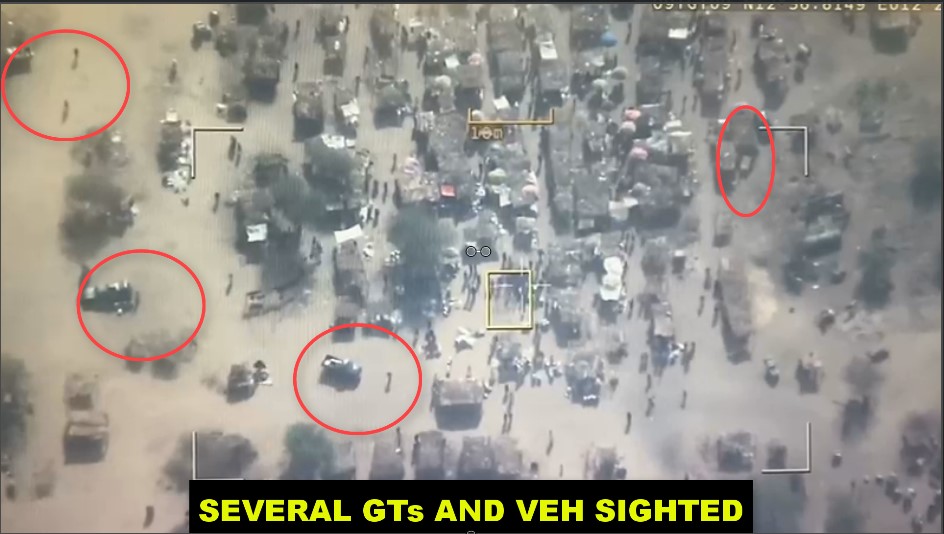
“Any such movements in restricted areas are therefore treated with the utmost seriousness in line with existing operational directives,” he added.
Despite the military’s justification, authorities have yet to officially confirm or deny reports of civilian casualties at the Jilli market, leaving uncertainty over the full impact of the strike.
What you should know
The Nigerian Army maintains that the Jilli airstrike was a precision operation targeting ISWAP terrorist logistics networks, based on credible intelligence and surveillance.
However, conflicting reports of civilian casualties have raised concerns about the risks of military operations in populated areas. The North-East remains a volatile region with ongoing insurgent threats, prompting aggressive counter-terrorism efforts under Operation HADIN KAI.
While the military insists the strike disrupted planned attacks, the lack of clarity on civilian impact highlights the ongoing challenge of balancing security operations with civilian safety in conflict zones.