
Jihadist fighters in northeastern Nigeria have killed a senior military officer during an attack on a military installation, marking the second death of a high-ranking commander in five months, according to local authorities.
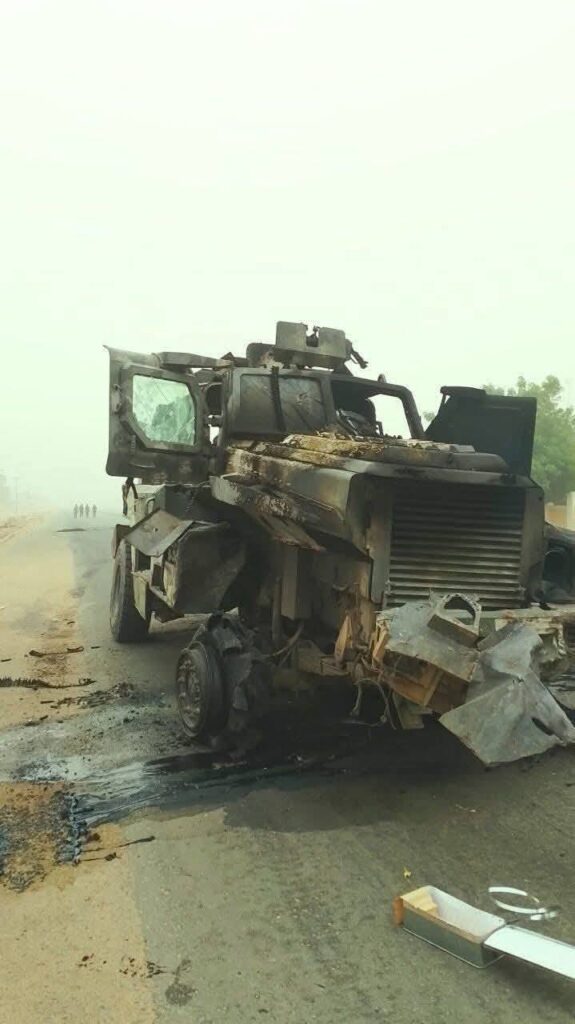
The incident occurred during a nighttime raid on a base in Benisheikh, located about 75 kilometres from Maiduguri. Intelligence sources told AFP that at least 18 soldiers were killed as attackers stormed the facility, setting fire to vehicles and infrastructure.
Confirming the development, Kaga Local Government Chairman, Zannah Lawan Ajimi, said the brigade commander, O.O. Braimah, lost his life in the assault.
“Unfortunately, the brigade commander, Brigadier General O.O. Braimah, lost his life,” Ajimi said during a phone interview.
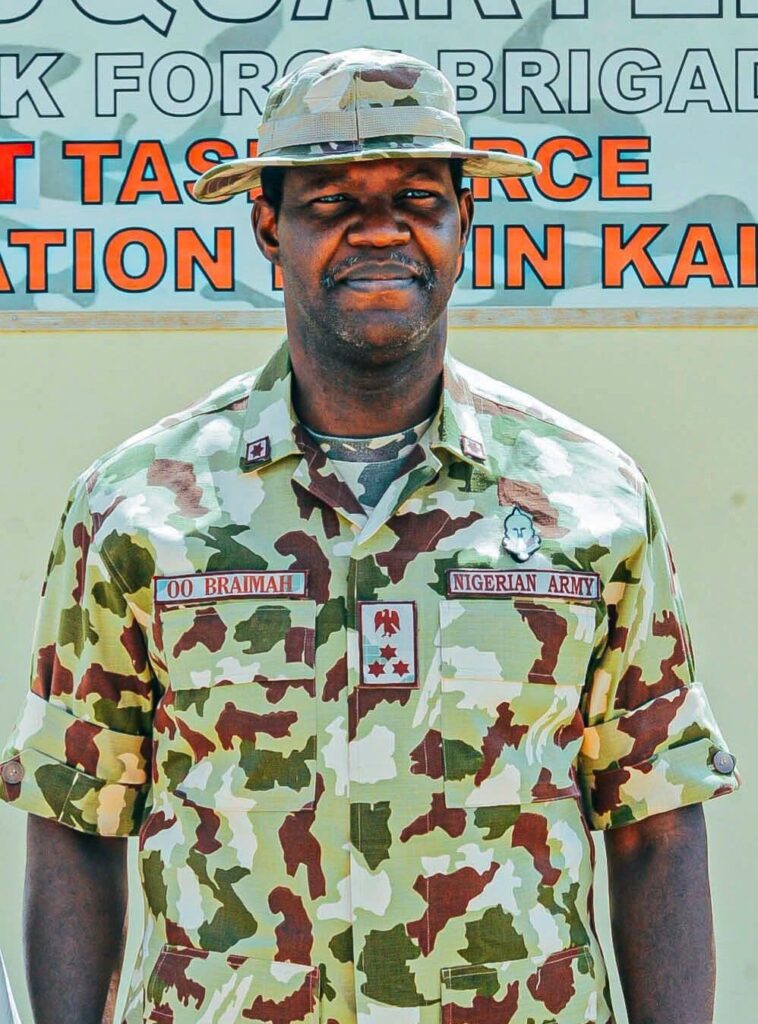
Multiple intelligence sources also verified the death of the senior officer, noting that the attackers overpowered troops stationed at the base. One source described the assault as overwhelming, stating that “they overran the brigade,” while another confirmed that several soldiers were killed and property destroyed before the attackers withdrew.
The latest killing follows the death of Musa Uba, who was killed in November by militants linked to Islamic State West Africa Province. His death had marked the highest-ranking military casualty in the conflict since 2021.
Nigeria has battled a prolonged insurgency for over 17 years, dating back to the 2009 uprising by Boko Haram. The conflict has since evolved, with multiple factions, including ISWAP, emerging and intensifying attacks across the region.
Security agencies, including the military and Defence Headquarters, had yet to issue an official response at the time of reporting.
Recent data and field reports suggest a growing surge in militant activities since 2025. Maiduguri has experienced two suicide bombings since December, echoing the urban violence seen at the height of the insurgency years ago.
The worsening situation has also drawn international concern. The United States Department of State recently authorized the evacuation of non-essential personnel from Abuja, citing deteriorating security conditions nationwide.
While insurgent activities remain concentrated in the northeast, there has been a noticeable expansion into other regions. In northwestern Nigeria, armed groups often referred to as bandits have continued to attack rural communities, targeting farmers and miners.
According to AFP, at least 90 people were killed across multiple villages in the northwest this week alone. One of the attacks in Kebbi State was attributed by police to a local jihadist group known as Mahmuda, reportedly linked to Al-Qaeda.
Border states such as Kebbi have seen increased militant infiltration since 2025, with conflict monitoring group ACLED reporting a spike in attacks linked to both Al-Qaeda and Islamic State affiliates.
In neighbouring Kwara State, militants associated with the Al-Qaeda-linked JNIM claimed responsibility for an attack in October, raising concerns about the southward spread of Sahel-based insurgencies.
Additionally, in December, joint operations involving the United States targeted fighters of the Islamic State Sahel Province in Sokoto State, highlighting the increasing cross-border dimension of the conflict, which also affects Niger, Mali, and Burkina Faso.
The killing of another senior officer underscores the persistent and evolving threat posed by insurgent groups, even as security forces continue operations to contain the violence.
What you should know
The killing of a brigadier general in Borno highlights the ongoing security challenges in Nigeria’s northeast, where insurgent groups remain active despite years of military operations.
The attack reflects a resurgence in violence, with increased casualties among both civilians and security forces. The spread of jihadist activities beyond traditional strongholds into northwest and central regions raises concerns about broader instability.
International actors, including the United States, have responded by issuing warnings and adjusting their presence.
The situation underscores the need for sustained security efforts and regional cooperation to combat evolving militant threats effectively.