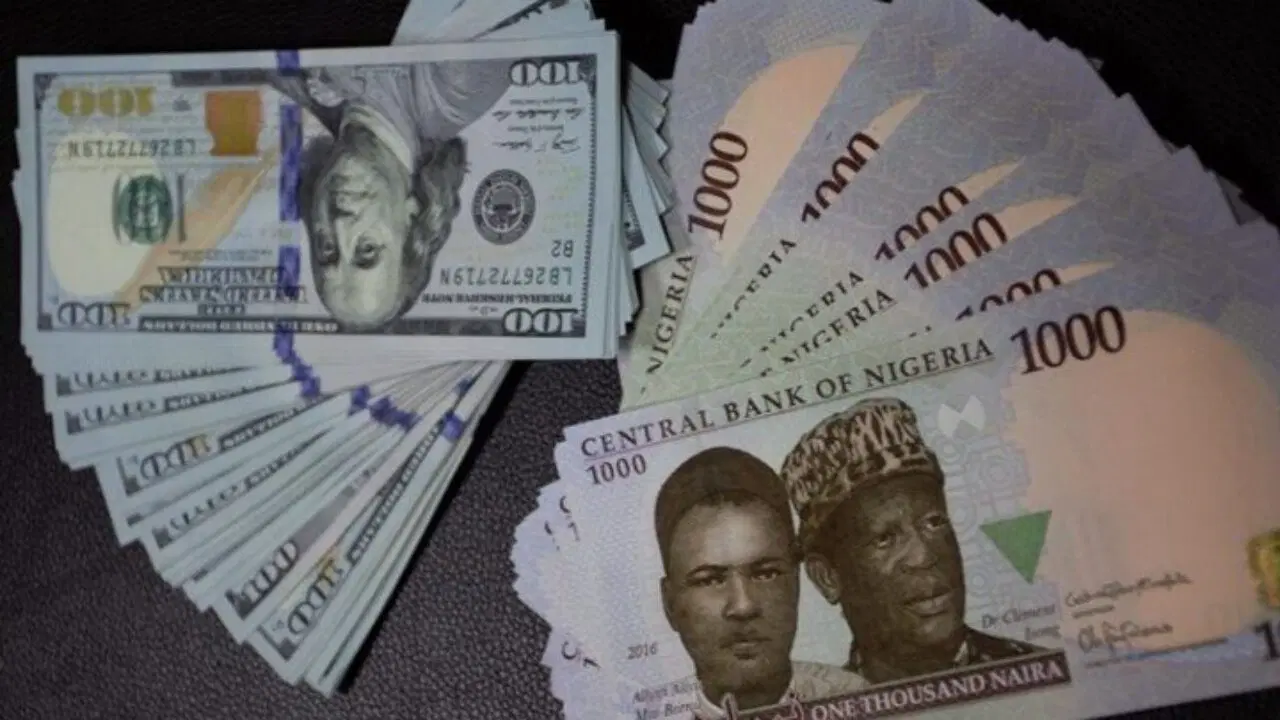
The naira ended the week strong, gaining to ₦1,338.59/$, its best NFEM performance in about five months, boosted by improved dollar liquidity and record-high external reserves.
The rally capped a steady week-on-week climb. The naira had settled at ₦1,343.59 to the dollar on Wednesday before Thursday’s gains pushed it further into positive territory, extending a run of appreciation that traders and analysts have increasingly linked to structural improvements in Nigeria’s foreign-exchange position rather than one-off intervention.
Early indications on Friday, however, suggested the currency may be giving back some of that ground.
Market data pointed to the dollar trading around ₦1,341.66 as the session opened, though officials cautioned that the final NFEM rate for the day would depend on the volume and pattern of transactions recorded before markets close, a reminder that the official rate remains a live, transaction-driven figure rather than a fixed benchmark.
Underpinning the naira’s recent resilience is a marked strengthening in Nigeria’s external reserves, which have reportedly climbed to approximately $53.34 billion, a level not seen in 18 years.
The milestone represents one of the clearest signals yet of the impact of the Central Bank of Nigeria’s ongoing reform agenda, which has centered on unifying exchange-rate windows, clearing verified forex backlogs, and courting renewed portfolio and oil-sector inflows.
For a currency that just a few years ago was being propped up by reserves languishing in the low $30 billion range, the current buffer marks a dramatic turnaround and one that analysts say has done much to restore investor confidence in the CBN’s capacity to defend the naira against external shocks without resorting to the kind of aggressive dollar-selling interventions that depleted reserves in the past.
Yet for all the optimism at the official window, the naira’s improved fortunes have not fully filtered through to the parallel market, where the currency continues to trade at a noticeable discount.
According to AbokiFX-related market reports, dollars were changing hands at around ₦1,410 on the sell side and ₦1,400 on the buy side on Thursday, meaning anyone looking to source a dollar informally would still need to pay a premium of roughly ₦68 above the indicative official rate of ₦1,341.66.
That gap, while narrower than in previous periods of acute currency stress, underscores a persistent reality for ordinary Nigerians and businesses: access to the official rate is not universal.
Banks, Bureau de Change operators, and other authorized dealers routinely apply their own rates depending on transaction size, location, transaction type, and prevailing conditions, meaning the NFEM figure, however encouraging, does not necessarily reflect what an importer, traveller, or parent paying overseas tuition will actually pay at the counter.
The Central Bank of Nigeria continues to withhold official recognition from the parallel market, which operates outside regulatory oversight and can see its rates shift multiple times within a single trading day, driven by informal supply and demand dynamics rather than the more structured mechanisms governing the official window.
As of Friday morning, the picture remained broadly consistent with the week’s trend: the dollar hovering near ₦1,341.66 officially, against parallel-market quotes still clustered between ₦1,400 and ₦1,410.
For businesses and households reliant on foreign currency, whether for imports, international travel, school fees abroad, or other cross-border transactions, the message from this week’s data is a cautiously positive one: the naira’s fundamentals appear to be improving, but the dual-market reality that has long defined Nigeria’s currency landscape has yet to be fully closed.
Whether the official-parallel spread continues to narrow will likely depend on the durability of the reserve build-up and whether dollar liquidity in the official market remains sufficient to meet demand that might otherwise spill into informal channels.
WHAT YOU SHOULD KNOW
The naira’s climb to ₦1,338.59/$, a five-month high, is backed by something real: external reserves at an 18-year high of $53.34 billion.
But the ₦68 gap that still separates the official rate from the parallel market (₦1,400–₦1,410) means the good news hasn’t fully reached the street yet, so anyone budgeting for dollars should still expect to pay closer to parallel-market rates, not the official one.