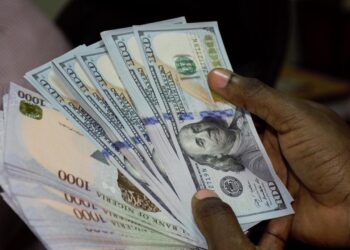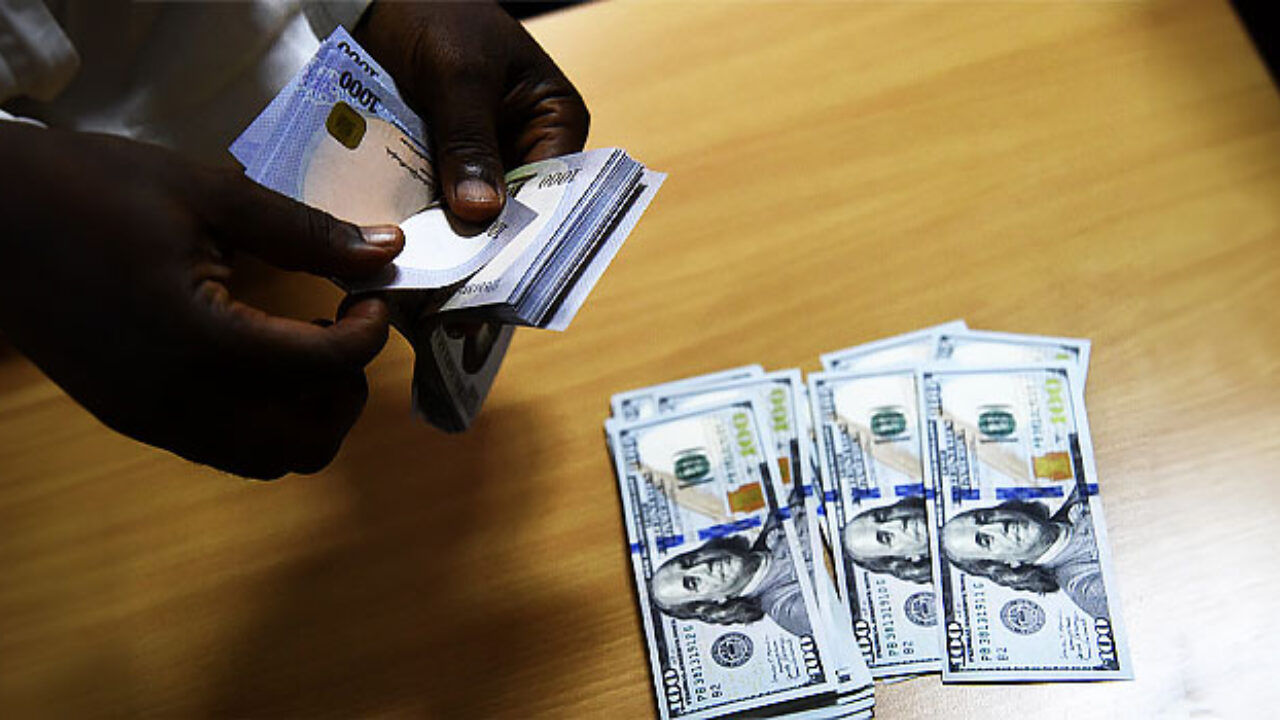
The naira extended its recent run of relative calm on Thursday, trading at approximately ₦1,345.94 to the US dollar on the Nigerian Foreign Exchange Market (NFEM), as the local currency continued to draw support from improving dollar liquidity and a swelling stock of external reserves.
The figure marks a continuation of a modest strengthening trend the naira has shown through the week.
On Wednesday, the unit closed at ₦1,343.59/$ on the official window, an improvement on Monday’s ₦1,346.98/$, suggesting that whatever pressures have periodically buffeted the currency this year are, for now, being absorbed without derailing the broader stability narrative the Central Bank of Nigeria (CBN) has been keen to project.
Away from the official window, the picture looks markedly different. Bureau De Change operators in the parallel market, commonly known as the black market, quoted the dollar at around ₦1,405 on Wednesday, according to BusinessDay.
A separate market check placed Lagos street rates even higher, with BDC operators buying dollars at ₦1,398 and selling at ₦1,407.
That spread of roughly ₦50–₦60 between the NFEM and parallel-market rates underscores a persistent structural reality of Nigeria’s currency market: official liquidity gains have not fully filtered down to informal channels, where retail demand for hard currency, often driven by travel, school fees, and small-scale import needs, continues to outstrip readily available supply.
The CBN, for its part, does not recognize the parallel market as a legitimate foreign-exchange channel, a position it has held consistently as it works to entrench the NFEM as the sole authoritative price-discovery mechanism for the naira.
Underpinning the naira’s relative firmness in the official market is a notable build-up in Nigeria’s external reserves, which BusinessDay reported have climbed to $53.34 billion, an 18-year high.
The milestone gives the CBN a considerably larger buffer than it has enjoyed in nearly two decades to intervene in the market, meet legitimate dollar demand from banks and corporates, and defend the naira against speculative pressure.
Analysts have generally linked the reserve accretion to steadier oil earnings, improved remittance inflows, and continued efforts by the apex bank to unify and deepen the official FX market since the reforms initiated in recent years.
The added war chest appears to be translating, gradually, into the kind of liquidity conditions that have kept the NFEM rate anchored in the ₦1,340–₦1,350 band this week.
For everyday Nigerians and businesses, the practical takeaway is that “the exchange rate” is rarely a single, fixed figure. What a customer pays for a dollar depends heavily on the channel used a commercial bank, a licensed BDC, or an informal street dealer as well as the size of the transaction, location, and prevailing conditions at that specific moment.
Parallel-market quotations, in particular, are known to shift multiple times within a single trading day, making same-day comparisons tricky.
Taken together, Thursday’s figures point to a currency market that is, on balance, more stable than it has been in recent memory, buoyed by record reserves and firmer liquidity, even as the persistent premium in informal trading serves as a reminder that full convergence between Nigeria’s official and parallel FX markets remains a work in progress.
Whether the CBN can sustain the reserve momentum, and whether that translates into a narrowing of the parallel-market spread in the weeks ahead, will likely be the next marker analysts watch closely.
WHAT YOU SHOULD KNOW
The naira is holding firm near ₦1,346/$ officially, backed by a record $53.34 billion in external reserves, the highest in 18 years. But don’t be fooled into thinking that’s the rate you’ll actually pay: the parallel market still trades roughly ₦50–₦60 higher, around ₦1,398–₦1,407, since the CBN doesn’t recognize it as official.
What you pay depends entirely on where you buy: bank, BDC, or street dealer, so always check the current rate before transacting, as parallel-market prices can shift several times a day.