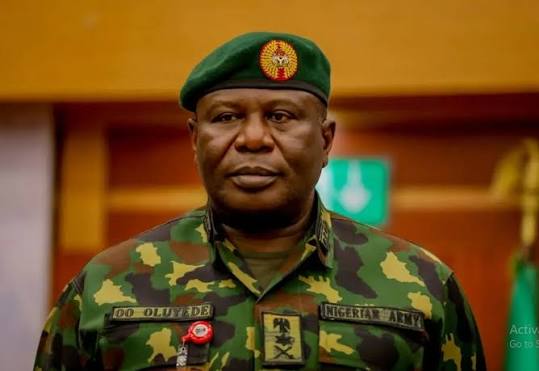
The Defence Headquarters has acted quickly to shut down a fake AI-generated video showing Chief of Defence Staff General Olufemi Oluyede appearing to back a political camp, disinformation officials say could erode trust in the military.
In a statement issued by the Director of Defence Information, Major General Samaila Uba, the military moved to close down the controversy before it could spread further, declaring flatly that the footage did not originate from the CDS and that every word attributed to him in it should be treated as false and disregarded entirely.
The episode places General Oluyede, who was confirmed by the Senate and took over as Chief of Defence Staff only in late October 2025, succeeding General Christopher Musa, at the center of a controversy he had no part in creating.
It is a reminder of how quickly synthetic media can attach itself to a public figure’s image, regardless of how new that figure is to the role.
The fake video is not an isolated case. It arrives against the backdrop of a string of AI-fabricated content targeting Nigerian public figures in recent months. Government regulators previously raised the alarm over a synthetic advertisement using President Bola Tinubu’s image and voice to solicit investment in what authorities described as a Ponzi scheme.
Around the same period, a viral clip falsely suggesting the president had stumbled during an overseas visit was also traced to AI manipulation, with supporters blaming political rivals ahead of the 2027 general election.
Clerics and broadcasters have not been spared either, with fabricated clips of religious and media figures previously used to peddle fraudulent health cures.
That pattern of deepfakes bleeding into Nigeria’s political and religious life appears to have now reached the country’s military leadership,, an institution that, unlike elected officials, is constitutionally required to stay above the partisan fray.
According to the statement, the Armed Forces of Nigeria remain a professional, apolitical institution bound to the constitution rather than to any political interest, a line officials appeared eager to put beyond dispute given the sensitivity of any suggestion that the military’s most senior uniformed officer had waded into partisan politics.
Beyond simply denying the video’s authenticity, the Defence Headquarters characterized its creation as a deliberate act aimed at deceiving the public, distorting the CDS’s official standing, and damaging the reputation of the armed forces as a whole.
Officials issued a pointed warning to those behind the clip, as well as to anyone still circulating or amplifying it online, to halt the activity immediately, a phrasing that leaves open the possibility of further action against persistent offenders.
With synthetic media now capable of convincingly mimicking a senior officer’s voice and likeness, the DHQ’s statement doubled as a public-awareness advisory.
It urged Nigerians to treat the circulating video as false and to rely exclusively on the military’s official communication channels for authentic information,, namely its Facebook page (Defence Headquarters Nigeria), X account (@DHQNigeria), Instagram handle (DefenceHQ), WhatsApp channel (Defence Headquarters Nigeria), and YouTube channel (DefenceTV-Nigeria).
The episode underscores a widening challenge for Nigerian institutions: as generative AI tools become cheaper and more convincing, government bodies are increasingly having to fight disinformation not just with denials, but with sustained campaigns steering citizens toward verified channels, a defensive posture that is likely to become a routine feature of public communication in the months ahead, particularly as the country moves closer to the 2027 election cycle.
WHAT YOU SHOULD KNOW
The video of General Oluyede is fake, and the Nigerian military, as a matter of law and principle, does not take political sides. As deepfakes targeting public figures become more common in Nigeria, the safest response is the same one the DHQ is asking for: don’t trust viral clips; verify through official channels before believing or sharing them.