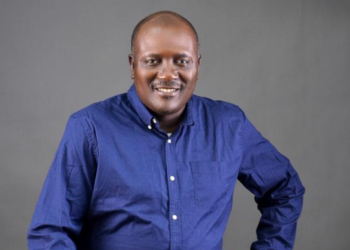
Ibrahim Gusau announced on Thursday that he is stepping down as president of the Nigeria Football Federation (NFF), ending a nearly four-year tenure marked by continental highs and painful World Cup absences.
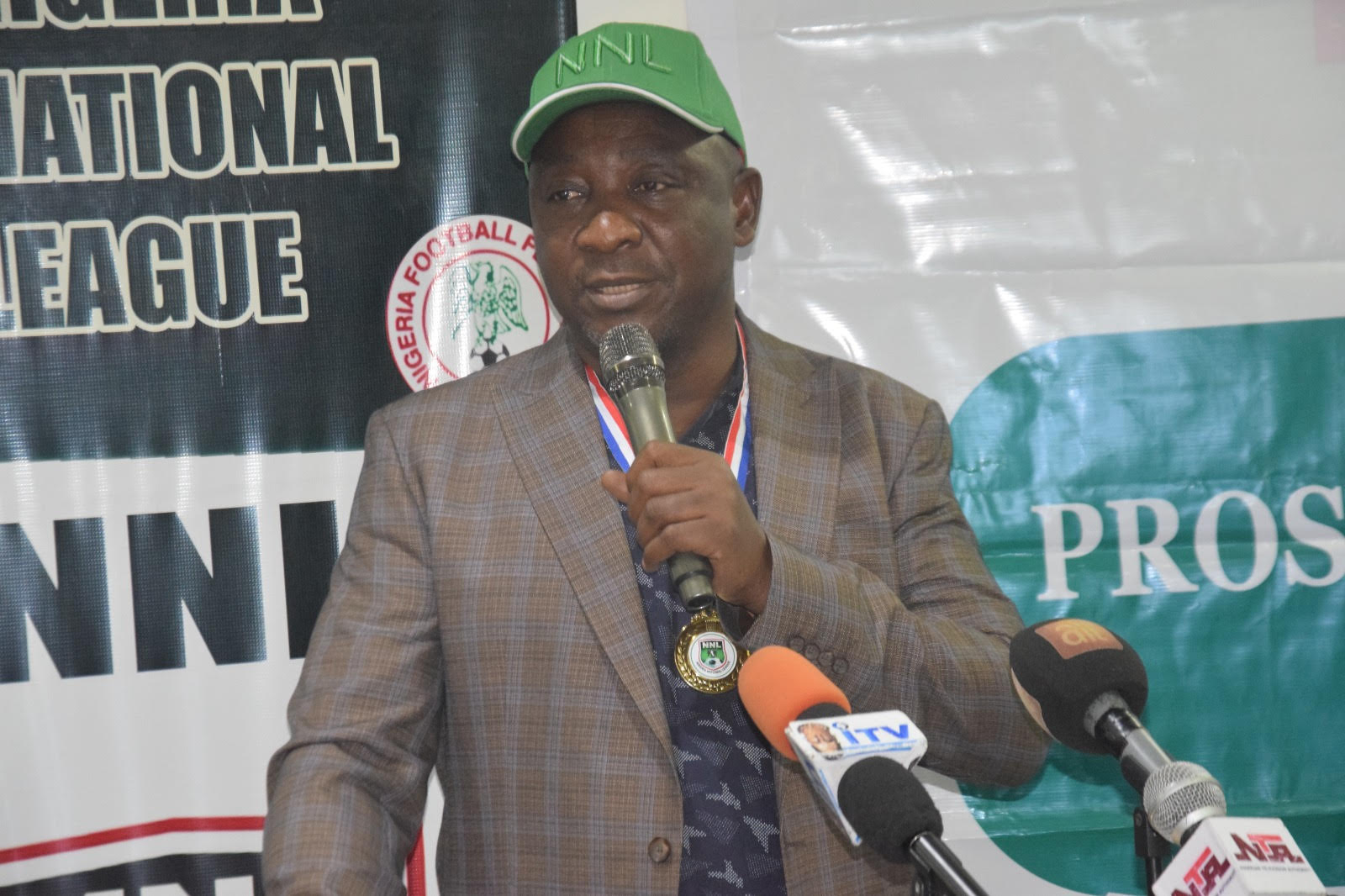
The announcement came at a hastily convened press conference at the NFF Glass House in Abuja, where a visibly composed Gusau told reporters he was making way for “other Nigerians” to take up the mantle of developing the sport in the country.
“I just want to tell you that I decided to resign my position as the NFF President,” Gusau said, reading from prepared remarks before fielding questions from a room of stunned journalists. “I informed my board members and advised them that anybody who wants to follow me should also resign.”
Yet even as he called on his executive committee to follow suit, Gusau admitted he could not confirm whether any of them had actually done so.
“As I am talking to you, I cannot tell you who and who or how many board members have resigned,” he said, an admission that hinted at the disarray now gripping football’s governing house in the country and raised immediate questions over whether his exit was a coordinated handover or a hurried, solitary decision.
Despite both the Super Eagles and the Super Falcons failing to secure qualification for their respective World Cups, arguably the two most damaging blows Nigerian football has suffered in recent memory, the outgoing president insisted he was leaving the federation stronger than he found it.
It is a claim that will be fiercely contested. Gusau’s presidency, which began at the 78th Elective Congress in September 2022, was bookended by two separate World Cup qualification failures for the men’s team and included a third-place finish for the Super Eagles at this year’s Africa Cup of Nations in Morocco, a result some saw as a partial redemption and others as a consolation prize for a team that should have gone further.
Critics, including former NFF vice president Gabriel Chukwuma, had spent months publicly demanding the resignation of Gusau’s entire board, accusing it of “cluelessness” and reducing the Super Eagles to “minnows of African football.”
Gusau was careful to frame his departure as a step back rather than a step away. He pledged to remain a resource for Nigerian football behind the scenes, leaning on the continental relationships he built during his time as a CAF committee member and president of the West African Football Union (WAFU) Zone B.
“By the grace of God, I hope I can continue to give my contributions,” he said, “because the experience and relationship we have within African football, we will never allow it to go in vain. Whenever we need to give our contributions, we will come here and give our contributions for the progress of the Nigerian people.”
The resignation was not confined to the top office. Earlier the same day, NFF General Secretary Mohammed Sanusi addressed staff at the federation’s secretariat to announce his own departure, a signal that Thursday’s upheaval extended well beyond the presidency and into the administrative core of the organization.
Perhaps the most consequential fallout from Thursday’s announcement concerns timing. Gusau’s exit lands just weeks before the NFF’s board elections, scheduled for September 27 in Lafia, Nasarawa State, polls that were meant to determine his successor through the federation’s normal electoral process.
His decision to step down before that vote, rather than simply serve out his term, threatens to complicate the process rather than smooth it, leaving open questions about interim leadership, the legitimacy of any transitional arrangements, and whether the September date can hold at all.
For a federation already under siege from angry stakeholders and a disillusioned fan base following back-to-back World Cup disappointments, the coming weeks will test whether Nigerian football can manage a leadership vacuum without further destabilizing a house that, by Gusau’s own admission, he is leaving in uncertain hands.
WHAT YOU SHOULD KNOW
Ibrahim Gusau’s resignation as NFF President, coming just weeks before the September 27 board elections and amid the fallout from the Super Eagles’ and Super Falcons’ failed World Cup qualifications, leaves Nigerian football’s leadership transition dangerously uncertain, since even Gusau himself cannot confirm whether his board is following him out the door.