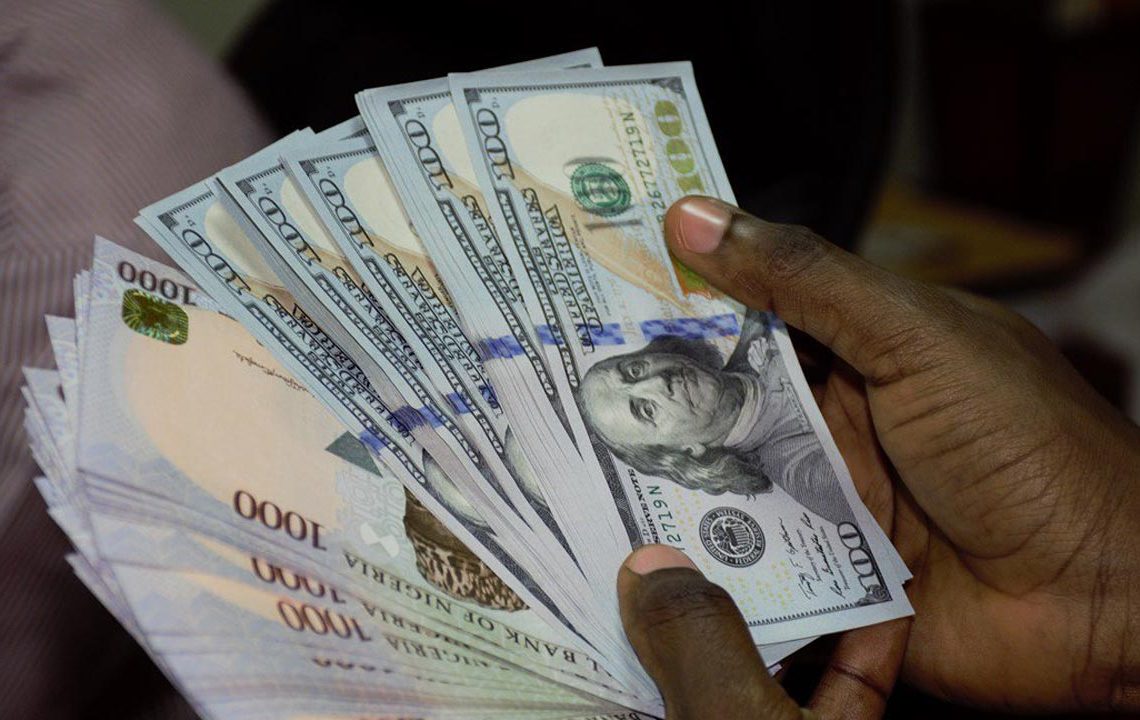
The naira held its ground against the US dollar on Wednesday, extending a run of relative calm in Nigeria’s foreign exchange market as the premium between official and street-market rates stayed within a moderate band.
Figures from the Nigerian Foreign Exchange Market (NFEM), the Central Bank of Nigeria’s official trading window, placed the dollar at roughly ₦1,346.34, a level consistent with the ₦1,347/$1 mark seen in recent official-market sessions.
The CBN calculates the NFEM rate as a volume-weighted average of transactions executed by authorized dealers, a methodology designed to reflect actual trading activity rather than posted quotes alone.
The most recent confirmed close had the naira trading at approximately ₦1,346.90 to the dollar, underscoring the currency’s tight range over the past several sessions.
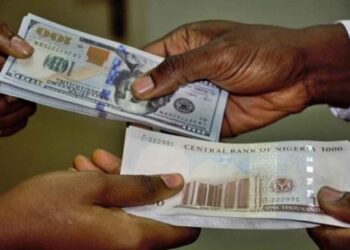
Away from the official window, the picture was somewhat different. Data from Aboki Forex showed the dollar changing hands for about ₦1,400 in the parallel market on Wednesday, a rate at which $100 would fetch roughly ₦140,000 and $1,000 would cost around ₦1.4 million.
That puts the gap between the two markets at approximately ₦53.66 per dollar, a spread that, while still notable, points to continued convergence between official and informal pricing.
Analysts have generally treated a narrowing spread as a signal of improving liquidity and confidence in the CBN’s official channel, since a wide gap typically drives more demand toward the black market and fuels arbitrage.
The current figures also track closely with trends reported by Reuters last week, when the naira was quoted around ₦1,345 per dollar officially, against a parallel-market rate near ₦1,410, a slightly wider spread than Wednesday’s.
Taken together, the numbers suggest the naira has maintained a measure of resilience through the month, even as the two markets continue to trade at different levels.
Still, currency dealers caution that the rates quoted by the CBN and platforms like Aboki Forex are reference points rather than guarantees.
Banks, Bureau de Change operators, and other authorized dealers routinely quote different prices depending on location, transaction size, and prevailing liquidity conditions, meaning individuals looking to buy or sell dollars may encounter rates that vary from the headline figures on any given day.
For now, though, the broader trend remains one of stability: a naira anchored just above the ₦1,346 mark officially, a parallel market trading at a moderate premium, and a spread that for the time being appears to be holding rather than widening.
WHAT YOU SHOULD KNOW
The naira remained stable on August 26, 2026, trading at about ₦1,346 officially versus ₦1,400 on the parallel market, a gap of roughly ₦54.
This narrowing spread signals growing convergence between Nigeria’s official and informal FX markets, a sign of improving confidence and liquidity. Still, actual rates for individuals will vary by dealer, location, and transaction size, so treat the headline figures as a benchmark, not a guarantee.