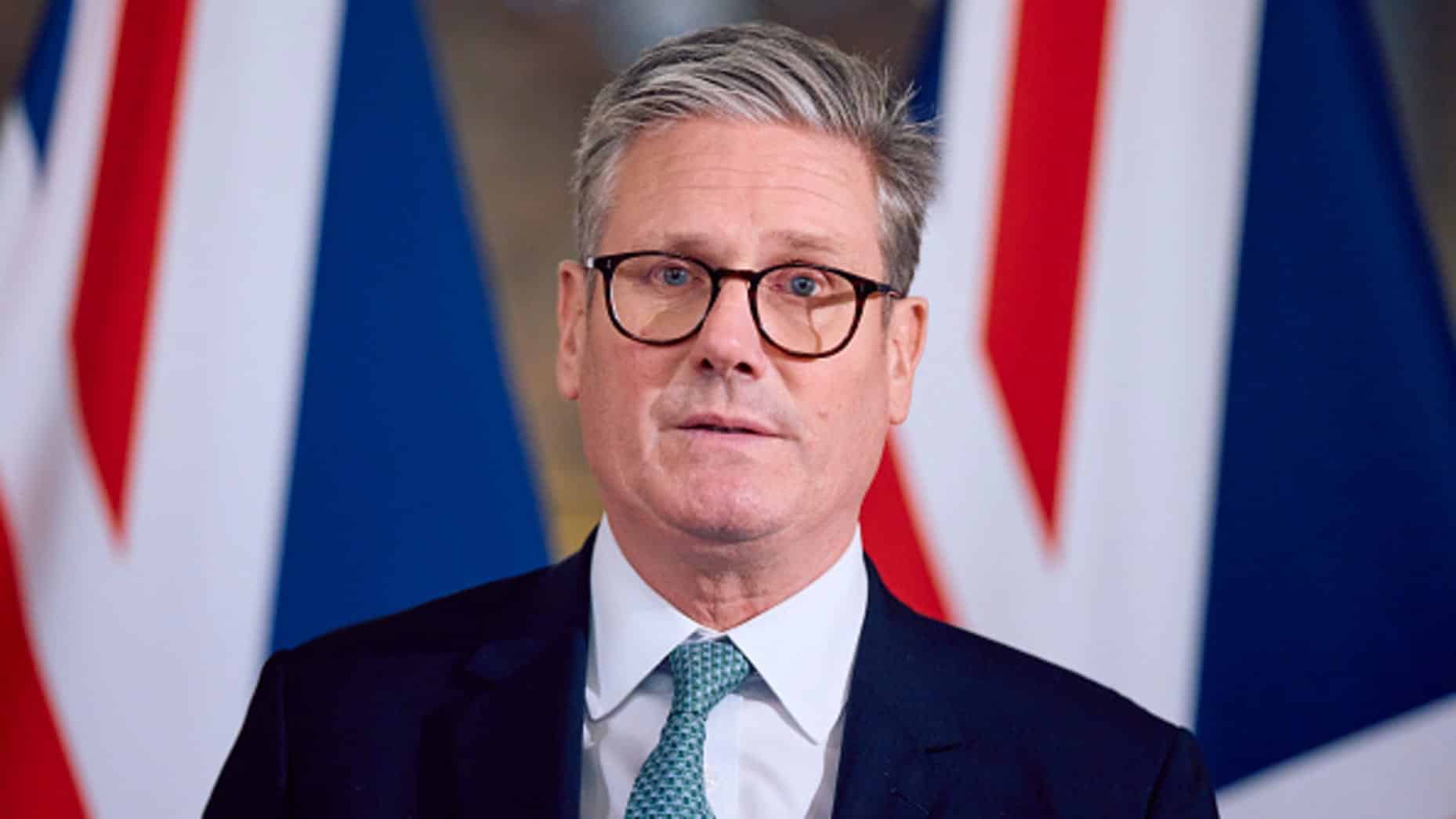
British Prime Minister Keir Starmer arrived at the lakeside French resort of Évian-les-Bains on Tuesday with a message for Vladimir Putin: the pressure will not relent.
Standing alongside fellow leaders of the world’s seven most powerful democracies, Starmer announced a sweeping package of 70 new sanctions targeting the financial arteries and energy infrastructure that continue to sustain Russia’s war machine.
“The UK announces 70 new sanctions targeting Russia’s decrepit shadow fleet, military procurement supply chains, and illicit finance networks used to circumvent sanctions,” read a joint statement from the UK’s Foreign, Commonwealth & Development Office and Downing Street.
The UK has become the first G7 country to sanction several Liquefied Natural Gas vessels recently acquired by Russia at great expense to service the already-sanctioned Arctic LNG 2 project, a venture responsible for exporting millions of tonnes of LNG and generating dirty revenue for the Kremlin.
The move signals a significant escalation, one that closes a loophole Western allies have been quietly debating for months.
This package is expected to bring the total number of UK-sanctioned shadow fleet and Russian LNG vessels to more than 600.
Russia’s so-called “shadow fleet,” a sprawling network of aged, often uninsured tankers operating under obscure flags of convenience, has long been the Kremlin’s lifeline for circumventing Western energy restrictions.
By disguising ownership structures and routing shipments through intermediary nations, Moscow has continued to profit from oil and gas sales that sanctions were designed to cut off.
Tuesday’s measures take direct aim at that machinery. The 20 ships sanctioned this time have lifted nearly 25 million barrels of crude, fuel oil, and refined products from Russia so far this year alone, according to data from S&P Global Commodities at Sea.
Among those blacklisted are Rosneft Marine (UK), the British-based marine fuel unit of Russian state energy giant Rosneft, along with Orion Star and Valego, which the UK identified as firms crewing and managing shadow fleet vessels.
Also in the crosshairs are several organizations helping Russia illegally move money and bypass Western sanctions, including one entity in Nigeria supporting a sanctions evasion scheme linked to the illicit finance network A7.
The reach of Tuesday’s action, stretching from the Baltic to West Africa, underscores just how globally embedded Russia’s financial circumvention network has become.
“Today’s sanctions show we will systematically dismantle his dangerous shadow fleet, starve his war machine, and support Ukraine to defend itself,” Foreign Secretary David Lammy declared, adding that the UK plans to work with partners to tighten the oil price cap to further hurt Russia’s oil revenues while maintaining market stability.
Beyond sanctions, Starmer unveiled a significant energy lifeline for a Ukrainian civilian population facing relentless attacks on its power infrastructure.
A deal worth £210 million ($282 million) in export finance will enable UK-based nuclear fuel supplier Urenco to deliver enriched uranium to Ukraine’s nuclear power producer, Energoatom fuel that officials say will power the country’s nuclear stations for the next two years.
The agreement carries both strategic and symbolic weight: as Russia continues to target Ukrainian energy infrastructure, London is quietly ensuring the lights stay on in Kyiv, and hundreds of jobs in northwest England will benefit in the process.
Officials pointed to a major military operation to interdict the Smyrtos vessel in the early hours of Sunday as evidence of intensifying UK pressure on Moscow, a signal that the new sanctions package is part of a broader, operationally active campaign, not merely diplomatic theater.
Ukrainian President Volodymyr Zelensky, attending the summit in person, is counting on Western allies to convert their stated solidarity into measurable military and economic advantage after more than four years of grinding warfare.
The first roundtable of the day was dedicated entirely to building peace and security for Ukraine and Europe.
Starmer’s tone was unambiguous. “Working with our G7 allies, we will continue to increase the pressure on Putin and his circle of collaborators until Russia’s war machine is brought to a halt and peace returns to our continent,” he said.
His defense secretary’s resignation last week over a row on military spending has handed critics at home fresh ammunition, and observers will be watching closely whether his muscular international posture can translate into renewed domestic authority.
Officials in London were keen to point out that the cumulative weight of Western sanctions is increasingly visible in Moscow’s economic data. Russia’s oil and gas revenues have fallen every year since 2022, losing over a third of their value in three years while inflation is rising, the sovereign wealth fund is being hollowed out, and government spending on defense and security is spiraling.
The UK has now sanctioned almost 500 individuals, entities, and ships under its Russia sanctions regime in 2026 alone, a statistic that speaks to the accelerating pace of economic warfare even as battlefield lines remain stubbornly fixed.
Whether Tuesday’s package proves a turning point or another incremental squeeze will depend, analysts note, on whether G7 partners follow Britain’s lead, particularly on the LNG front, where Washington and Brussels have so far moved more cautiously. Starmer has made clear he will push them to go further.
For now, as world leaders gather on the shores of Lake Geneva with the sound of Ukrainian sirens still echoing from the night before, Britain has placed its cards firmly on the table.
WHAT YOU SHOULD KNOW
Britain has drawn a hard line at the G7 summit, becoming the first major Western nation to sanction Russia’s LNG tankers while expanding its total sanctions package to 70 new measures targeting Moscow’s shadow fleet, military supply chains, and illicit finance networks.
Paired with a £210 million nuclear fuel deal to keep Ukrainian power stations running, London is making clear that economic strangulation, not just battlefield support, is now a central pillar of the West’s Ukraine strategy.
With Russian oil revenues already down by a third since 2022, the walls are closing in on Putin’s war economy.