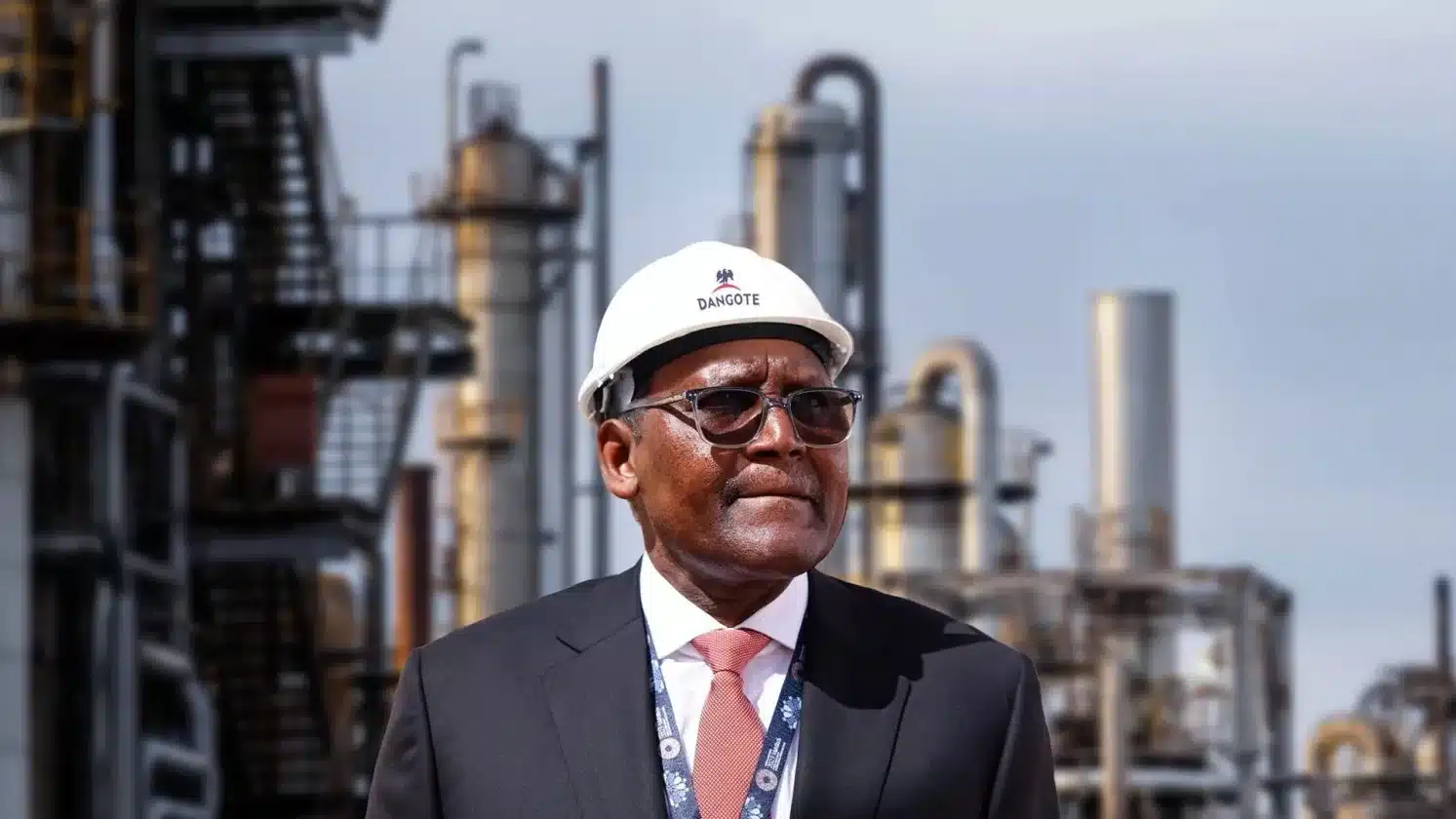
Africa’s richest man has set his sights on the creeks and coastline of Ondo State, pledging to build what could become Nigeria’s most ambitious industrial development in a generation, a self-powered mega free trade zone at Olokola that its backers say will rewrite the rules of doing business in West Africa.
Aliko Dangote, President of the Dangote Group, announced on Monday during a high-profile courtesy visit to Governor Lucky Orimisan Aiyedatiwa at the Government House in Akure, flanked by two of his most senior executives: Olakunle Alake, Vice President of Dangote Industries Limited, and Capt. Jamil Abubakar, the group’s Managing Director for Logistics and Infrastructure.
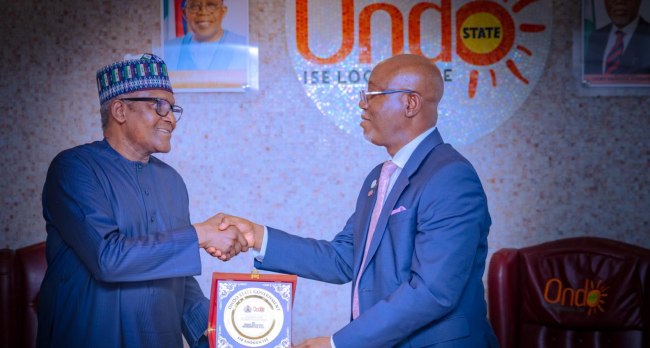
Dangote had once attempted to plant roots in Olokola before, only to be driven back by operational realities that sent his capital flooding into Lagos. Monday’s meeting signaled that those impediments, at least in the billionaire’s estimation, have changed and that Ondo’s moment may have finally arrived.
At the heart of Dangote’s vision is a free trade zone unlike any previously attempted in Nigeria, one that would not merely offer land and tax breaks but would deliver turnkey industrial infrastructure: reliable electricity, potable water, logistics networks, and, crucially, freedom from the energy paralysis that has suffocated Nigerian manufacturing for three decades.
“We want to create the biggest free trade zone where investors can just come and plug in,” Dangote told the governor. “We will generate power, provide infrastructure, and remove the bottlenecks around doing business.”
It was a statement as much about Nigeria’s present failures as its future possibilities. For over 30 years, Dangote noted, the country’s biggest industrial constraint has not been raw materials, not skilled labor, not even policy uncertainty; it has been power.
The vast majority of Nigerian manufacturers today run on self-generated electricity, bearing enormous costs that make their goods uncompetitive in both domestic and export markets.
The Olokola project, as envisioned, would break that cycle by integrating a dedicated energy supply directly into the industrial zone’s power that investors would access as a utility, not a capital expenditure.
Complementing this would be a proposed east-west gas corridor to feed energy-intensive industries within the zone, linking Ondo’s position along Nigeria’s southern coastline into a broader infrastructure grid.
Sitting along Nigeria’s southern coast in Ondo State, the location benefits from what Governor Aiyedatiwa described as a rare convergence of natural and logistical advantages, not least its position along the Lagos-Calabar Coastal Highway corridor, a federal infrastructure project that, when completed, promises to transform the movement of goods along Nigeria’s Atlantic seaboard.
The governor also disclosed that Ondo State holds a deep seaport license, an asset that, if developed, would allow the Olokola zone to handle large ocean-going vessels without the costly transshipment that currently inflates Nigerian import and export logistics.
Further bolstering the case for cement and construction materials manufacturing, the state’s limestone deposits have been tested and confirmed suitable for industrial-grade use, potentially making Ondo a new front in Dangote’s own cement empire.
“This project aligns with our administration’s efforts to position Ondo State as a leading industrial destination in the South-West,” Governor Aiyedatiwa said, describing the initiative as a milestone in the state’s industrialization agenda.
Dangote told the governor to expect movement on the ground within three to four months, with full construction targeted to begin in the final quarter of this year. The pace would be brisk by Nigerian infrastructure standards and contingent on a governance structure that both sides appear eager to formalize.
The industrialist specifically requested that the state government nominate a representative to sit on the board of the industrial zone, a measure designed to ensure coordination between private capital and public authority does not become an afterthought once contracts are signed.
Governor Aiyedatiwa confirmed the state’s readiness to make that nomination and disclosed that a technical committee has already been established to engage Dangote Group on the legal, land, community, and operational frameworks that will govern the zone’s development.
It is a detail that speaks to lessons learned. Nigeria’s landscape is littered with industrial projects that stalled not for want of investment but for want of community trust and regulatory clarity.
By building the government into the project’s governance structure from the outset, both Dangote and the Ondo administration appear to be building in accountability mechanisms they hope will see the project through.
Similar industrial investments in the commercial capital, he said, have generated significant employment and export revenues. For Ondo, a state whose economic identity has long been defined by cocoa, timber, and more recently, the complexities of the petroleum sector, the promise of large-scale manufacturing jobs carries particular resonance.
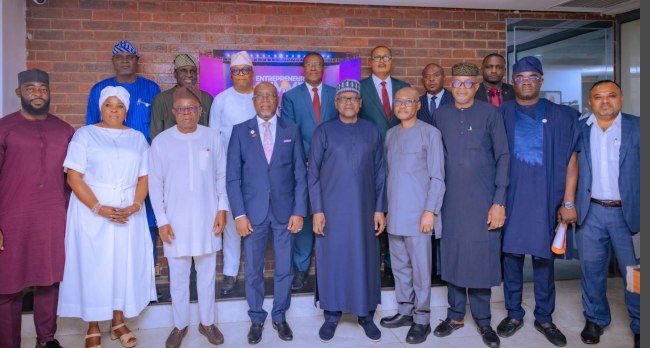
The meeting was attended by a full complement of senior state officials: the deputy governor, chief of staff, and commissioners across finance, energy, commerce, and environment, a signal that the Aiyedatiwa administration is treating this not as a bilateral commercial negotiation but as a whole-of-government priority.
Whether this moment translates into ground broken, workers employed, and goods exported will depend on execution, on whether contractors mobilize as promised, on whether infrastructure is delivered as designed, and on whether community relations are managed with the care that large industrial projects in Nigeria’s south demand.
But on Monday in Akure, at least, the ambition was unmistakable, and the alignment between the continent’s wealthiest industrialist and an oil-producing state hungry for economic diversification felt, for the first time in years, genuinely within reach.
WHAT YOU SHOULD KNOW
Aliko Dangote plans to build Nigeria’s largest free trade zone in Olokola, Ondo State, one that will generate its own power, supply its own water, and handle its own logistics so manufacturers can operate without Nigeria’s infamous infrastructure headaches. Construction is expected to begin by year-end.
Dangote has put a timeline on it, requested a board seat for the state government to ensure accountability, and has the track record in Lagos to back the ambition. If executed, Olokola could fundamentally shift Nigeria’s industrial geography southward and finally offer manufacturers a genuine alternative to grinding through decades of power failure on their own.