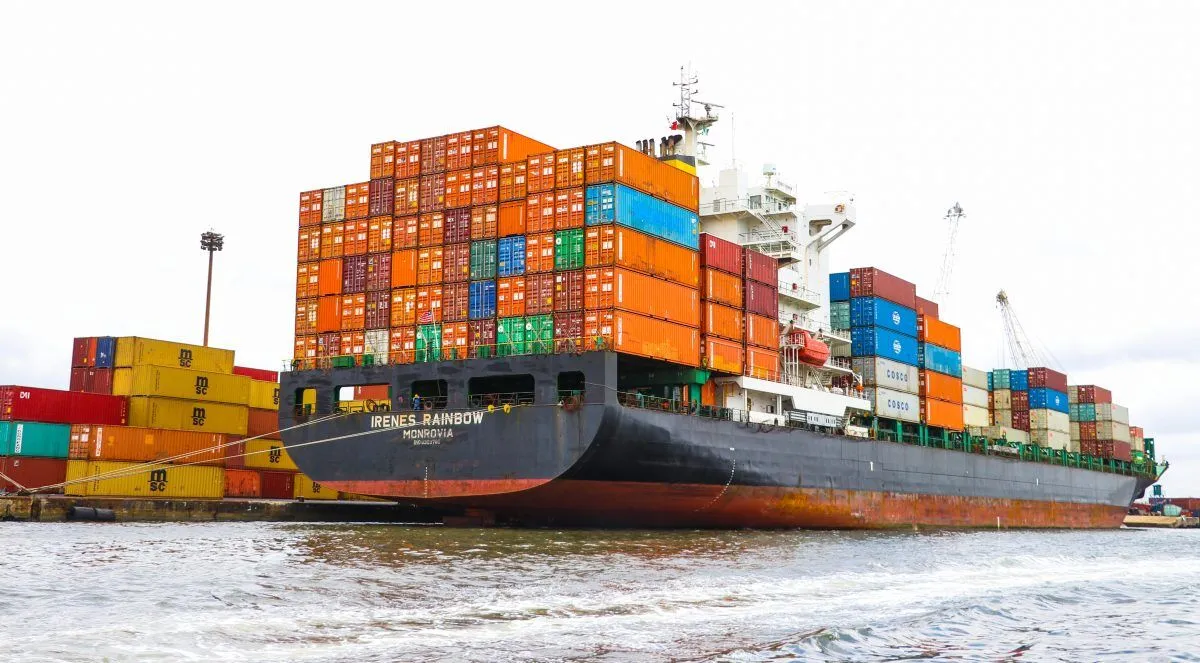
The World Bank’s Container Port Performance Index (CPPI) for 2025 has named Lagos Port Complex in Apapa and Tin Can Island Port Complex among the world’s top 20 most improved container ports over the last five years, outranking established maritime heavyweights from France, Turkey, India, and China.
Compiled jointly by the World Bank and S&P Global Market Intelligence, the sixth edition of the index evaluates container port performance based on vessel turnaround time and operational efficiency using a consistent, data-driven global benchmark.
TinCan Island Port placed 10th globally, improving its CPPI score by an impressive 42 points, climbing from -68 in 2020 to -26 in 2025. Lagos Port followed closely at 12th, recording a solid 35-point gain over the same period.
To put this in perspective, Nigeria’s ports outperformed France’s Marseille Port (11th, 39 points), Turkey’s Iskenderun Port (13th, 34 points), and India’s Jawaharlal Nehru Port (14th, 32 points), all major global trade arteries.
The Nigerian Ports Authority’s enhanced operations have been a quiet but consequential driver of Nigeria’s sustained national trade surplus.
According to the National Bureau of Statistics, Nigeria recorded a trade surplus of N7.54 trillion in Q1 2026 alone, the latest in a consecutive run of positive trade balances maintained year-on-year since 2024. More efficient ports mean lower logistics costs, faster cargo clearance, and a more competitive Nigerian economy on the global stage.
Industry observers, however, urge measured optimism. While the gains are genuine and well-documented, Nigeria’s CPPI scores remain in negative territory, meaning absolute port performance still trails the world’s leading benchmarks.
Persistent infrastructure challenges, particularly the notorious road congestion surrounding the Apapa port corridor, continue to impose operational costs that internal port reforms alone cannot fully resolve.
The World Bank’s recognition is anchored in verifiable, time-series data, not goodwill or potential. For a country long associated with port congestion and inefficiency, breaking into the global top 20 for improvement is a meaningful milestone.
The trajectory is clear, and the foundation is being laid. The task now is to sustain the momentum and push from being among the most improved ports to being among the most efficient, a harder ceiling to break, but no longer an implausible one.
WHAT YOU SHOULD KNOW
Nigeria’s Lagos Port and Tincan Island Port ranking among the world’s top 20 most improved container ports is a significant milestone, but the real headline is what that improvement is delivering for the Nigerian economy.
More efficient ports have directly contributed to a national trade surplus of N7.54 trillion in Q1 2026 alone, proving that port reform is not just a logistics story, it is an economic growth story.
The World Bank’s recognition is backed by hard data, not sentiment, and that credibility matters. It signals to global investors, shipping lines, and trade partners that Nigeria is serious about competitiveness.
The caution worth holding onto is that Nigeria is still climbing from a low base, and real infrastructure challenges remain.