Guinea has become the first country within the Economic Community of West African States (ECOWAS) to formally and publicly reject the bloc’s long-planned single currency, the eco, dealing an early setback to a regional integration project that has been decades in the making.
In a statement from the presidency, authorities in Conakry made clear that the Guinean franc is not up for negotiation.
Officials framed the decision not as a technical monetary judgment but as a matter of national sovereignty, an assertion that a country’s ability to “determine its own economic future” is inseparable from its control over its own currency.
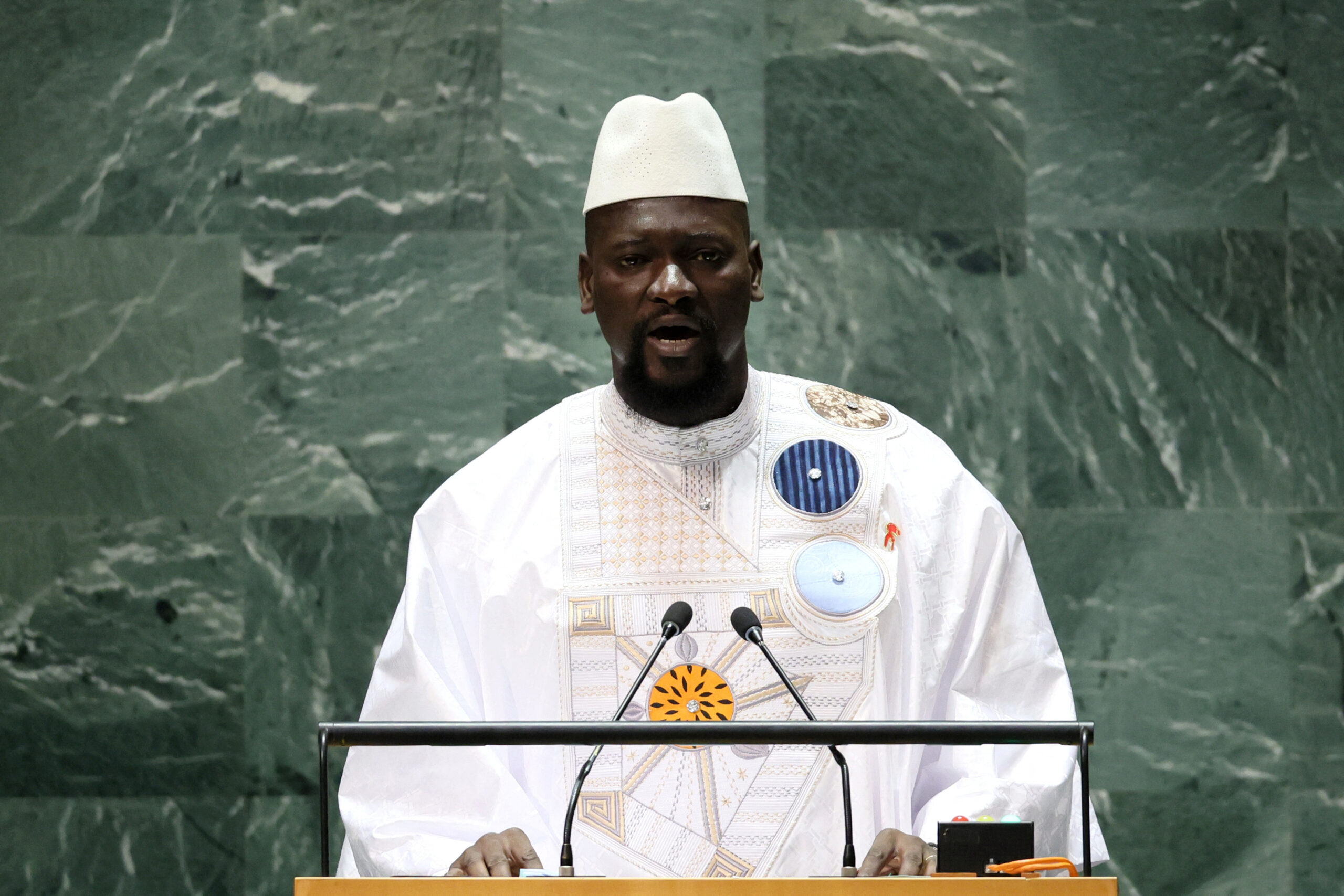
The statement came after President Mamadi Doumbouya’s participation in a recent ECOWAS summit in Sierra Leone had fuelled speculation that Guinea might be edging toward joining the eco zone. Conakry moved quickly to shut that speculation down, insisting that adopting the eco- “does not correspond to the economic realities of the country.”
Notably, Guinean officials left the door open to continued dialogue; the country says it will still take part in ECOWAS technical working groups shaping the eco’s design, even as it opts out of adopting the currency itself.
That distinction matters: Guinea isn’t walking away from the table; it’s simply declining to hand over its monetary steering wheel.
The announcement lands at a delicate moment for the currency project. Last month, ECOWAS leaders settled on a phased approach to the eco’s introduction, agreeing that only member states meeting convergence criteria thresholds on inflation, public debt, and monetary stability would join the first wave, currently targeted for July 2027. Countries not yet meeting those benchmarks were to be given room to join later.
That compromise was itself the product of years of delay. The eco has been in gestation for more than two decades, conceived as a tool to boost intra-regional trade, cut the transaction costs that come with currency conversion between neighboring states, and knit West Africa’s economies more tightly together.
The project also envisions a new West African Central Bank and a shared monetary policy framework of institutions that would represent a fundamental transfer of monetary authority away from national capitals.
Guinea’s move suggests that even the softer, phased version of that bargain is a harder sell than ECOWAS Commission planners may have hoped.
Guinean officials pointed to two concrete economic arguments for staying out. The first is the country’s underdeveloped domestic production base a concern that binding its currency to a regional bloc before building sufficient industrial and manufacturing capacity could lock in structural disadvantages rather than resolve them.
The second, more striking, is geography of trade: roughly 80 percent of Guinea’s exports go not to fellow ECOWAS members, but to Asian markets.
Economist Mohamed Camara, speaking to RFI, put the logic plainly: with Guinea’s major trading relationships lying outside West Africa entirely, tying the national currency to its regional neighbors risks costing Conakry policy tools currently control the ability to manage its exchange rate, respond to external shocks, and set monetary policy according to its own trade exposure, rather than a regional average dominated by very different economies.
The irony is not lost on observers: Guinea sits on some of the world’s largest reserves of bauxite, along with substantial gold and iron ore deposits, making it a resource-rich nation by any measure.
Yet it remains heavily reliant on imports for food and manufactured goods, a dependency that leaves it exposed and, in the government’s calculation, ill-positioned to absorb the additional constraints of a shared currency regime while its own productive base is still catching up.
Guinea’s decision also lands against the backdrop of a West African bloc that has already been reshaped by political rupture. ECOWAS now counts 12 member states, following the 2024 departure of Burkina Faso, Mali, and Niger, which broke away to form the rival Alliance of Sahel States.
That exodus was driven primarily by disputes over democratic governance and sanctions rather than monetary policy, but it nonetheless stripped the bloc of three members and underscored the fragility of West African unity projects more broadly.
Whether Guinea’s monetary opt-out becomes an isolated case or the first domino in a wider pattern of reluctance is now the question hanging over the bloc’s remaining members.
The ECOWAS Authority of Heads of State and Government is due to reconvene in December to work through unresolved details of the eco project: which countries will be deemed eligible for the first implementation phase, how decision-making within the planned central bank will be structured, and how the currency’s governance will balance the interests of larger and smaller economies within the union.
Guinea’s rejection is expected to be a central talking point at that summit. For ECOWAS technocrats, the challenge will be persuading other member states, many of which share Guinea’s concerns about weak industrial capacity, even if their trade profiles differ, that the eco is worth the sovereignty trade-offs Conakry has just declined to make.
For Guinea, having staked out its position early, the question now is whether standing apart from the currency union while remaining engaged in its design proves to be a sustainable middle path or simply a prelude to deeper divergence from the rest of the region’s economic trajectory.
WHAT YOU SHOULD KNOW
Guinea’s rejection of the eco boils down to one core fact: with roughly 80% of its exports going to Asia rather than West Africa, tying its currency to a regional bloc it barely trades with would cost Conakry more control than it would gain in convenience so it’s keeping the Guinean franc and its own monetary policy intact, while still trying to have a voice in shaping the eco from the sidelines.