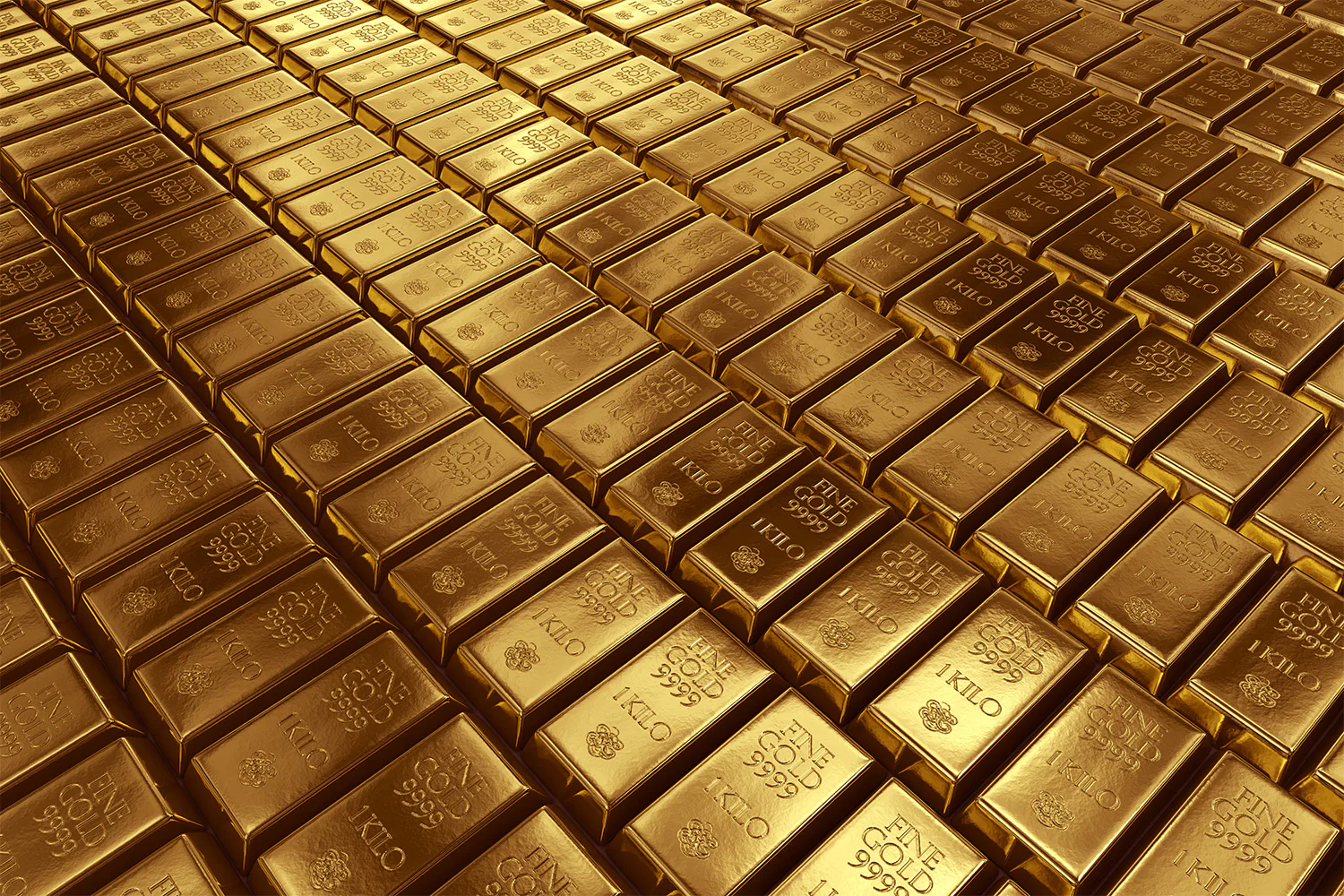
Gold slid for a second consecutive week on Friday, as stalling Middle East peace talks crushed investor hopes for a geopolitical resolution that would have otherwise boosted safe-haven demand.
Spot gold slipped 0.2% to $4,463.73 per ounce in early London trading, while U.S. gold futures for August delivery retreated 0.3% to $4,491.
The metal has shed roughly 1.6% over the course of the week, extending a bruising slide that has now wiped more than 16% off gold’s value since hostilities flared in late February, a counterintuitive rout that has confounded investors who traditionally treat bullion as a refuge in times of global uncertainty.
At the heart of gold’s woes is a Middle East peace process that appears to be unraveling in real time. Iran-backed Hezbollah militia formally rejected a new ceasefire proposal in Lebanon on Friday, while the Israeli government stated categorically that it would not withdraw its troops from the country.
The twin rebuffs delivered a sharp blow to the diplomatic ambitions of U.S. President Donald Trump, who had been working to halt the fighting as a stepping stone toward a broader peace agreement with Tehran.
The collapse of those negotiations carries consequences that ripple well beyond the battlefield. With U.S.-Iran talks stalling, oil markets have grown increasingly jittery over supply disruptions along one of the world’s most critical energy corridors.
“When the Iran-U.S. negotiations don’t seem to be going in the right direction, it tends to drive up oil prices,” said Nitesh Shah, commodity strategist at WisdomTree. “That triggers inflation fears and increases the likelihood that interest rates will remain relatively high, pressuring gold.”
In theory, gold is a classic inflation hedge, a hard asset that holds its value when the purchasing power of paper currencies erodes. In practice, however, the inflation being generated by this particular crisis is not the kind that flatters gold.
It is oil-driven, supply-shock inflation, and it carries with it the near-certain prospect of central bank tightening, and that is precisely the environment in which gold struggles most.
Higher interest rates raise the opportunity cost of holding a non-yielding asset like gold. When investors can park cash in Treasuries or money market funds earning competitive returns, the allure of bullion fades considerably.
According to CME Group’s FedWatch tool, markets are now pricing in a Federal Reserve rate hike before the end of the year, with a 37% probability assigned to a 25 basis point increase in December.
Just months ago, traders had been betting heavily on rate cuts by this point in the calendar, a dramatic reversal of expectations that has fundamentally altered the investment case for gold.
All eyes on Friday afternoon will turn to the release of the May U.S. nonfarm payrolls report, a data point that could either cement or complicate the Fed’s policy calculus heading into the summer.
“The main driver of the weaker gold price is lackluster investment demand, and that is influenced by the U.S. economy still expanding at a solid pace, while inflation is trending higher,” said Giovanni Staunovo, analyst at UBS. “The payroll data will be an important input factor for the Fed.”
A strong jobs number would likely reinforce the case for sustained monetary tightening, applying further downward pressure on gold. A softer-than-expected reading, on the other hand, could offer the metal a brief reprieve, though analysts caution that one data point is unlikely to shift the broader narrative significantly.
In India, traditionally one of the world’s most voracious consumers of gold jewelry and coins, buyers pulled back this week as volatile overseas prices left traders reluctant to commit. In China, another cornerstone of global gold demand, premiums eased, suggesting that appetite from the world’s largest consumer market is also cooling.
Gold was not alone in its misery on Friday. The broader precious metals complex sold off in sympathy, with silver leading the declines. Spot silver tumbled 1.7% to $72.58 per ounce, while platinum dropped 1.2% to $1,877.82 and palladium slid 1.5% to $1,300.90. All three metals were on track to post weekly losses.
Perhaps the most telling aspect of gold’s current slide is the nature of its contradictions. The world is embroiled in an active military conflict with global economic consequences. Inflation is rising. Geopolitical uncertainty is elevated. In almost any conventional market analysis, these are precisely the conditions under which gold is supposed to shine.
Instead, the metal finds itself trapped squeezed between the inflationary consequences of war on one side and the monetary policy response to that inflation on the other. Until either the conflict de-escalates or the Federal Reserve pivots, analysts suggest that gold’s path of least resistance may continue to point lower.
For now, bullion traders will be watching the newswires from Beirut and Washington as closely as they watch the tickers on Wall Street knowing that in this unusual market, geopolitics and monetary policy have become impossible to separate.
WHAT YOU SHOULD KNOW
Gold’s decline is not a market anomaly; it is a trap of competing forces. The very conflict driving inflation fears is simultaneously killing the rate-cut hopes that would otherwise make gold attractive.
Until the Middle East situation stabilizes and the Federal Reserve’s tightening cycle peaks, gold remains caught in a painful paradox: a world that looks tailor-made for a gold rally yet keeps delivering the opposite.
The nonfarm payrolls data due on Friday will be the next critical test, but make no mistake the real variable here is geopolitical, not economic. Peace talks, not jobs numbers, will ultimately determine gold’s next major move.