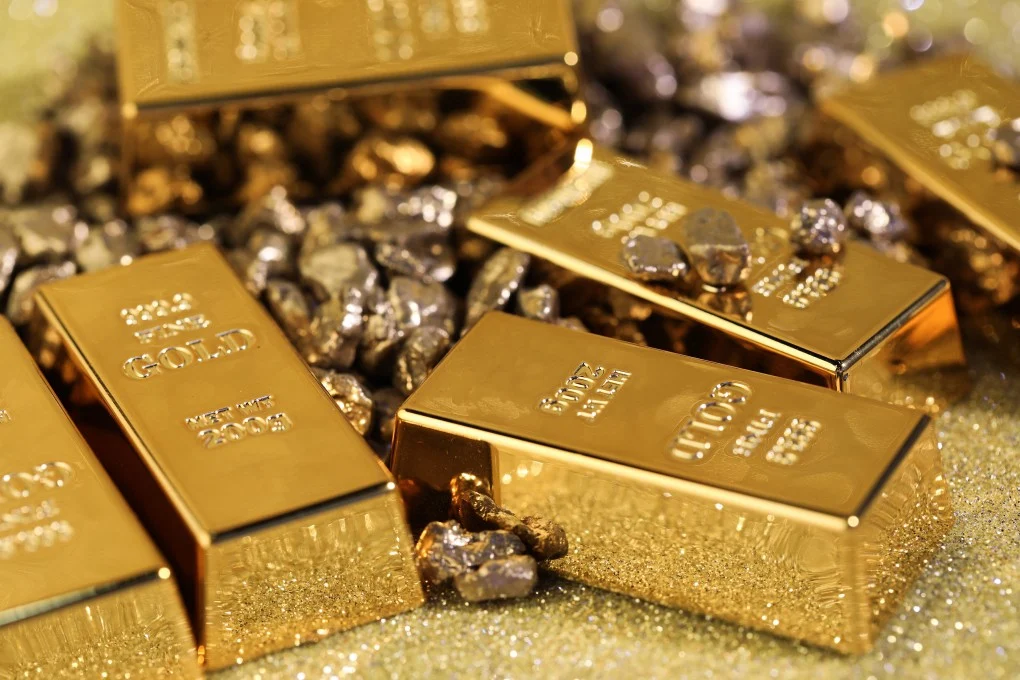
Fresh Middle East diplomatic developments sent gold sharply higher on Thursday, as a softening dollar and falling oil prices gave the metal its best day in months.
Spot gold surged 1.7% to $4,506.19 per ounce by mid-morning in London, while U.S. gold futures for August delivery advanced 1.5% to $4,533.60, a welcome, if cautious, reprieve for investors who have watched the metal shed roughly 16% of its value since the United States and Israel escalated military operations against Iran in late February.
The catalyst for Thursday’s rally came from Washington. The Trump administration announced on Wednesday that Israel and Lebanon had agreed to implement a ceasefire, raising hopes that a broader diplomatic framework to end the wider U.S.-Israeli conflict with Iran may finally be within reach.
Adding political weight to the development, the Republican-led U.S. House of Representatives passed a resolution to block President Donald Trump from continuing military operations against Iran, a rare legislative rebuke that underscored growing domestic appetite for a negotiated exit from the conflict.
The dual developments were enough to send shockwaves through commodity markets. Oil prices fell sharply on the news, alleviating fears that persistently elevated crude prices would continue stoking inflation fears that have kept gold under pressure for months by raising the prospect of higher-for-longer interest rates.
To understand Thursday’s rally, one must first understand the vice that has gripped gold since hostilities with Iran began.
Rising oil prices, a direct consequence of Middle East tensions, have kept inflationary pressures stubbornly high. That, in turn, has forced markets to price in a more hawkish Federal Reserve, one less inclined to cut interest rates.
For gold, a non-yielding asset that earns investors no interest, that environment has been deeply corrosive. Every uptick in rate expectations has sapped demand for bullion, sending prices steadily lower even as geopolitical anxiety, historically a tailwind for safe-haven assets, raged in the background.
A weaker dollar on Thursday compounded the positive effect, making gold cheaper for buyers holding other currencies and expanding the pool of potential demand.
Despite the day’s gains, seasoned market watchers are reluctant to declare a turning point.
Nikos Tzabouras, a senior market analyst at Tradu.com, the trading platform owned by Wall Street giant Jefferies, acknowledged the encouraging signs while urging investors not to get ahead of themselves.
“A successful diplomatic outcome would allow crude flows to resume and ease inflationary fears,” Tzabouras told markets on Thursday. “Cooling geopolitical concerns and lower oil prices weighing on the greenback could help bullion extend its recovery.”
Yet in the same breath, he sounded a note of caution: “The near-term outlook remains challenging, and the precious metal could slip deeper into bear territory over the coming days. This combination of lingering geopolitical risk and higher-for-longer interest rates benefits the U.S. dollar, maintaining strong headwinds for gold.”
His words reflect a broader tension in precious metals markets: while peace in the Middle East would remove a key source of inflationary pressure, the underlying monetary policy landscape remains hostile to non-yielding assets so long as the Federal Reserve holds rates elevated.
Even beyond the immediate geopolitical noise, the longer-term picture for gold presents its own complications. Consultancy Metals Focus projects that gold will resume its bull run in the second half of 2026, a forecast that will hearten long-term holders.
However, the firm also expects total gold demand to fall 2% this year, weighed down by double-digit declines in jewelry consumption and a pullback in central bank purchases, two pillars that have supported prices in recent years.
Jewelry demand, particularly sensitive to high price levels, has struggled as gold prices remain historically elevated even after recent losses. Central banks, aggressive buyers in 2024 and 2025, appear to be tempering their accumulation pace.
With the diplomatic situation still fluid and the Federal Reserve’s next move uncertain, all eyes are now turning to Friday’s release of U.S. nonfarm payrolls data for May, a report that could prove pivotal in shaping expectations for monetary policy.
A strong jobs number would likely reinforce the case for the Fed to hold rates steady or even entertain further tightening, heaping fresh pressure on gold. A softer print, on the other hand, could embolden bulls and lend fresh momentum to Thursday’s recovery.
Precious metals more broadly shared in the day’s optimism. Spot silver led the charge with a 2.4% gain to $74.44 per ounce, while platinum rose 2.1% to $1,897.60 and palladium added 1.8% to $1,325.14.
For now, gold’s fortunes remain inextricably tied to two volatile and unpredictable forces: the trajectory of Middle East diplomacy and the resolve of the Federal Reserve. Thursday offered a brief moment of clarity on both fronts. Whether it lasts is another matter entirely.
WHAT YOU SHOULD KNOW
Gold‘s Thursday rally is ultimately a story of cautious optimism. A potential Middle East ceasefire lifted prices by easing oil-driven inflation fears and weakening the dollar, but the recovery remains fragile.
As long as interest rates stay elevated, gold faces an uphill battle because in today’s market, diplomacy and Fed policy are the only two things that truly matter for bullion. Friday’s jobs report will be the next real test.